Harry Culy
Pink Castles, Burning Windows
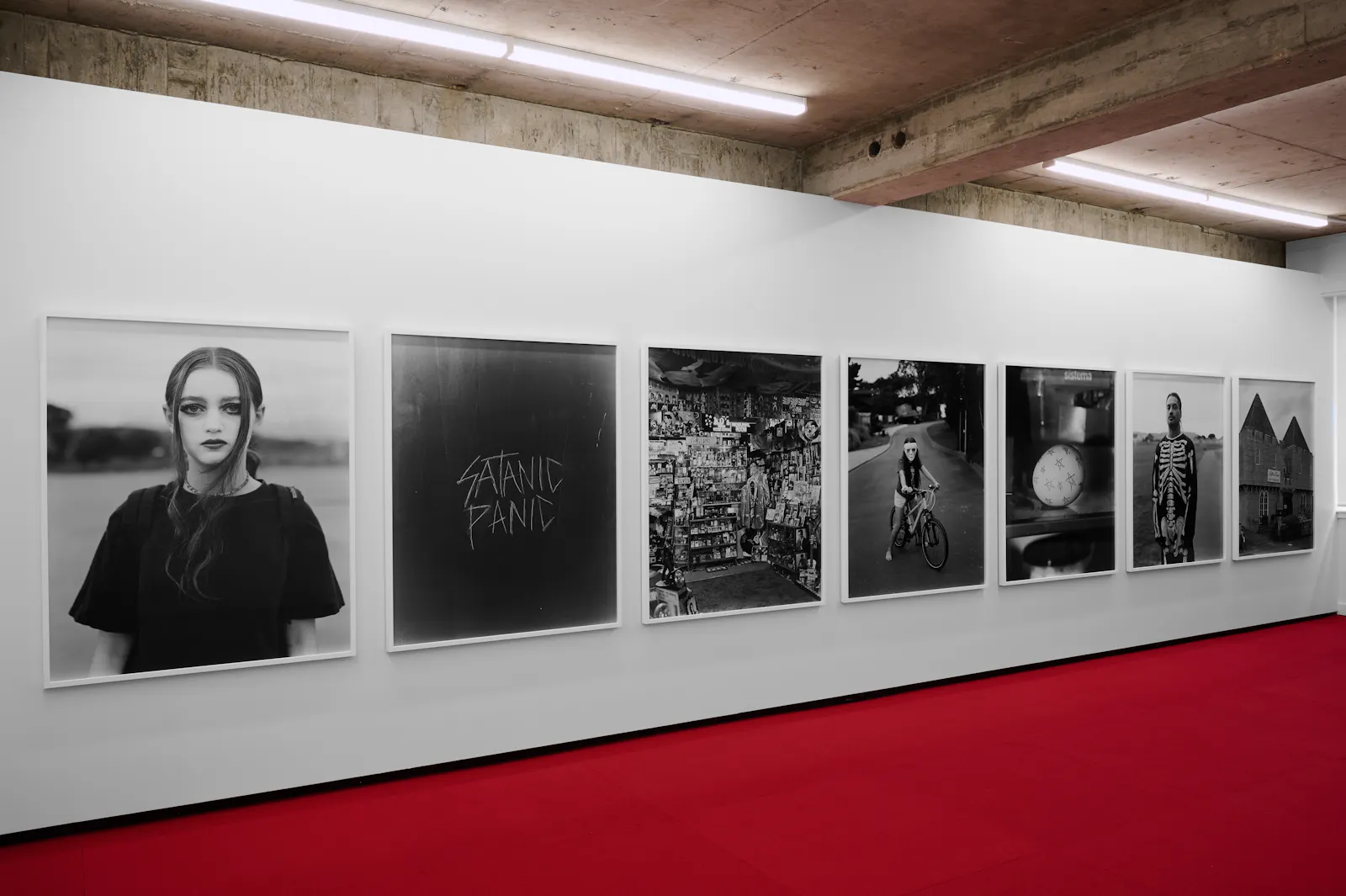
16 July — 15 August
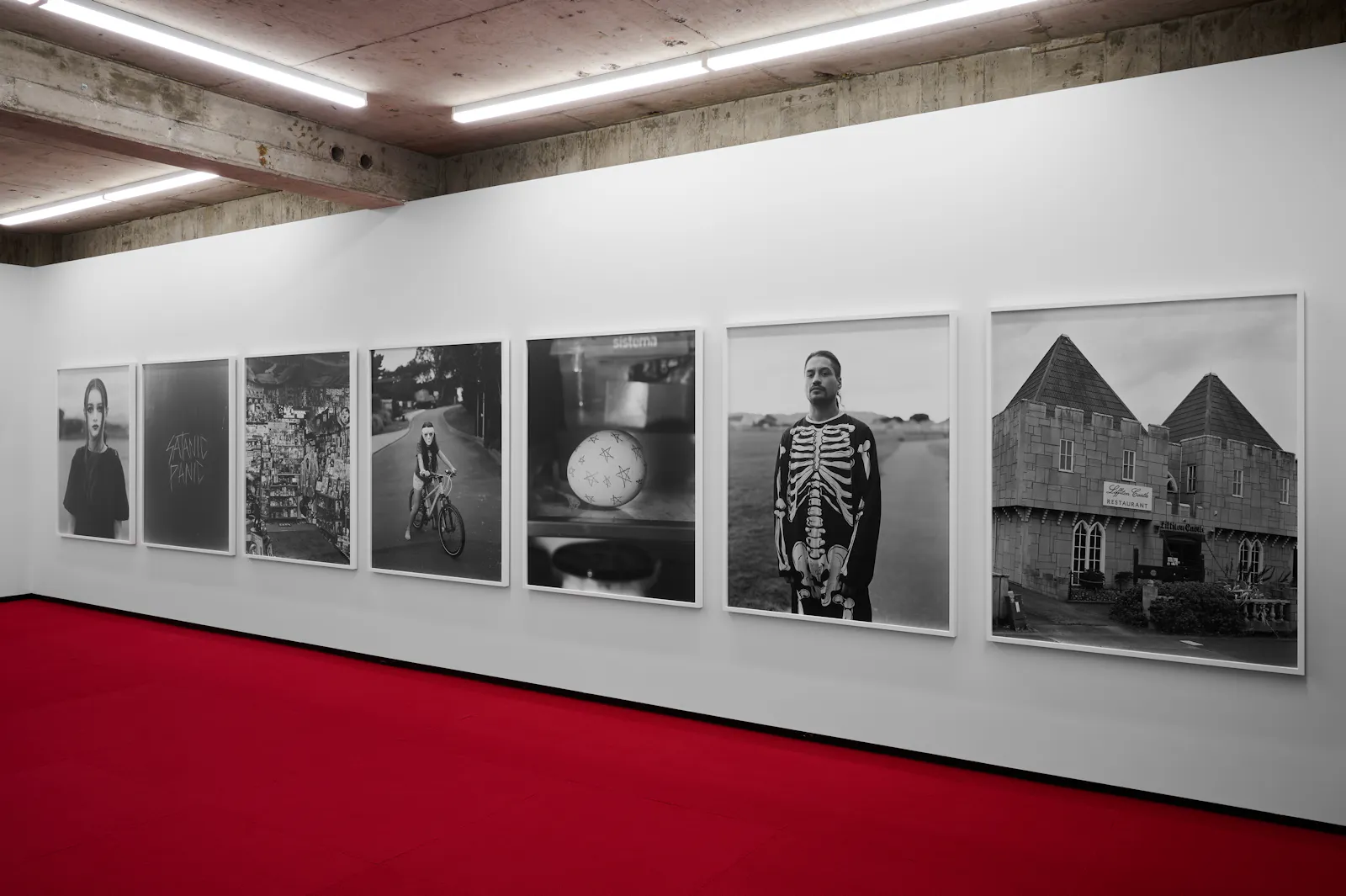
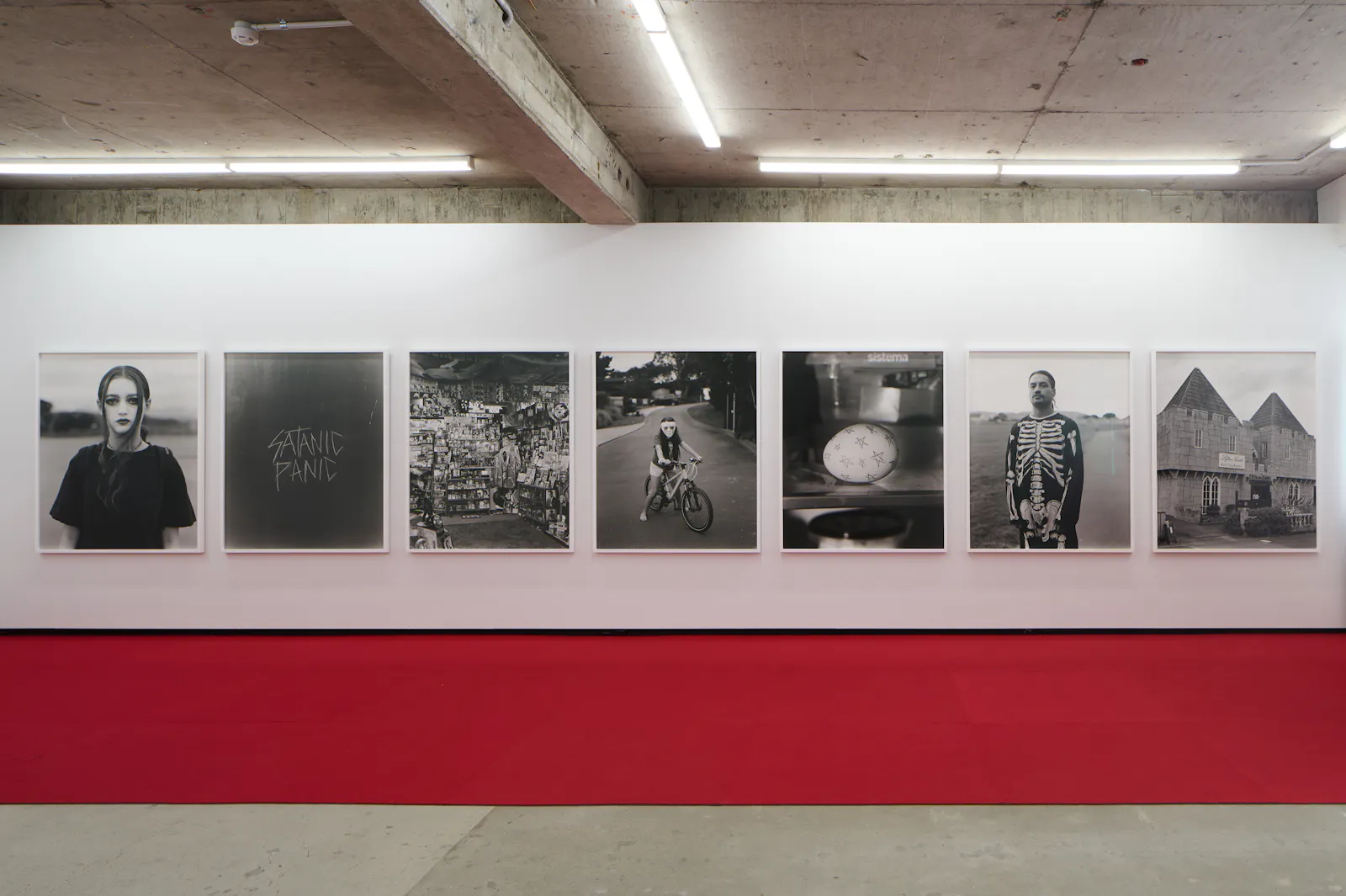
Harry Culy’s Pink Castles, Burning Windows draws the gothic out of Aotearoa’s familiar surfaces, finding something strange, funny and quietly unsettling in places that might otherwise seem ordinary.
The exhibition continues the psychological terrain of Vampire Grove, Culy’s ongoing series of large-format black-and-white photographs, originally shown at The Dowse Art Museum. In that series, familiar streets and people of Aotearoa become the setting for an imagined gothic utopia.
Yet, as Chelsea Nichols writes, “nothing here depends on elaborate illusion.” Culy does not transform the everyday so much as worry at it, loosening its surfaces until other possibilities begin to show through.
Across these photographs, suburban streets, teenage gestures and private obsessions become sites of transformation. The gothic does not arrive through grand spectacle, but by increments: a cheap mask, a line of eyeliner, a faux castle. Each becomes a small aperture into a stranger world.
Funny, tender and quietly disquieting, Pink Castles, Burning Windows lingers at the threshold between reality and imagination. These are images of enchantment under pressure, where the smallest gesture can alter the atmosphere of an entire scene.
An accompanying text by curator Chelsea Nichols will be available in the gallery.
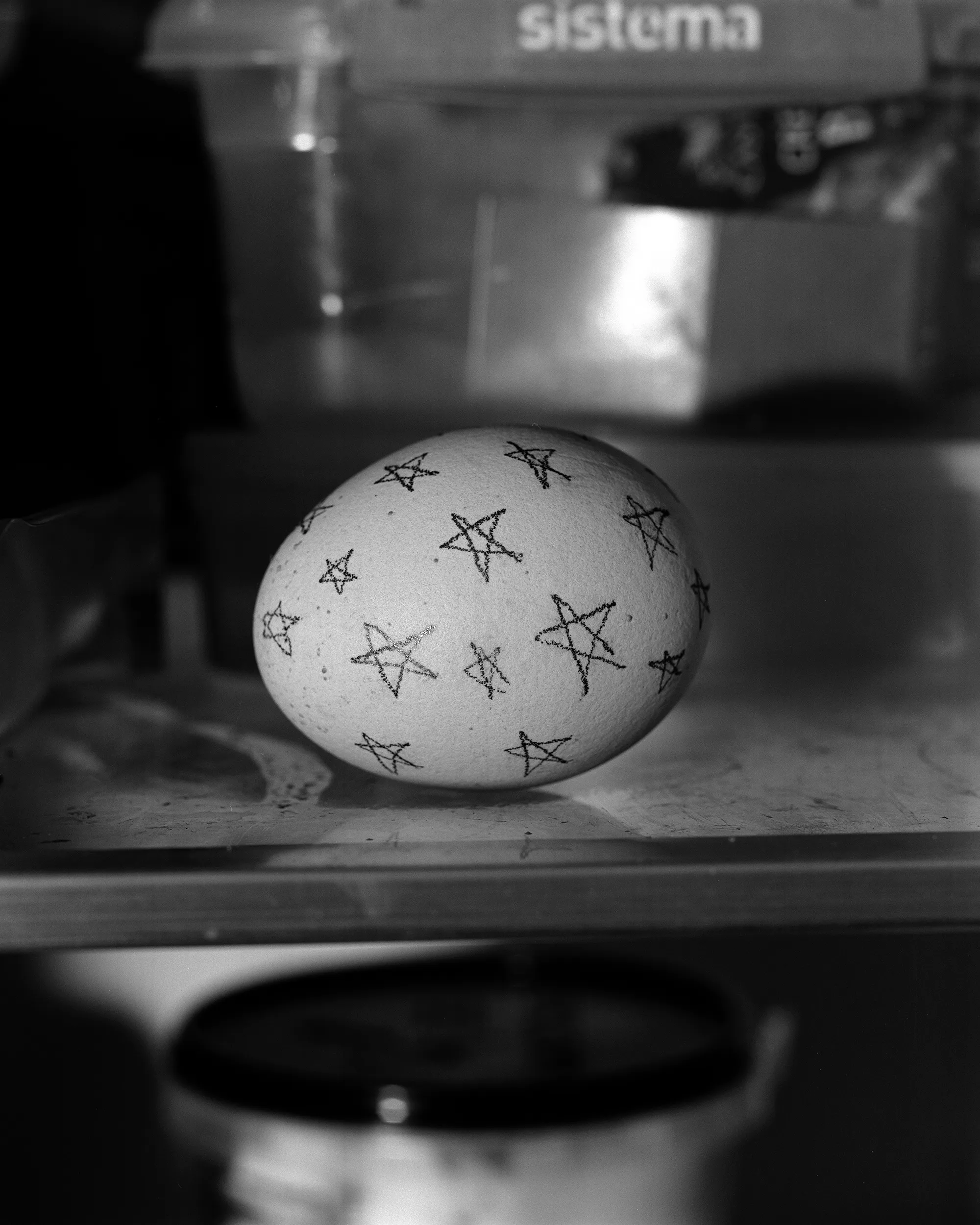
Untitled (Bruce Avenue III), 2026
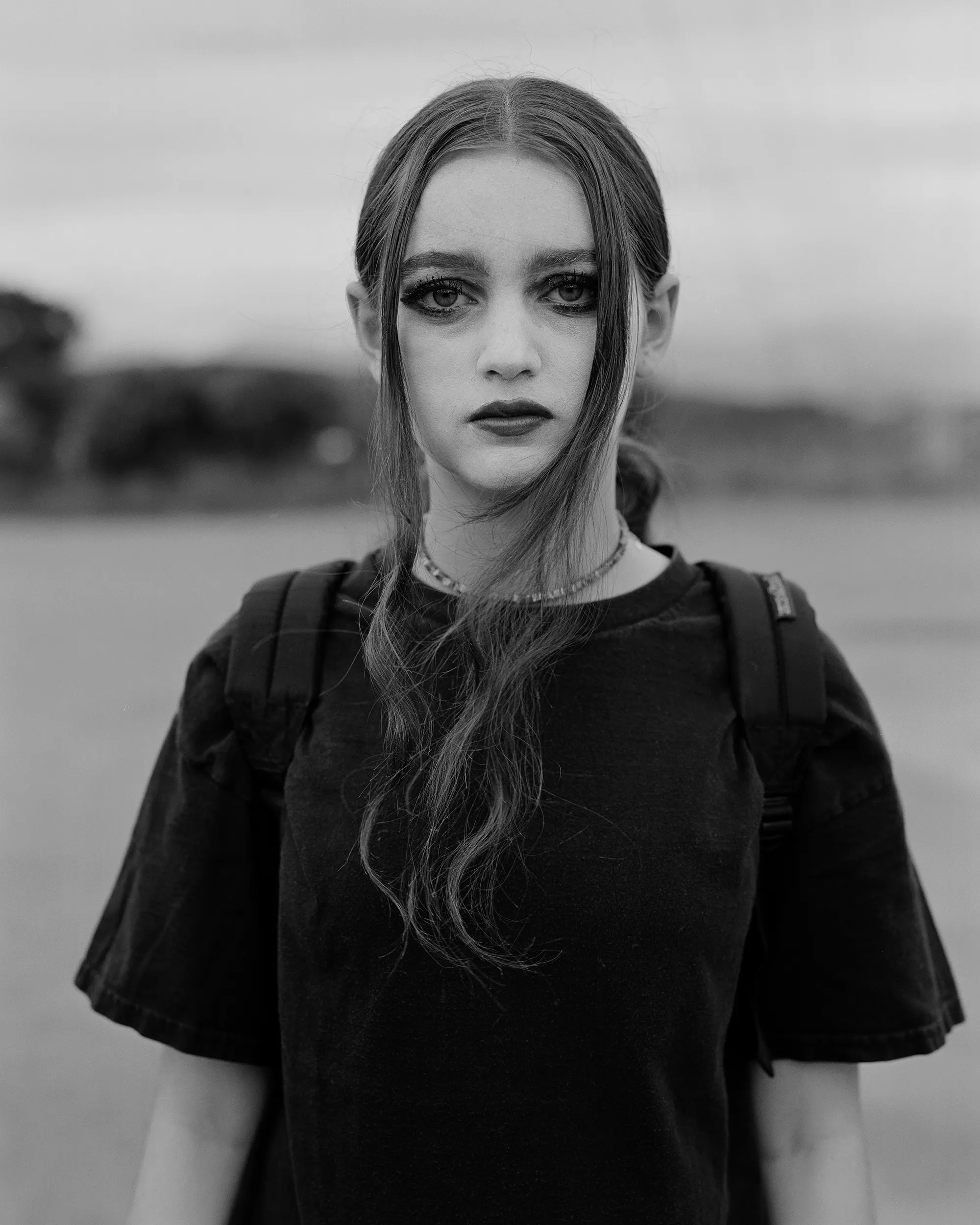
Untitled (Tanera Park) 2026, 2026
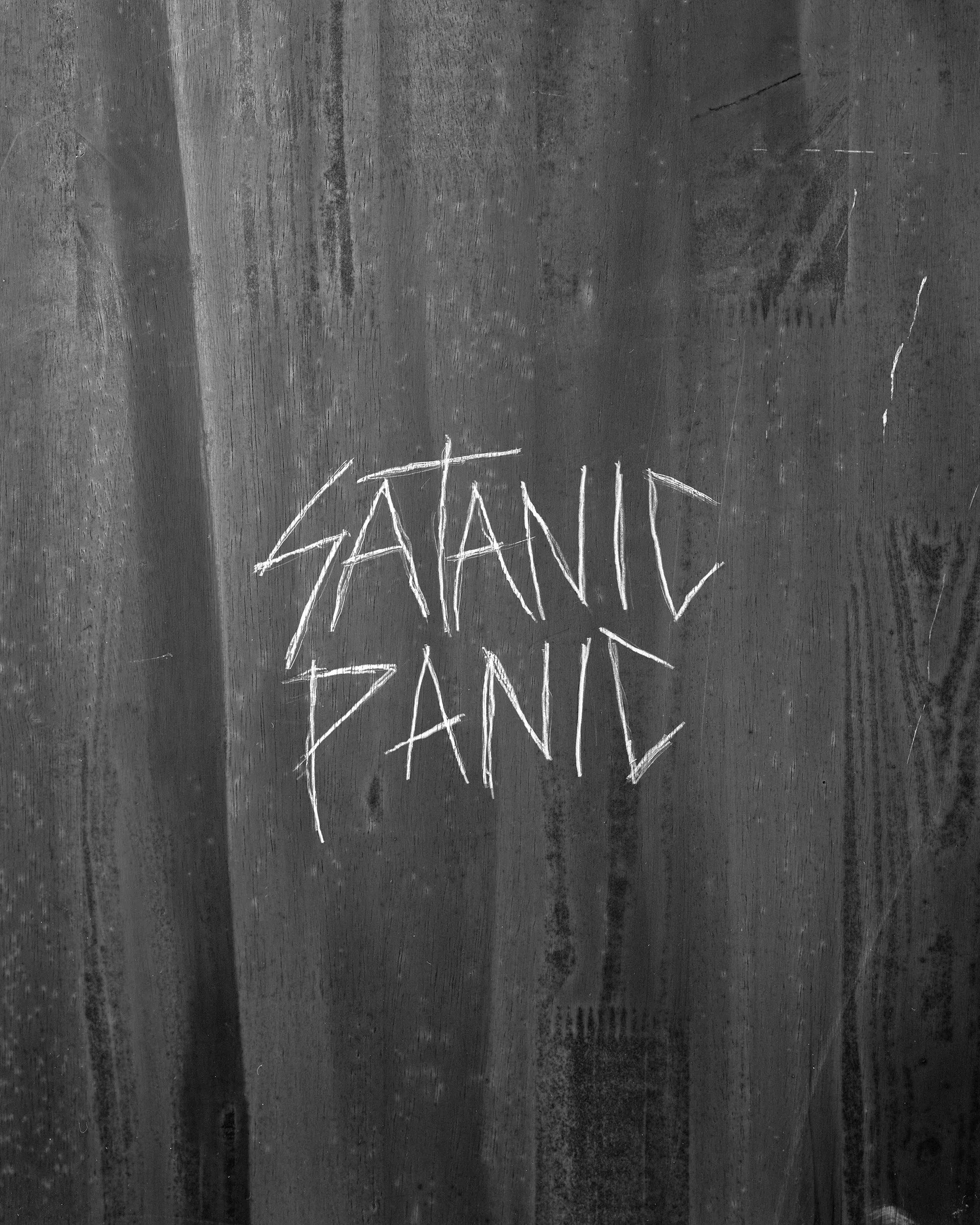
Untitled (Marion Street), 2017
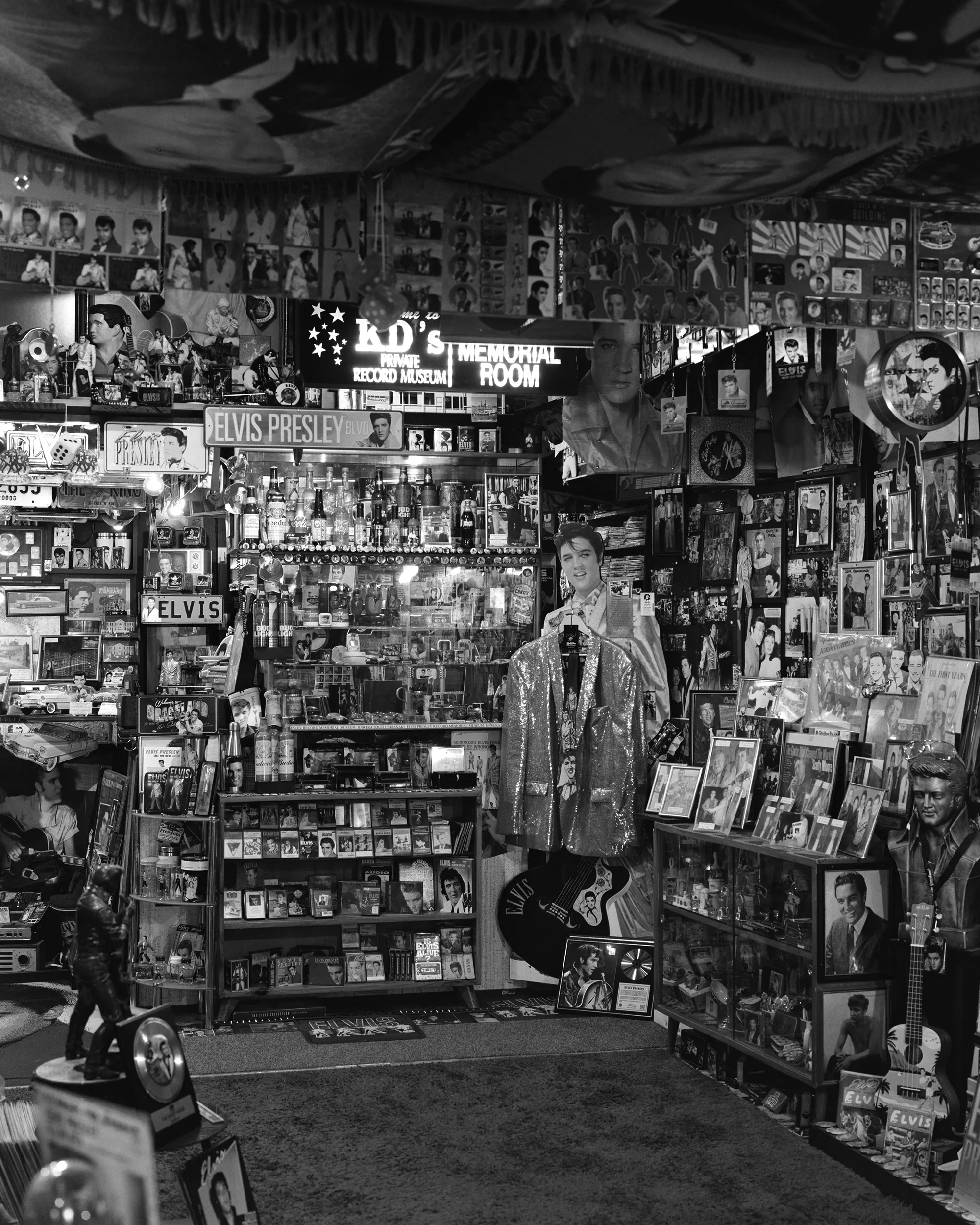
Untitled (Argyle Street), 2024
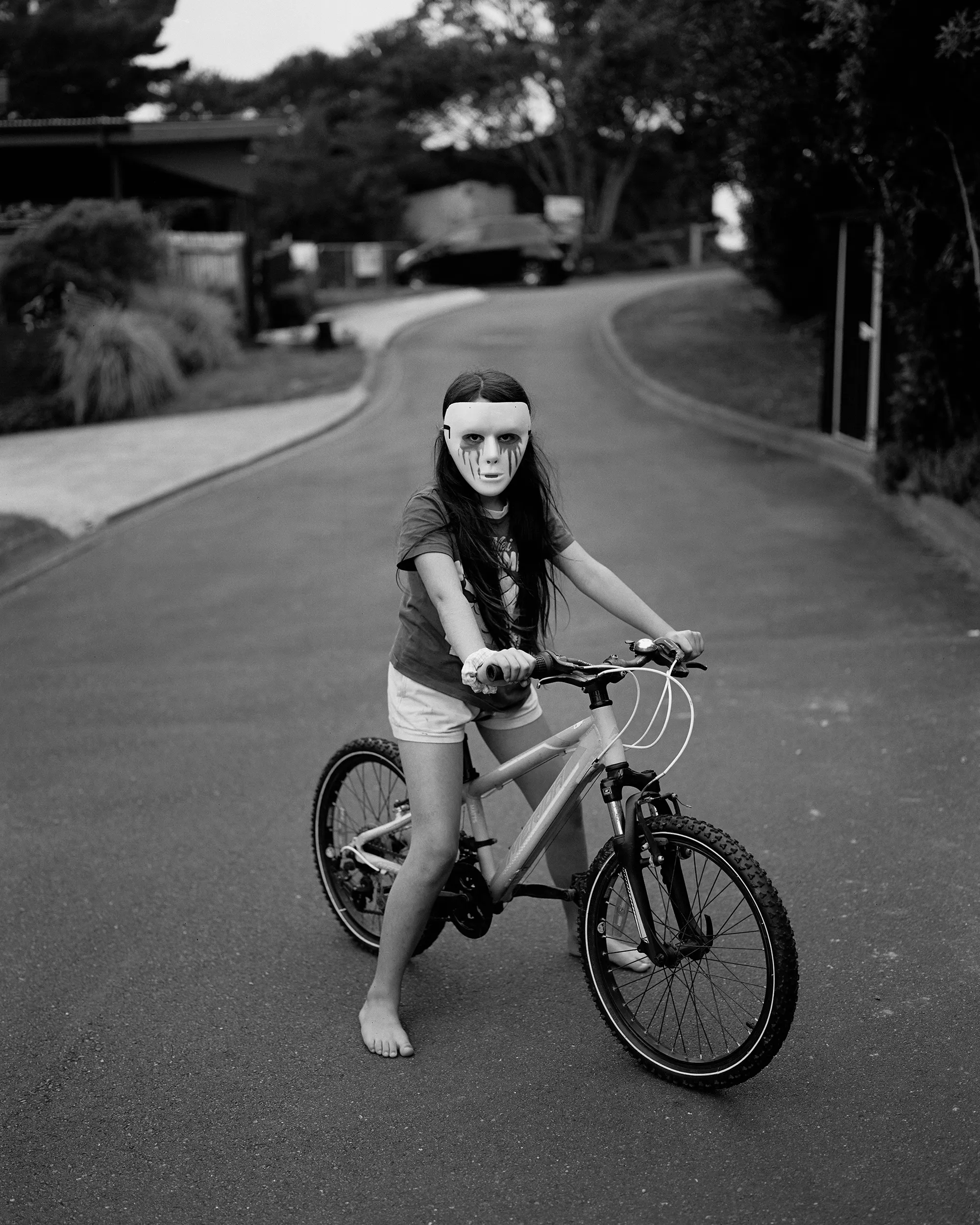
Untitled (Makomako Road), 2026
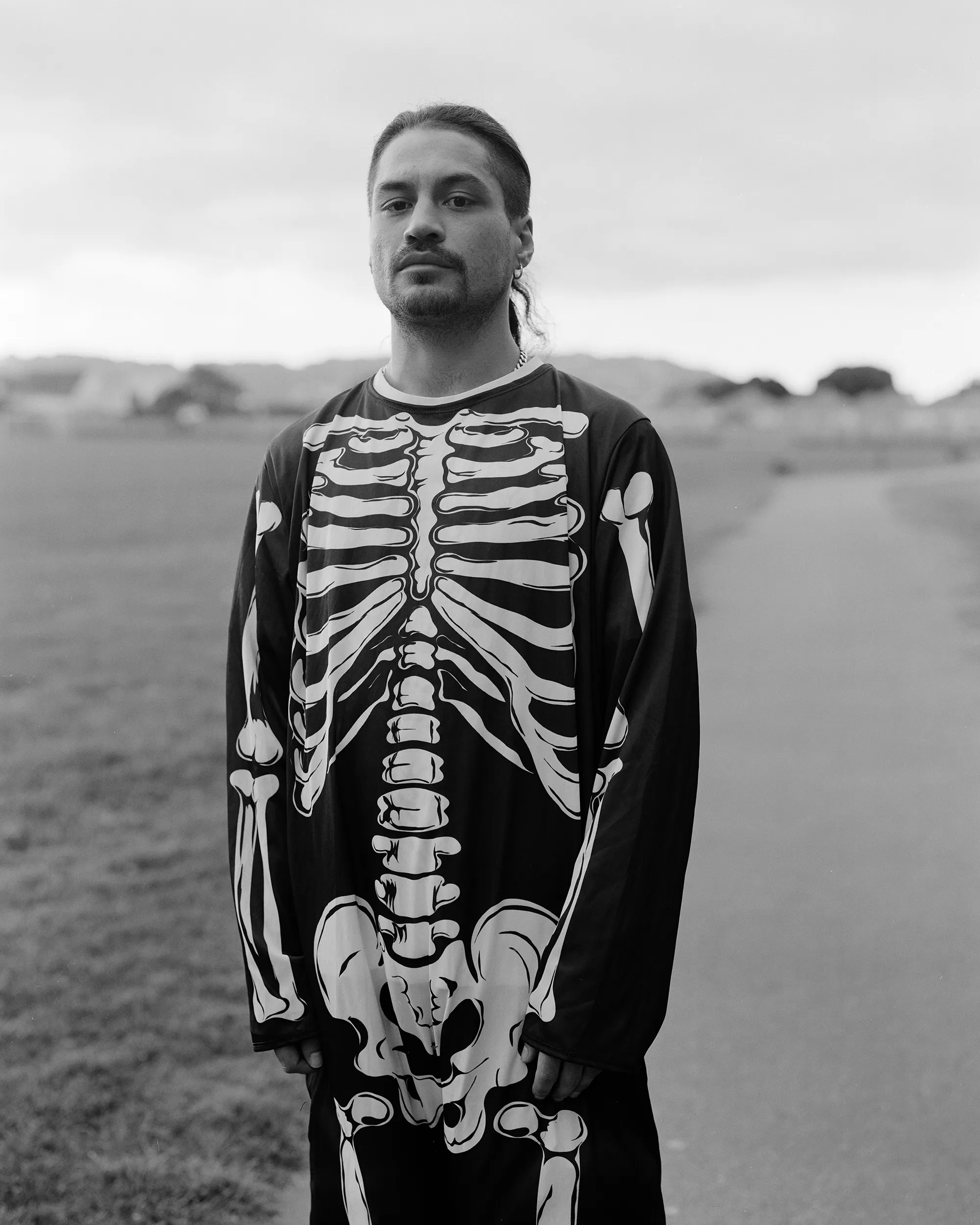
Untitled (Kingsford Smith Street), 2026
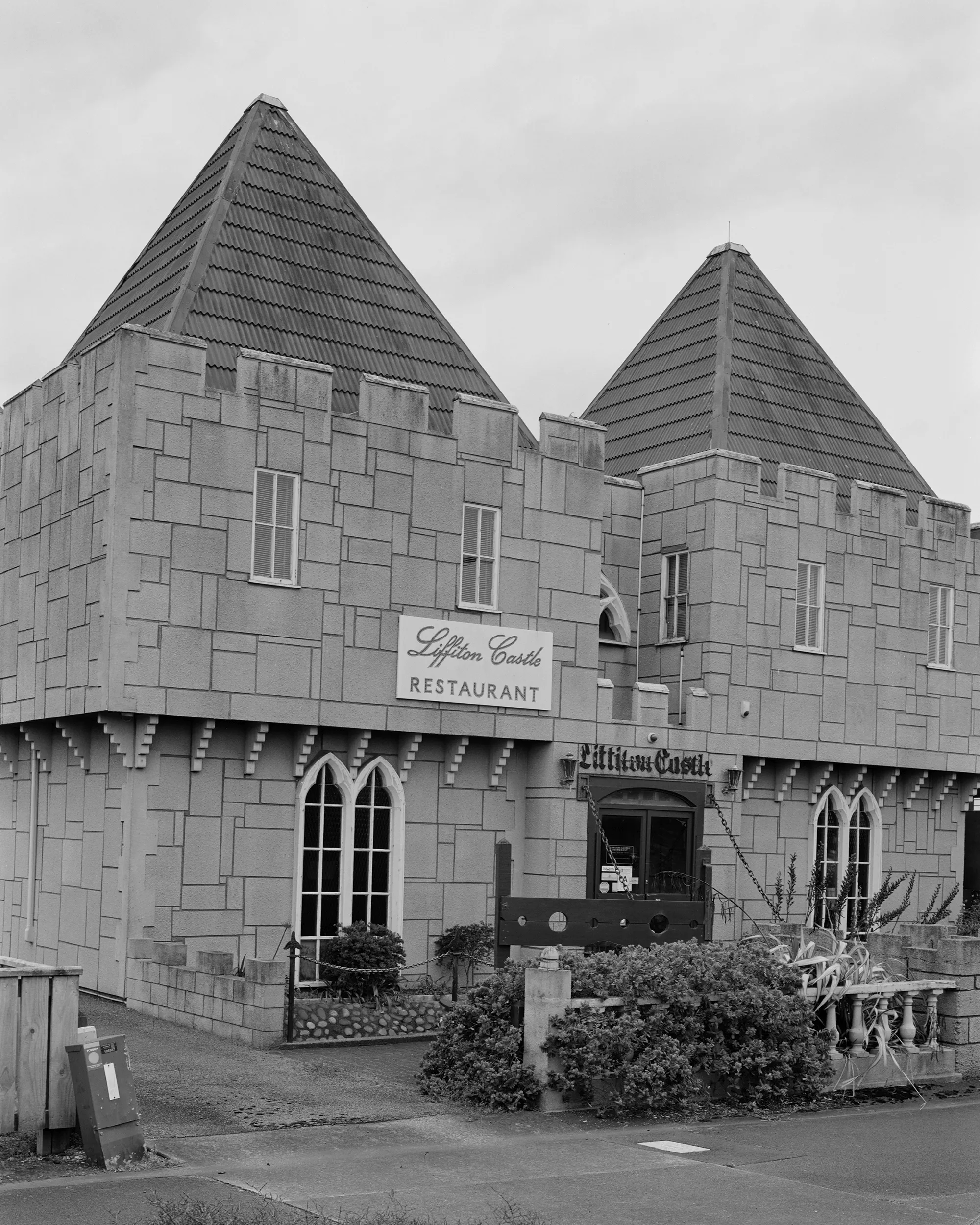
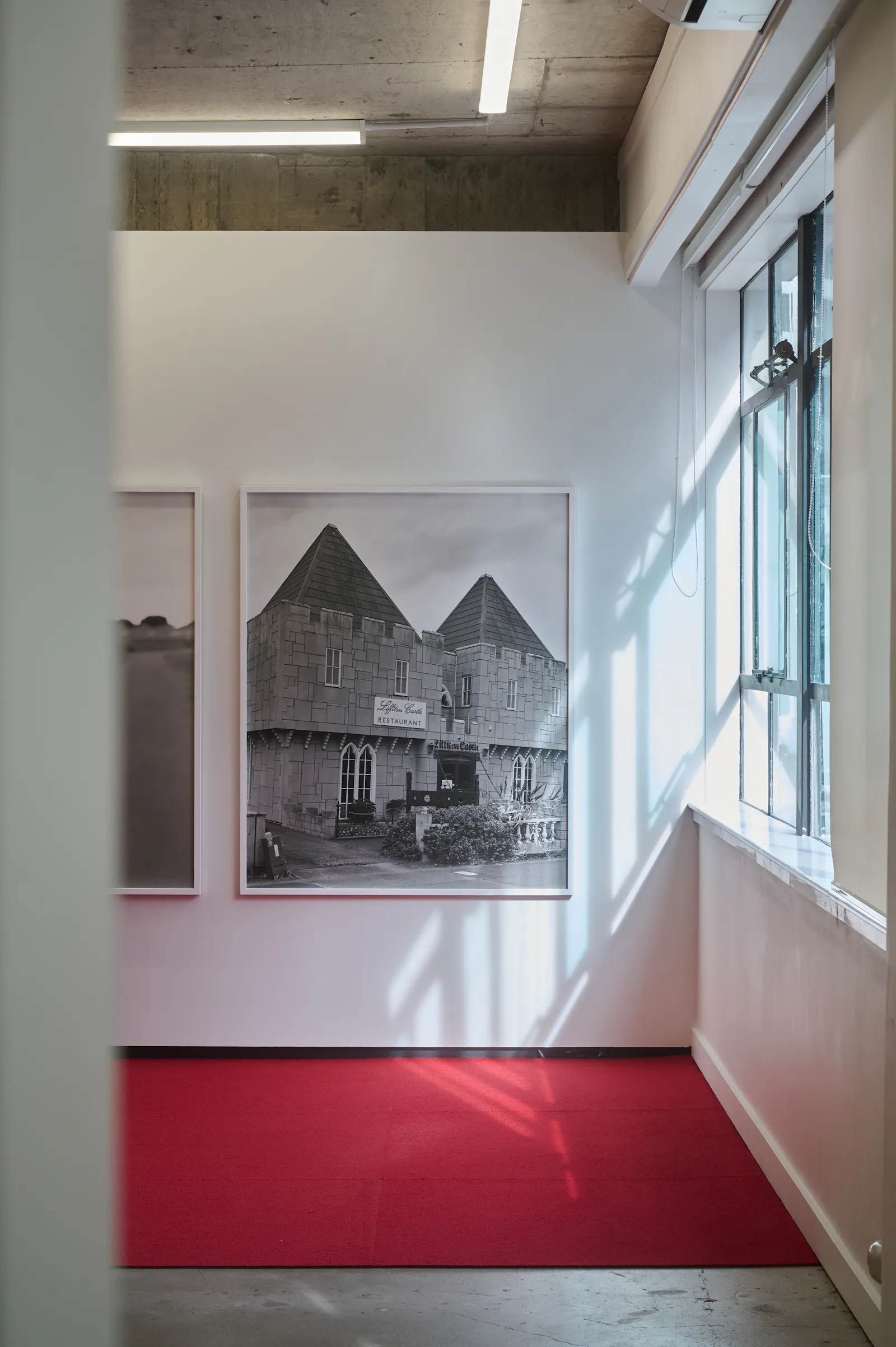
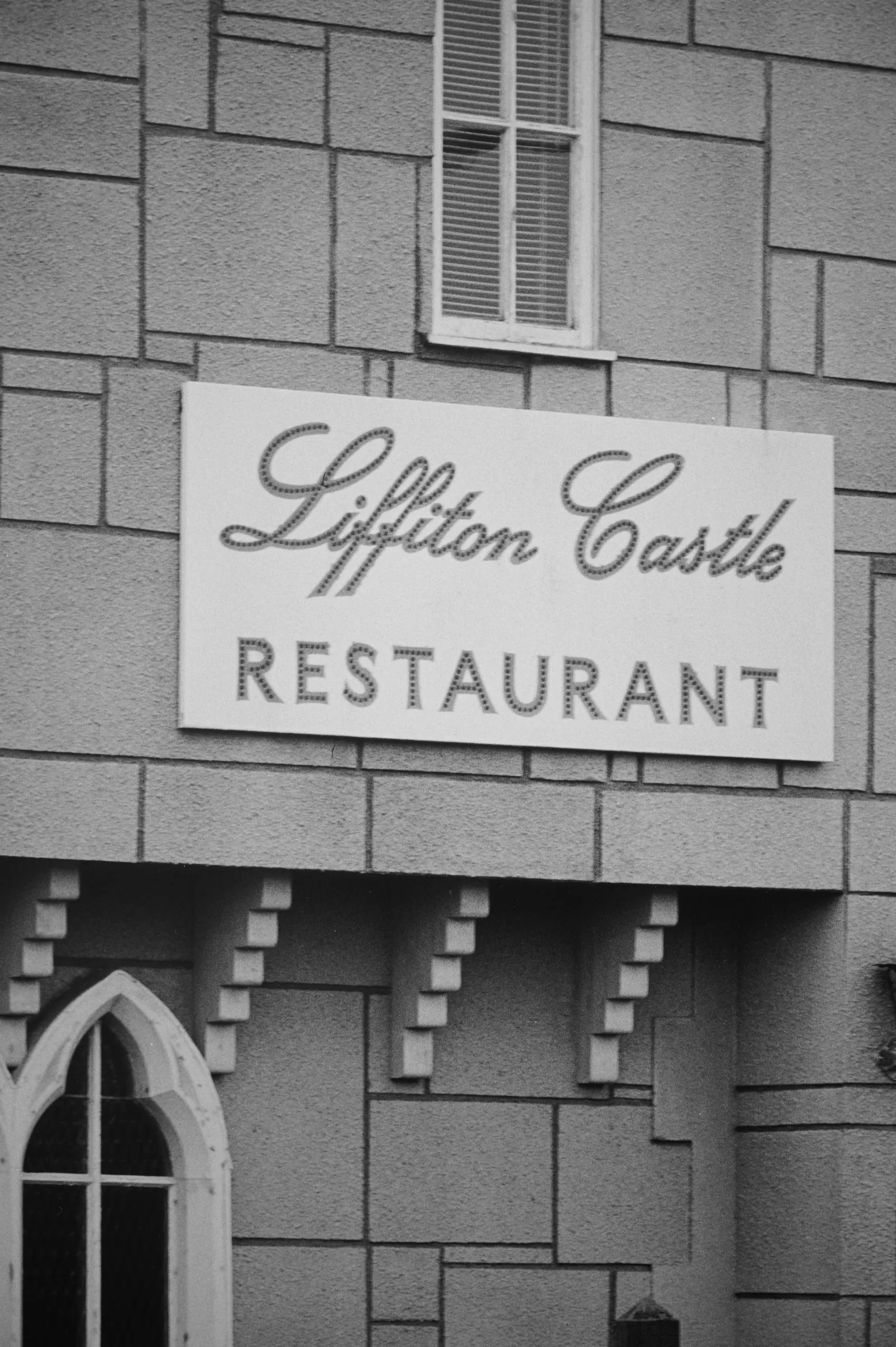
Untitled (Liffiton Street), 2018
Untitled (Massey Avenue), 2026
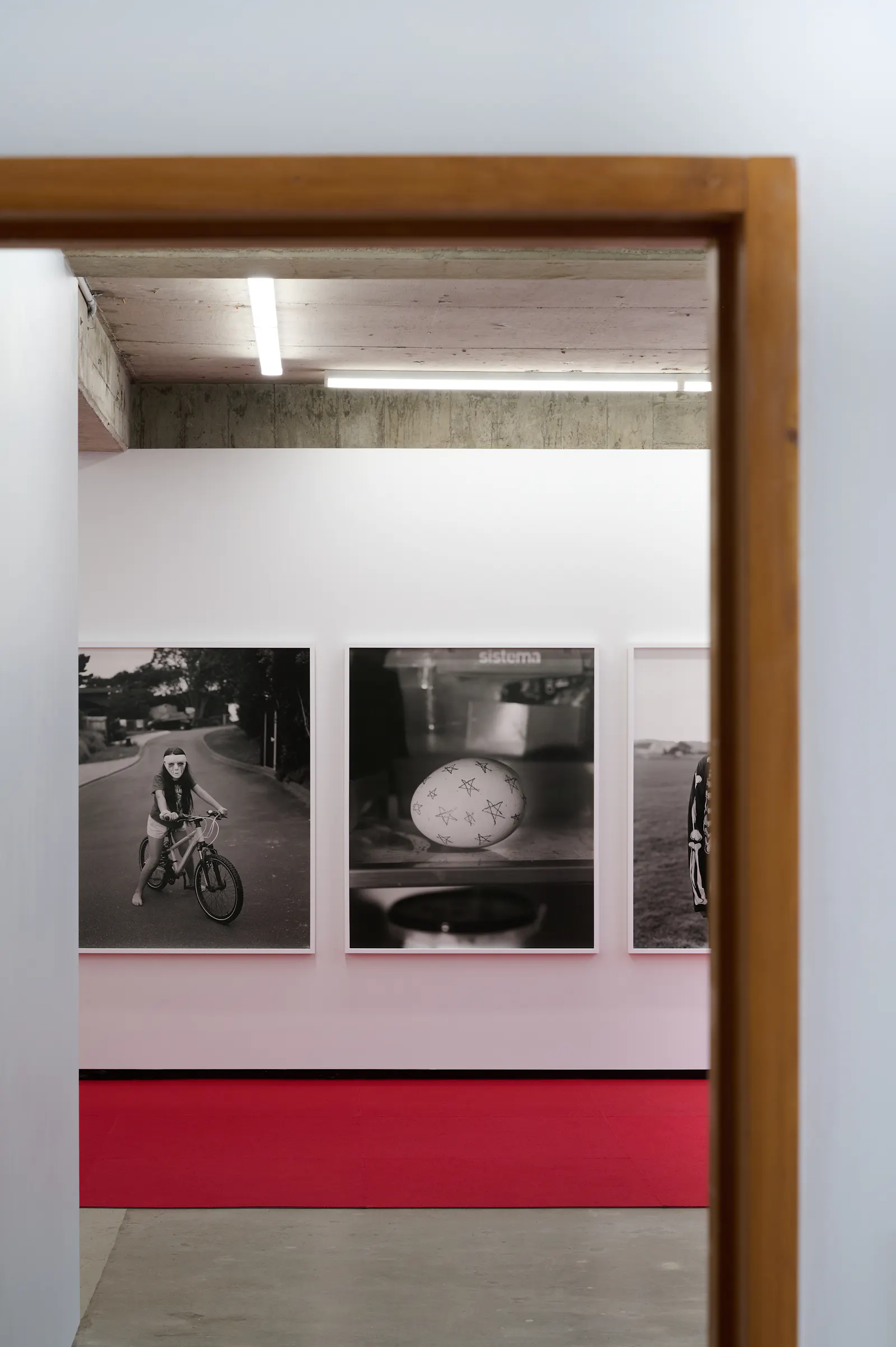
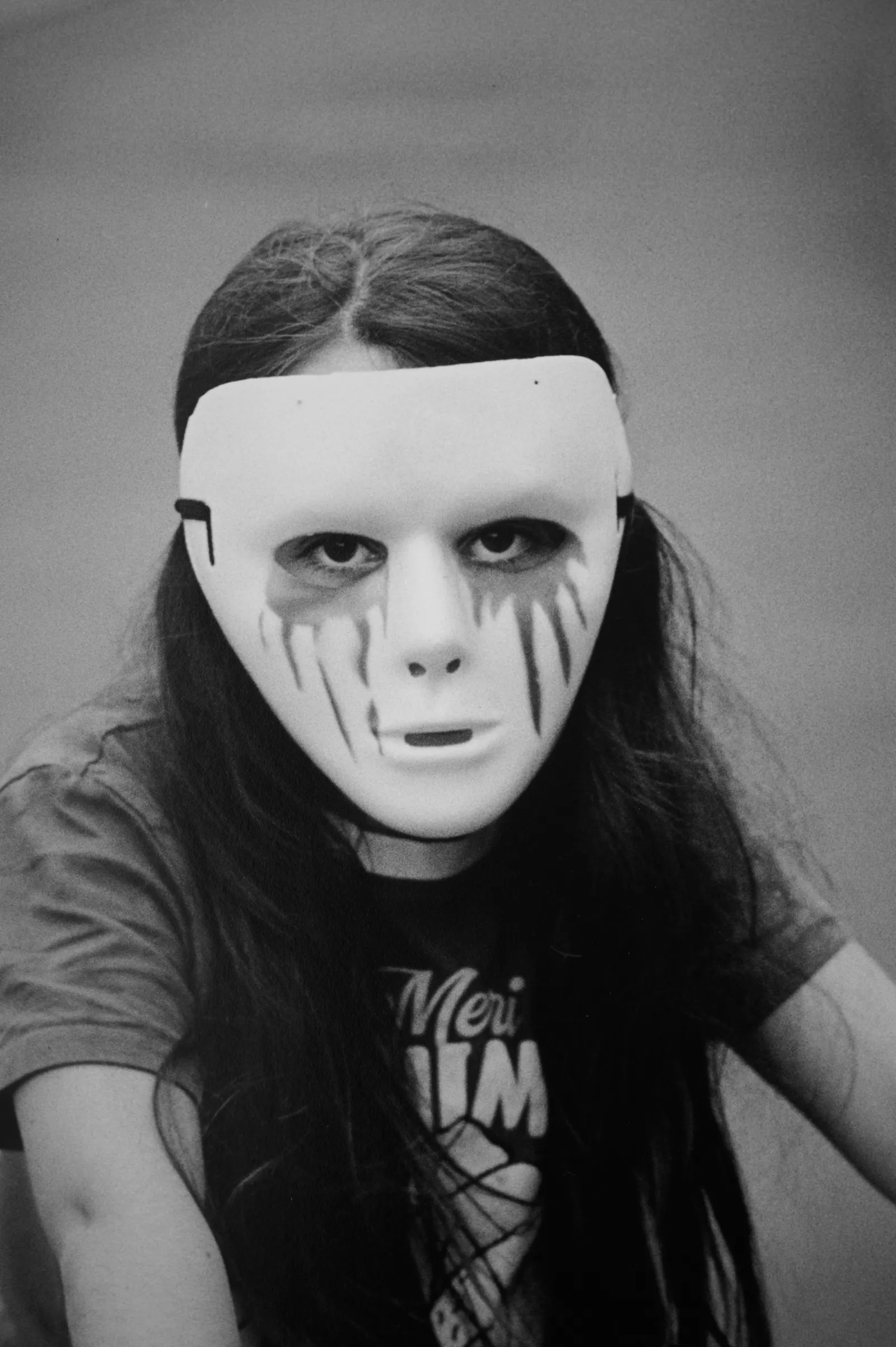
A little girl sits on a bicycle in the middle of a suburban New Zealand street, staring directly at the viewer with a cold, unwavering gaze. Looped around her wrist is a scrunchie, the official regalia of suburban girlhood at its most wholesome. Beneath her bare feet stretches the immaculate asphalt of an ordinary cul-de-sac. She wears no helmet, because skull protection seems unnecessary if you happen to be the demonic spawn of Satan. Instead, she wears a simple Halloween mask: pale-faced, hollow-eyed, streaked with tears of blood. The effect is both faintly ridiculous and genuinely chilling.
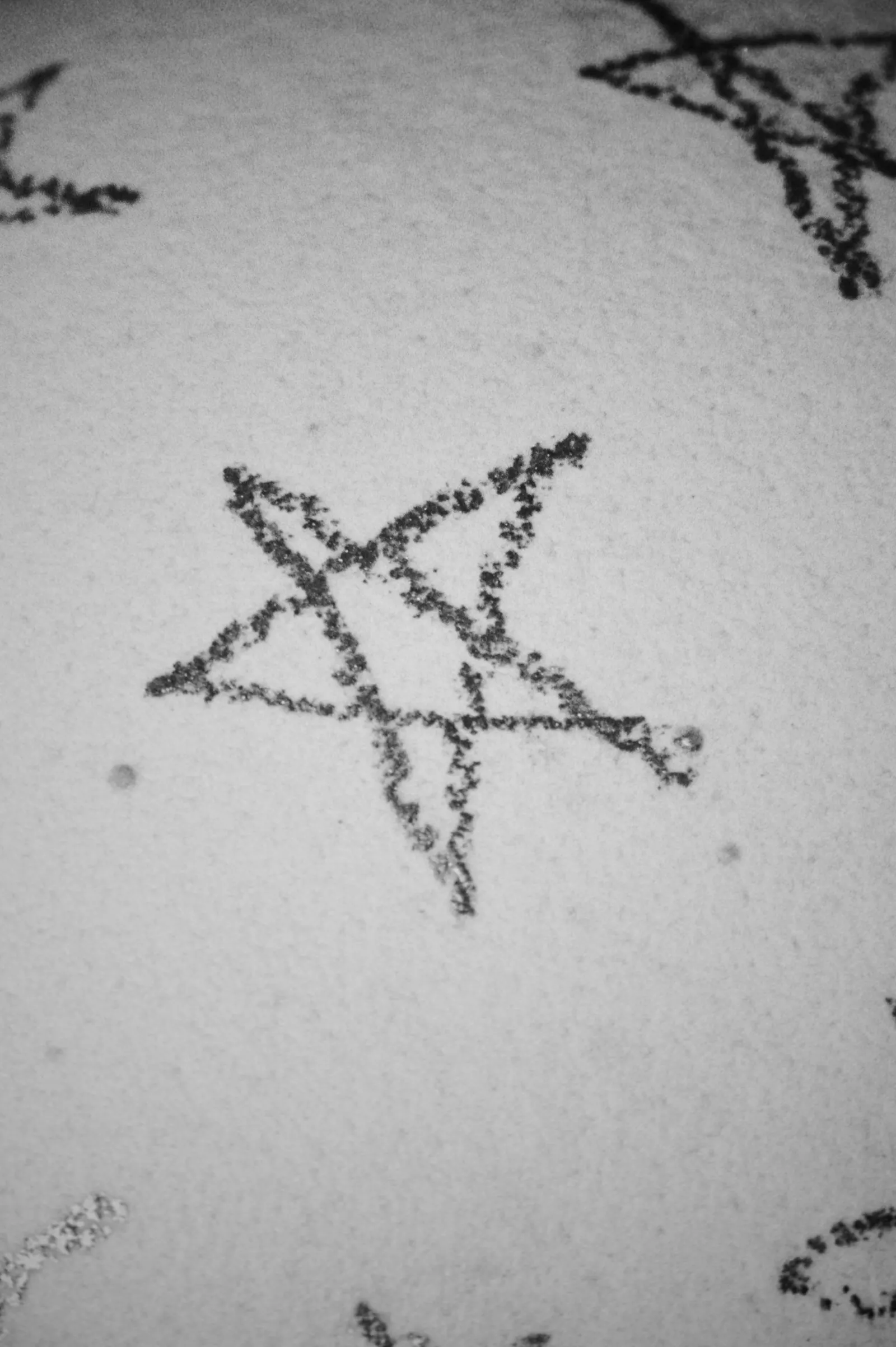
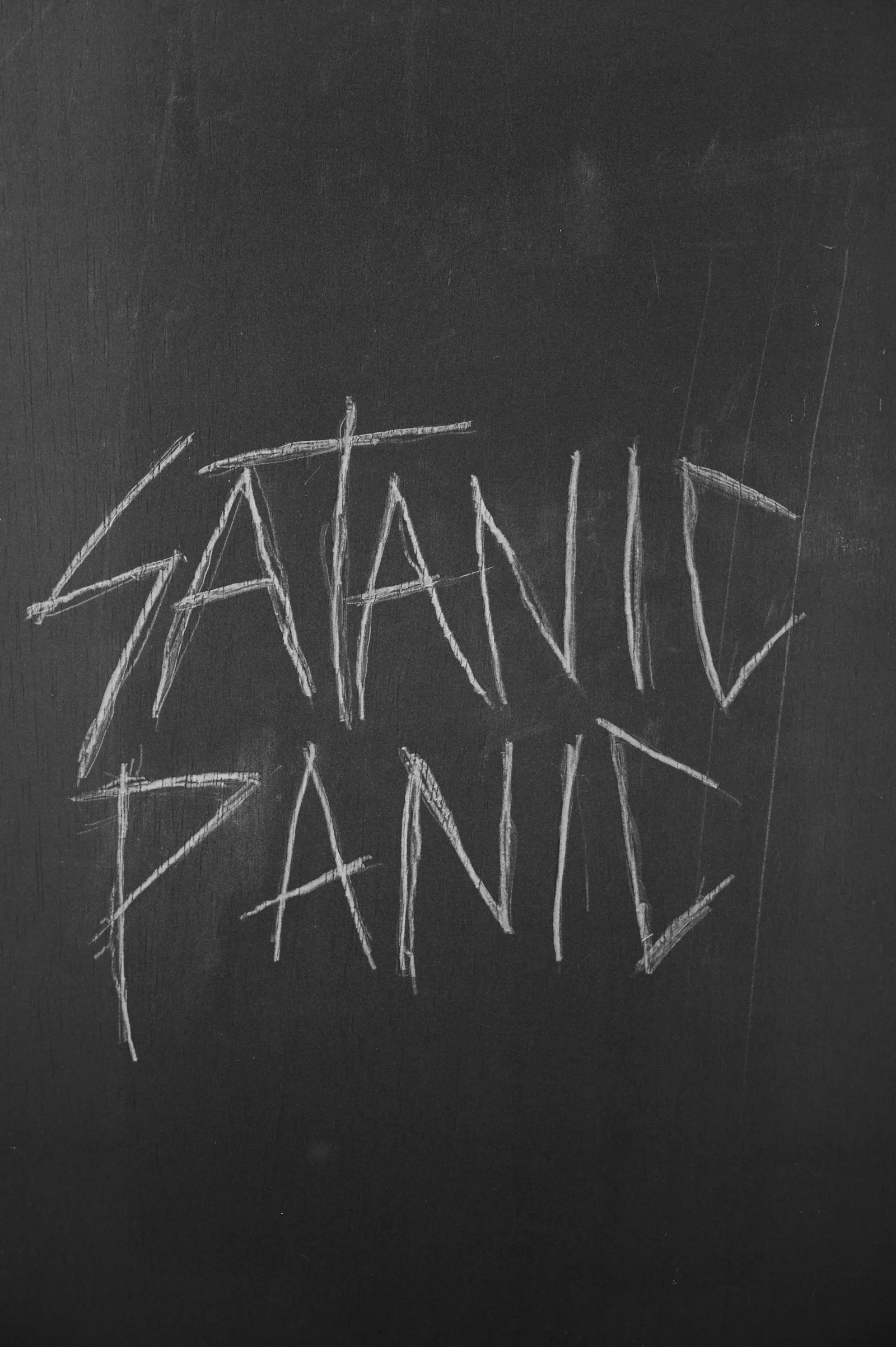
It doesn't take much. The gothic, in Harry Culy’s hands, arrives by increments rather than apparitions. A cheap mask. Black stars scribbled on an egg. The words Satanic Panic scratched into wood panelling. Again and again, his photographs ask how little is required to disturb the reassuring surfaces of ordinary life. Culy’s photographs are not records but rituals. Each image performs small acts of conjuring that coax the gothic already latent within the everyday into momentary visibility.
These photographs extend the psychological terrain of Vampire Grove, Culy’s ongoing series of large-format black-and-white photographs, in which familiar New Zealand streets become the setting for an imagined gothic utopia. Yet nothing here depends on elaborate illusion. Culy does not transform the everyday so much as worry at it, loosening its ordinary surfaces until other possibilities begin to show through. The suburban cul-de-sac, the cluttered garage filled with Elvis memorabilia, a faux castle: each becomes a small aperture into a stranger world.
The little girl on the bicycle presides over this world like its patron saint of suburban dread. Creepy children have long been a staple of horror fiction because they violate one of culture’s most sentimental fantasies: that children should be innocent, harmless and in need of protection. Little girls, in particular, carry the intolerable charge of the angelic and the monstrous in the same small body. She is the Grady twins in The Shining, Regan in The Exorcist, Merricat Blackwood in We Have Always Lived in the Castle: girlhood rendered uncanny, transforming vulnerability into something dangerous and unsettling.
Yet Culy's masked child performs another role as well. She reminds us that childhood occupies the fragile border between imagination and reality with an enviable ease. Adults understand that a cheap plastic mask is only a cheap plastic mask. Children know that putting it on changes something. Playing dress-up has always carried traces of ceremonial magic. The little girl is frightening not simply because she resembles horror's demon children, but because she still inhabits a world in which transformation feels entirely plausible.
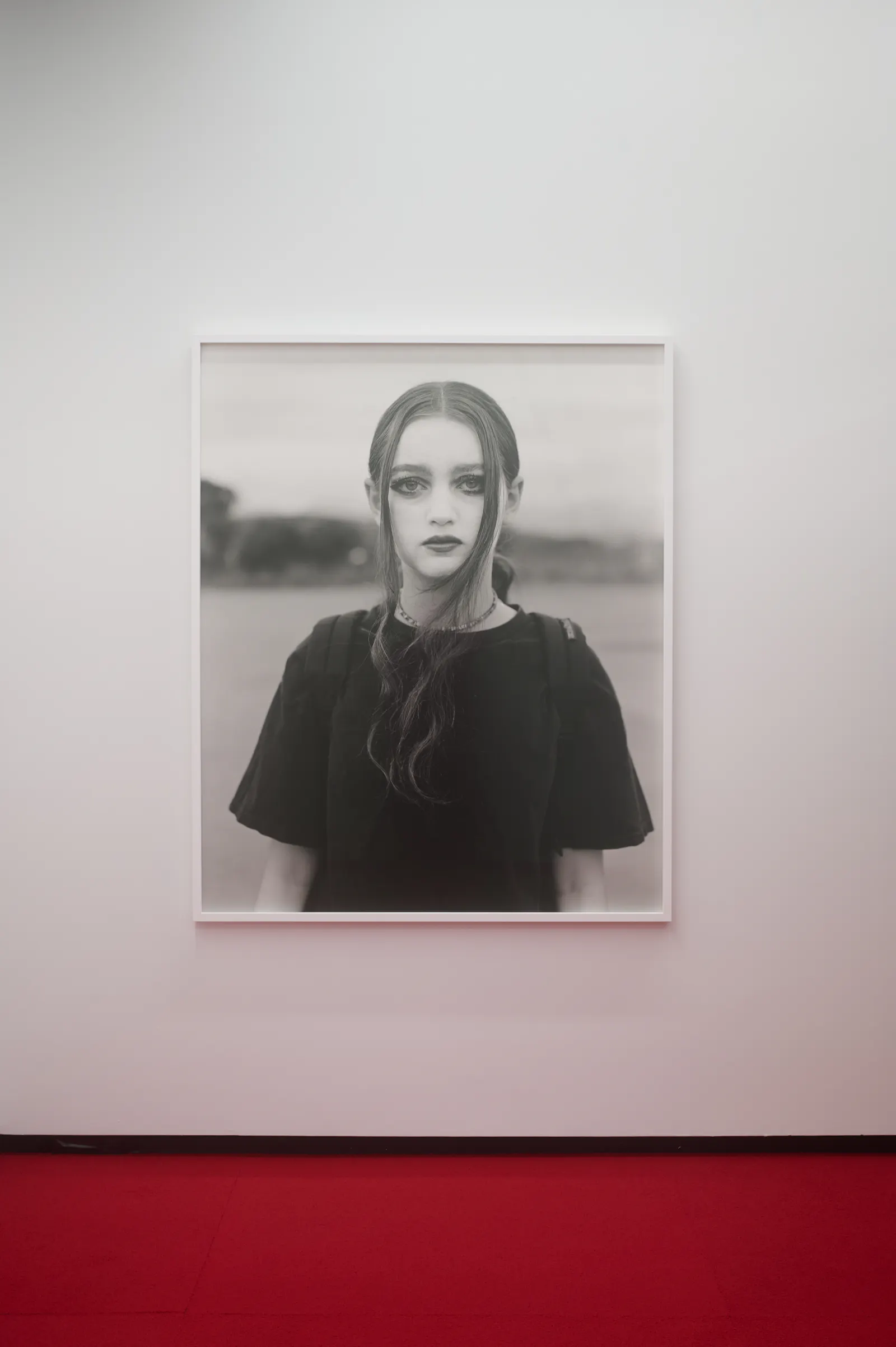
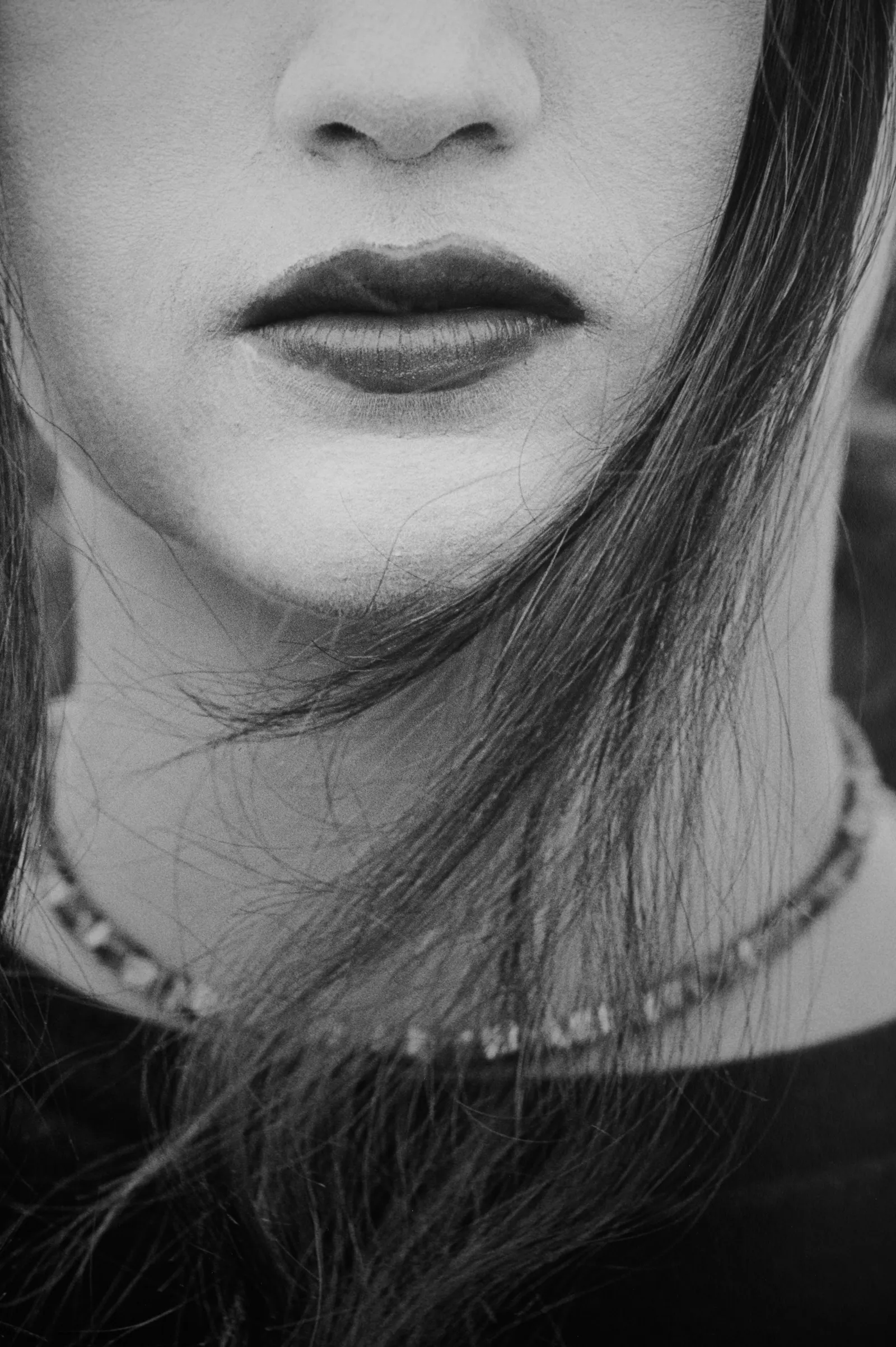
That same fragile enchantment returns in the portrait of a teenage girl, her eyes darkened with smudgy black eyeliner. She possesses none of the masked child's theatrical menace. Instead, she appears caught in one of adolescence's oldest acts of alchemy: discovering that identity is something made rather than simply inherited. The eyeliner feels less like makeup than a protective spell, carefully reapplied each morning against the encroaching forces of ordinary life. Childhood offers enchantment freely. Adolescence discovers that it must be cultivated.
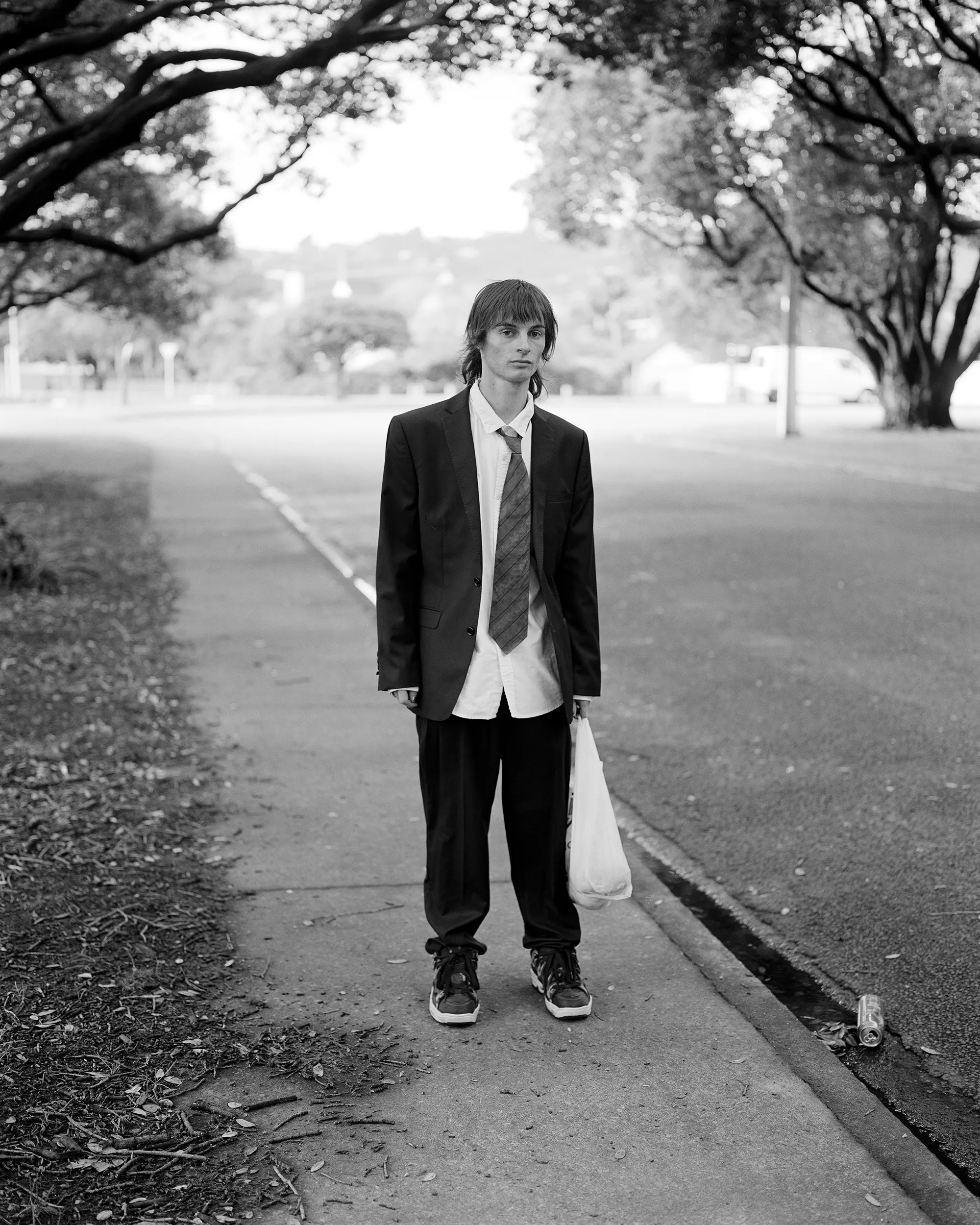
Elsewhere, Culy discovers the Byronic hero alive and slightly stranded in contemporary Aotearoa. A handsome youth in an ill-fitting suit, with a haircut that carries the private drama of a hysterical late-night decision in a bathroom mirror. The figure has the melancholy bearing of the tortured poet, but the world around them refuses grandeur. There are no ruined abbeys or moonlit cliffs—only an empty can of energy drink crumpled on the pavement and a plastic bag of groceries. The image is funny, tender and quietly devastating: dark brilliance persisting in a world that has no particular use for it.
The absurdity of Culy’s subjects matters. At Liffiton Castle in Whanganui, gothic fantasy appears as cheerful pastiche: a faux castle restaurant with fake medieval stocks and a drawbridge, the whole thing slightly wrong, slightly funny, and somehow more unsettling. You wouldn’t find this castle in a gothic novella; at best you might glimpse it in the background of Police Ten 7. This is the Aotearoa gothic as a built thing, an imported dream shoddily assembled from borrowed signs and local materials. Its awkwardness is not a failure of the fantasy, but part of its charge. The gothic does not arrive here intact. It is copied, misremembered, suburbanised, made weird again.
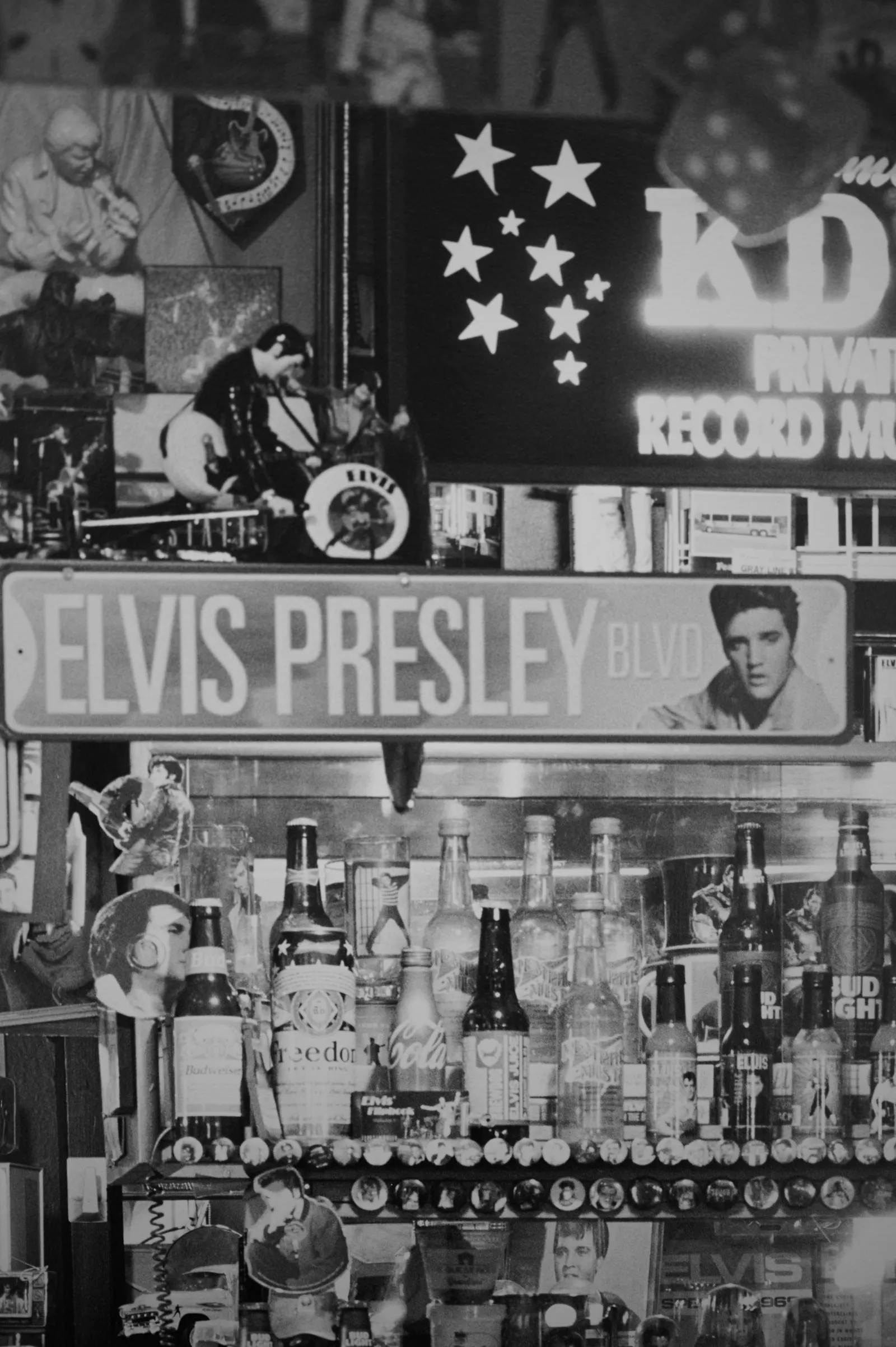
A similar tension animates Culy’s photograph of the sprawling collection of Elvis memorabilia, gathered in such volume that tribute tips into eeriness. The collector is absent; only the accumulation remains. What is it about too much of anything that begins to feel haunted? The image is not simply documentary, nor even really about Elvis. It is about romantic fixation: the private obsession made public, the personal museum as both shrine and exposure. In gothic literature, romance often plays along the line between devotion and destruction. Here, that line runs through a garage in Hāwera.
It takes effort to remain enchanted. Culy's photographs understand this. They return again and again to the fragile threshold where ordinary objects, places and people become charged with other possibilities. What they awaken is not simply the gothic, but the imaginative life itself.
Even the egg. Maybe especially the egg. Crudely marked with graphite stars, it sits quietly among the yoghurt pots and Sistema containers, refusing to announce itself as either joke or symbol. It is simultaneously cosmic object and teenage doodle—a gesture so slight it almost feels absurd, yet somehow succeeds in altering the atmosphere of the entire image. Like so much in Culy's work, the gesture changes almost nothing. Which turns out to be just enough.
But the little girl in the blood-streaked mask could have told you that.