Ayesha Green
The Radical Utopia of the Great Pacific


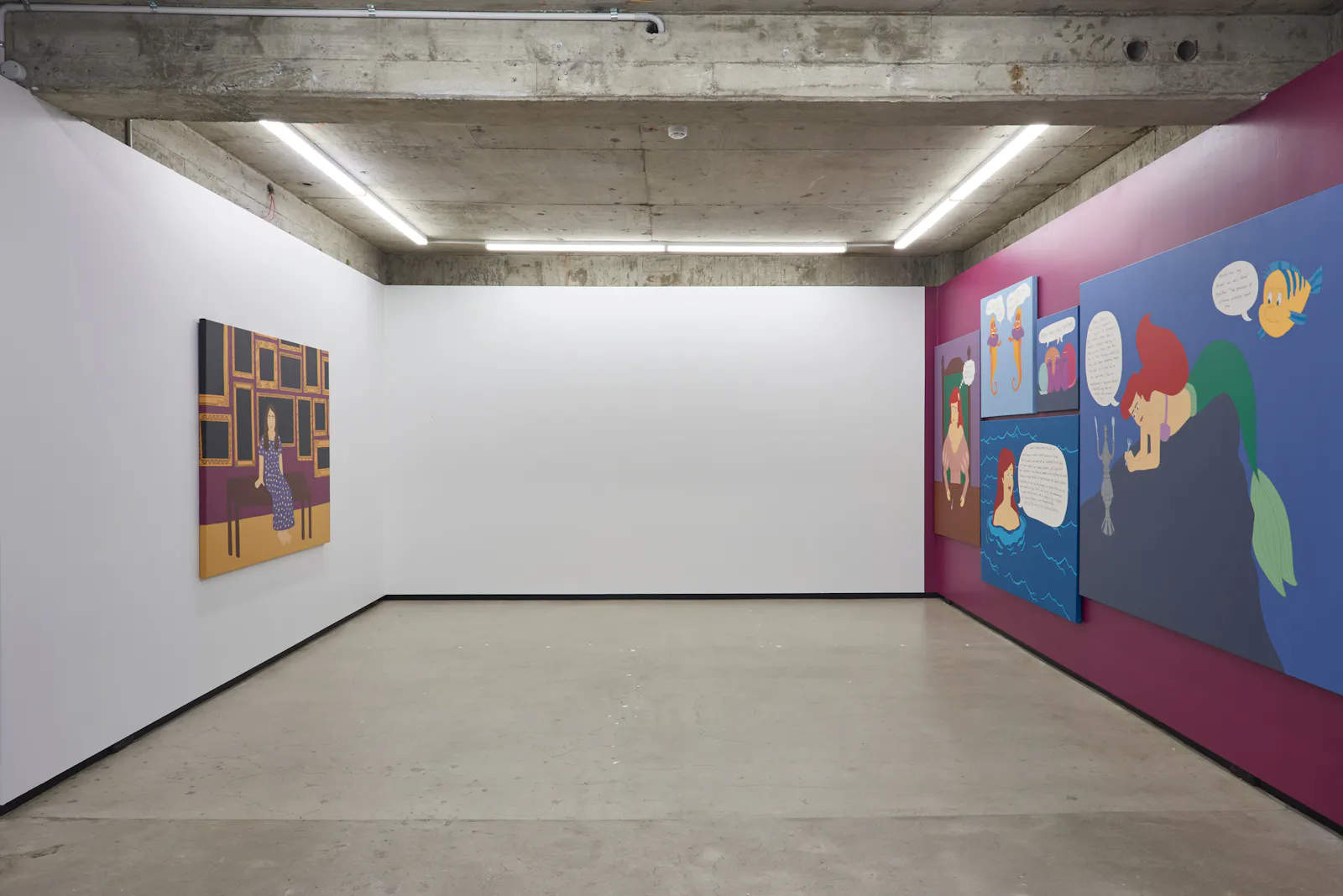
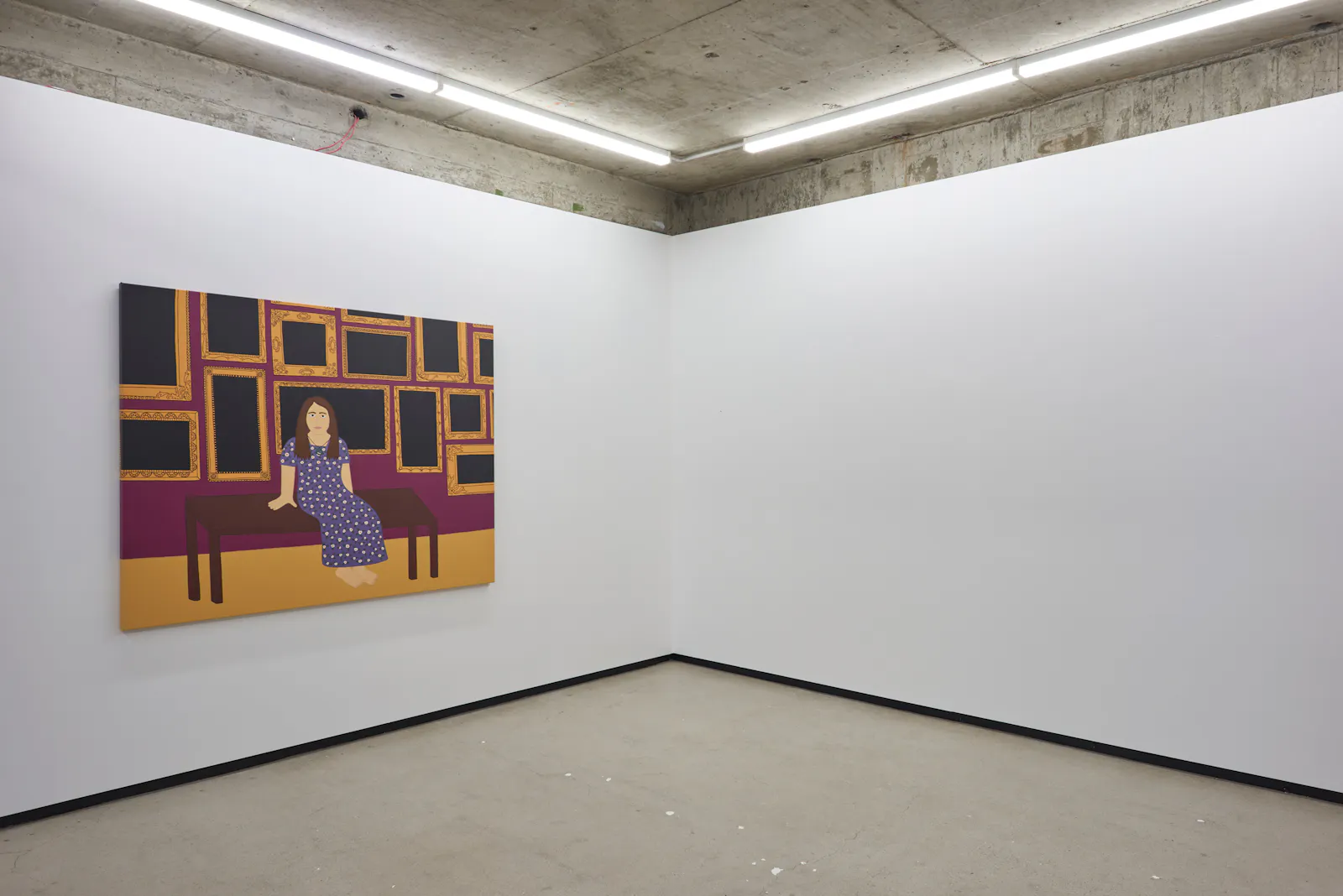
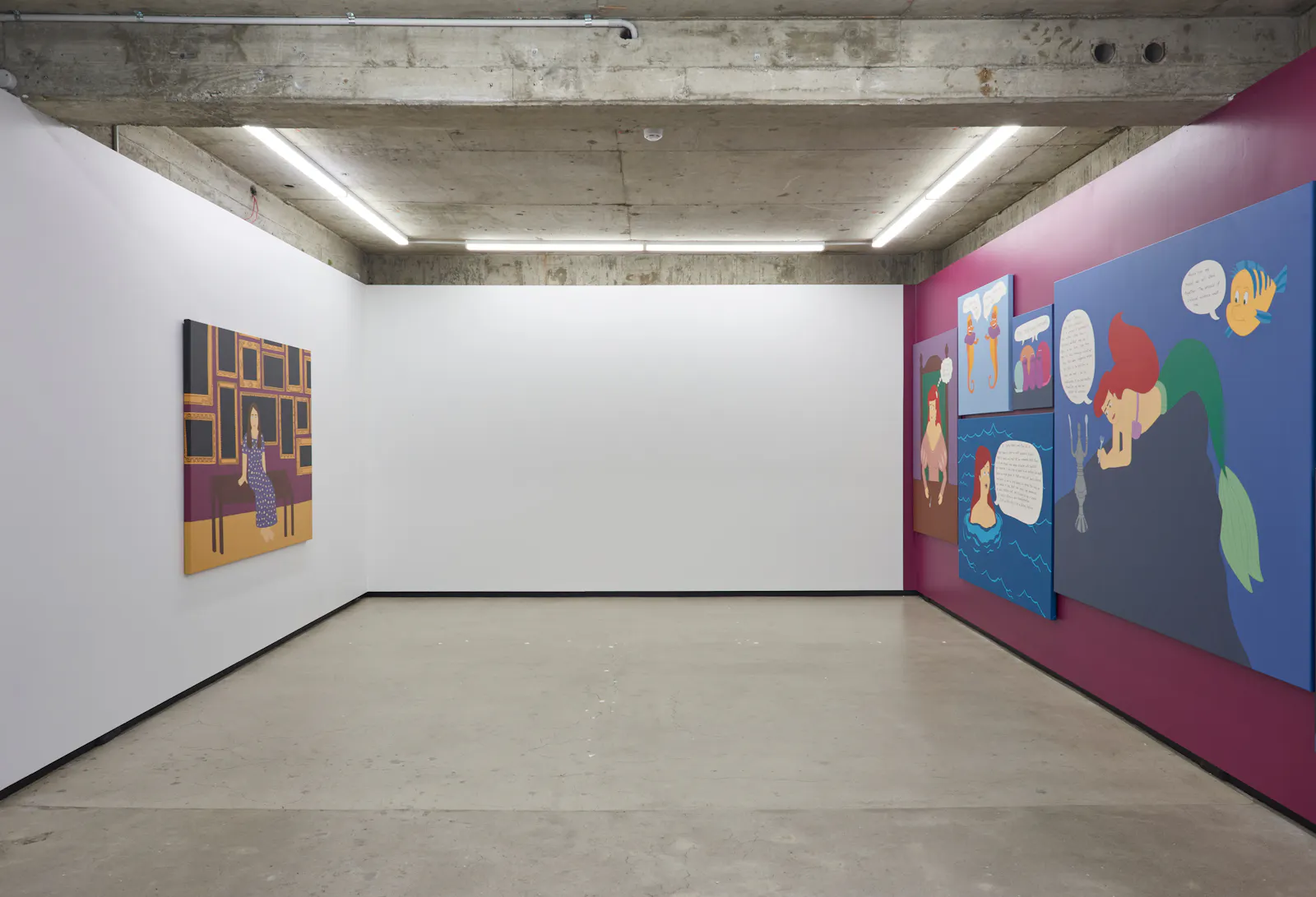
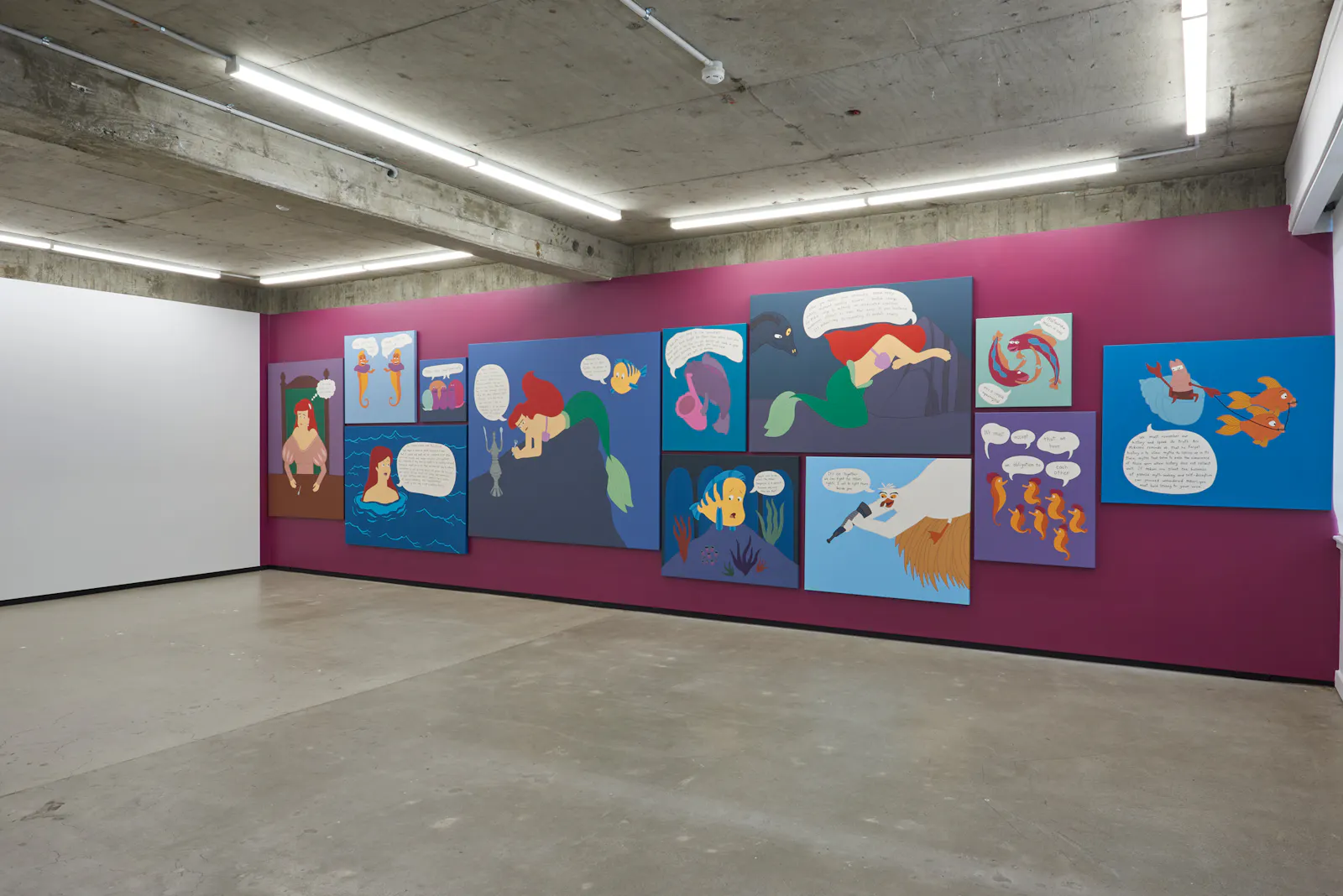
14 March — 6 April
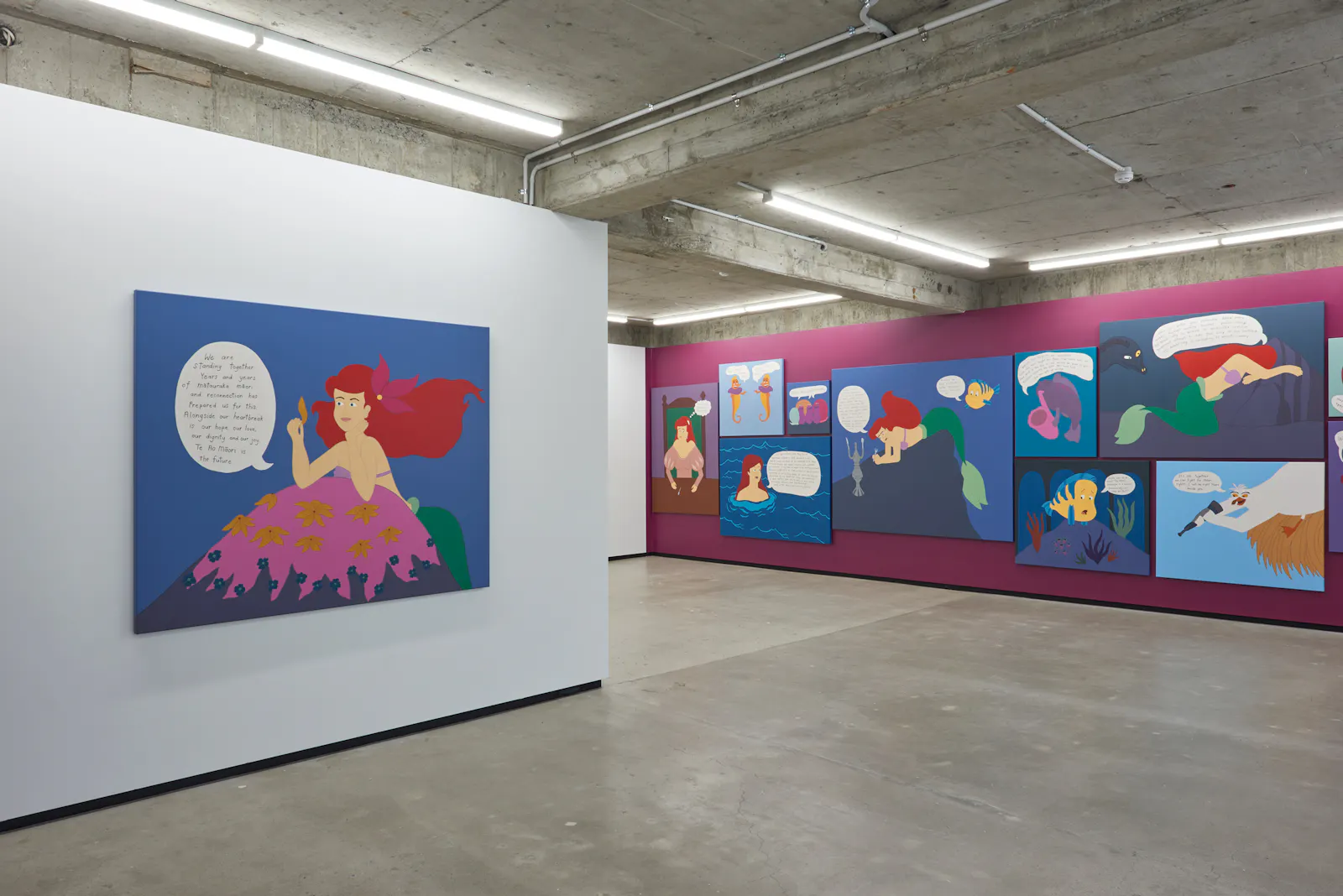
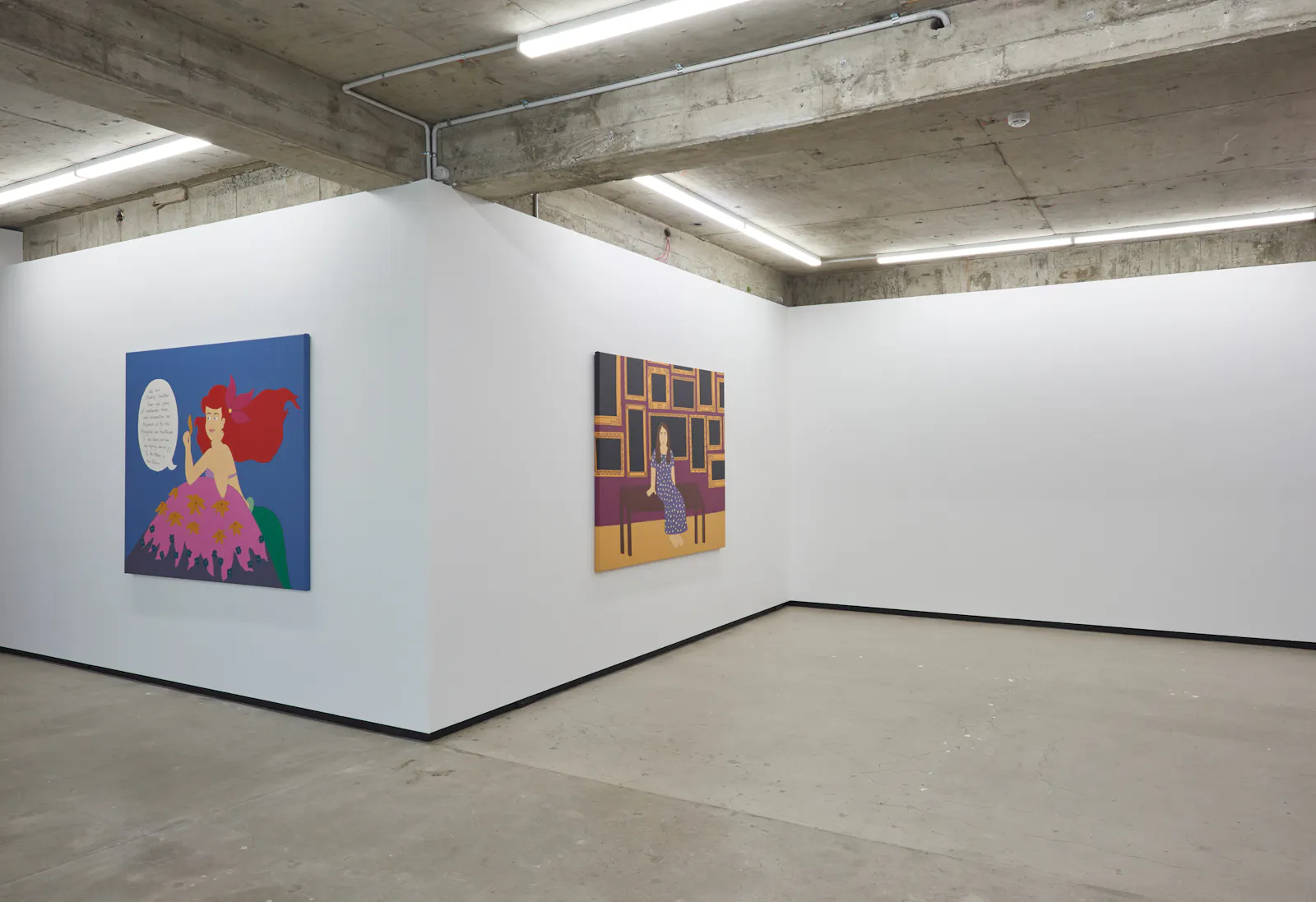
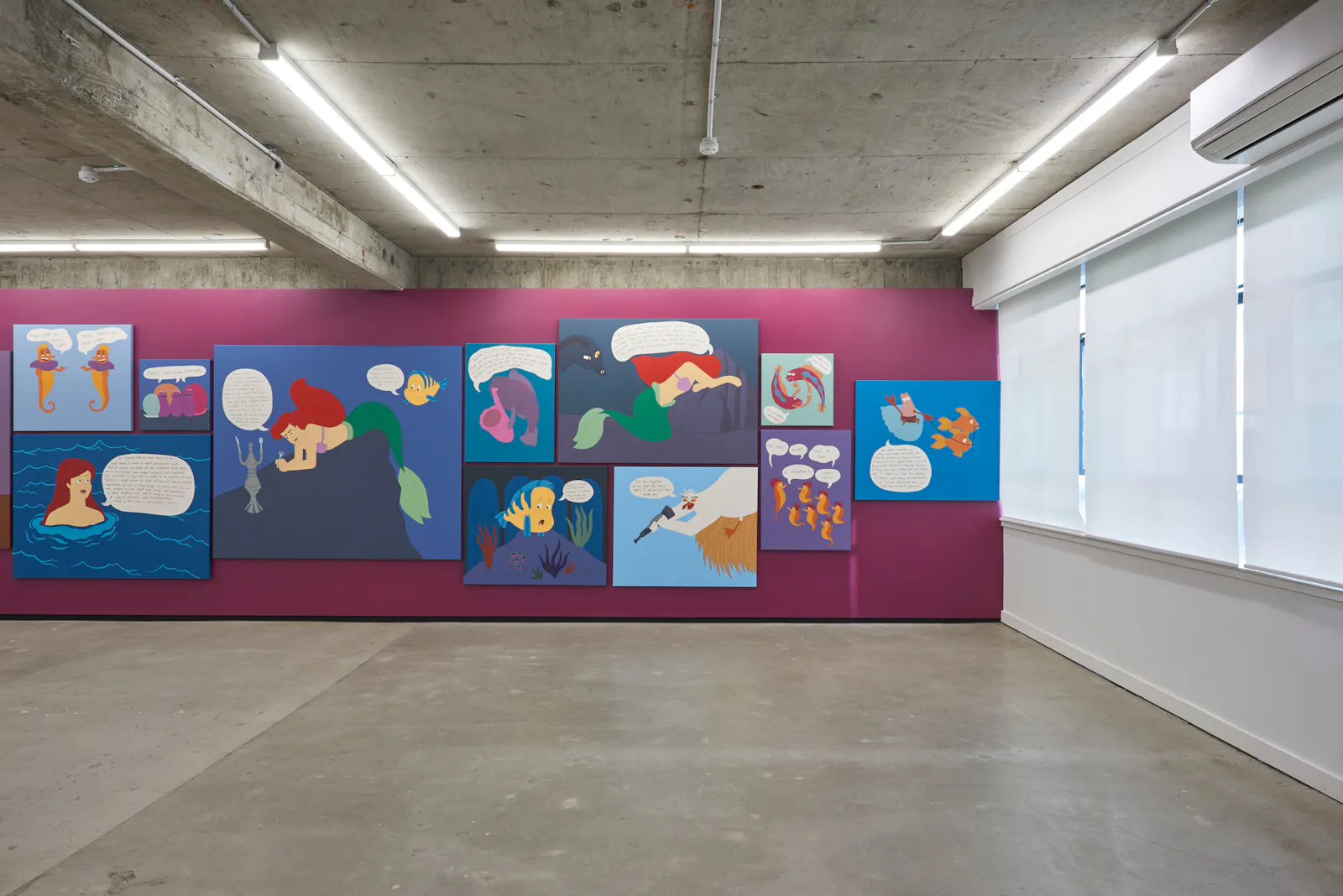
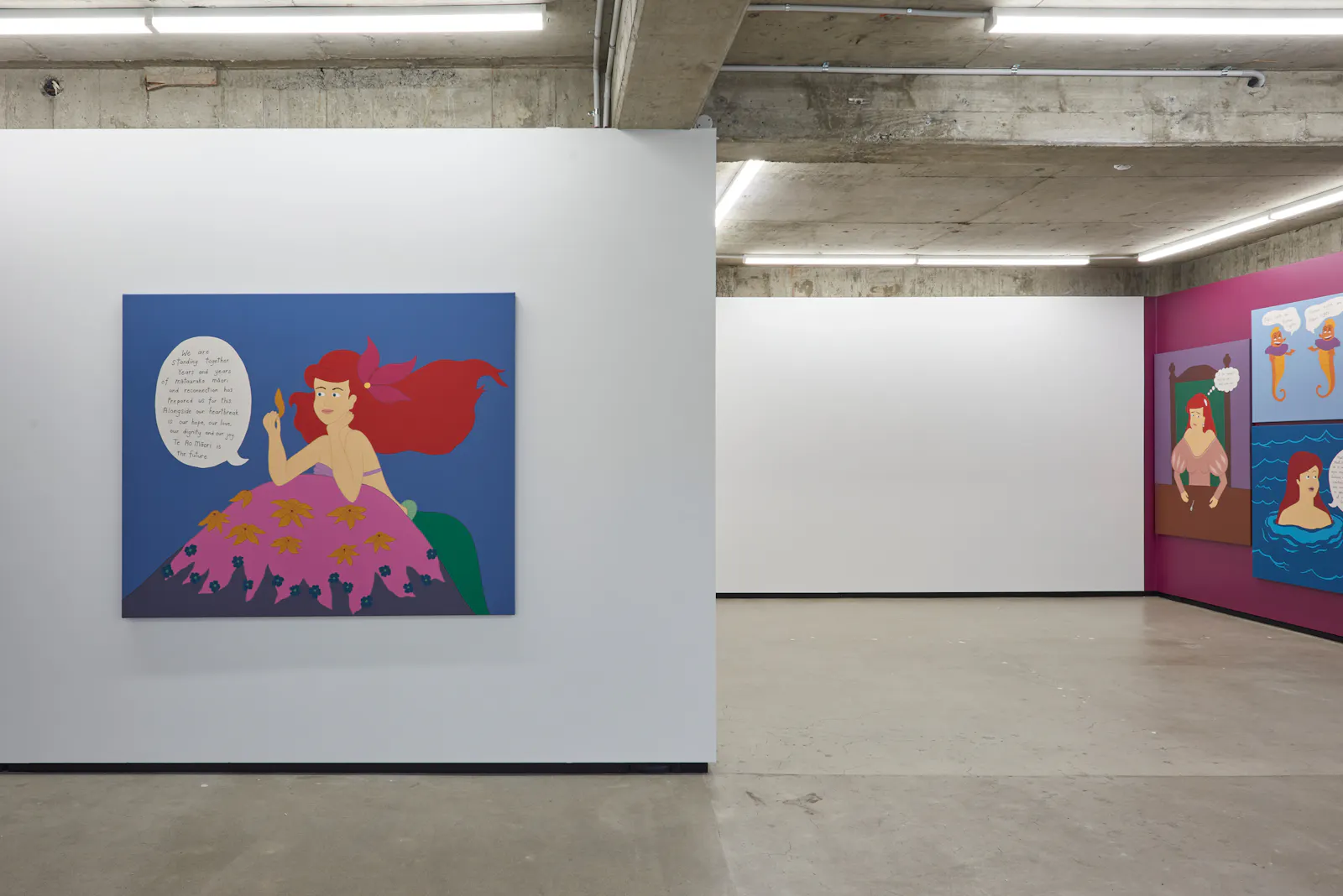
Ayesha Green’s new solo exhibition, The Radical Utopia of the Great Pacific, extends on the artist’s well- known use of copying, or near-copying, as a means of exploring the ways in which power—cultural, economic, and political—is structured and communicated. The exhibition title is a reference to the New Zealand Association, founded in 1837 on the ideas of the charismatic and persuasive Edward Gibbon Wakefield, who zealously promoted the colonisation for New Zealand via ‘private speculation’. The association evolved into the New Zealand Company, the commercial body that founded Wellington.
An important impetus for the exhibition was the recent formation of the National-ACT-New Zealand First coalition government, which threatens serious injury to Te Tiriti o Waitangi, te reo Māori, and Māori at large. In the past, Green has often used older and ‘venerated’ forms of art, including history painting, formal portraiture, and public sculpture, as discursive frameworks. Here, she turns to popular culture, drawing on visual and narrative aspects of the 1989 animated musical film The Little Mermaid—adapted by the omnipresent Walt Disney Company from Hans Christian Andersen’s fairy tale of the same name from 1837— and associating them with ideas from Māori scholarship.
There are noticeable resonances between The Little Mermaid and Māori experiences. The central character, Ariel, calls a vast ocean home. Life-shaking effects flow from her encounter with a foreign, seafaring people. Engaging with their world involves the signing of a dubious contract, which entails the destruction of her voice, the core of her identity, and threatens her sovereignty. Of course, the film is not a perfect fit in symbolic terms, and so Ayesha adapts it, as Disney adapted Andersen’s text, and as she has always done with her source materials. As with previous bodies of work, she pours herself into the characters. They express her attitudes, speak her words.
Forming a coda to The Radical Utopia of the Great Pacific is a large self-portrait showing Ayesha at a museum (perhaps the nearby Museum of New Zealand Te Papa Tongarewa, where works of hers are presently on display). This piece alludes to the wide range of visual domains in which hierarchies, histories, and social priorities are set. Read in conjunction with the other works, which are hung ‘salon style’, it invites visitors to consider the methods we use to recount stories, within public and educational institutions, but also in private spaces, like dealer galleries and homes. Ayesha advocates generosity and accessibility but also frankness and firmness as we contend with issues of vital importance to Māori and tauiwi alike.
A long-form essay from Francis McWhannell contributes to the greater understanding of the exhibition. We encourage you to read the full length essay below.
Once upon a time, Pānia, descendant of the People of the Sea, fell in love with Karetoki, the son of a great chief. She chose to be with Karetoki on land and it was there she gave birth to their son, Moremore. Although her life above ground was happy, each day Pānia could hear her people crying her name, calling her home to the water. One day Pānia could no longer resist the will of her people and swam home to visit them one last time. When she began her journey back to her family above the sea, Pānia’s people, unable to bear the thought of grieving for her again, cast her into a reef so she would lie forever at their side. Pānia never returned to land. Karetoki’s heart was broken.[1]
*
Once upon a time, there was an artist called Ayesha Green. She lived in a mighty archipelago in a vast ocean called Te Moana-nui-a-Kiwa by Māori, the people of the islands, and the Pacific Ocean by Pākehā, the people who came later, and who tended to disrupt any peace they came across. Ayesha, who was of Ngāti Kahungunu ki Heretaunga and Kāi Tahu, was fascinated by images. She made them, as many artists do, and she thought deeply about how they functioned. They told tales—real ones and fake ones, truths and lies. They taught people and deceived them. They were traded a great deal for great sums of money.
Images, Ayesha observed, often served those in control. Likenesses of monarchs and political leaders, for instance, travelled the world like boats on the sea, on canvases and currency, in photographs and engravings, as monuments and souvenirs. They proclaimed the importance of their powerful subjects to the subjects of the powerful. Governments, corporations, and other massive organisations created images too, often with the aim of staking claims to lands, resources, and cultures to which they had no right, and for which they harboured little genuine respect.
Ayesha began to make copies of the images she saw—or not-quite-copies. She would change things here and there to make her works say different things, or to give them distinct attitudes. Sometimes, she would insert herself into a picture, asserting her right, and the right of Māori people more broadly, to be centred rather than marginalised. She often simplified the original images, purging extraneous detail and making her works look a bit like comics or picture book illustrations, to emphasise the dimension of storytelling and education, or re-education, in the original images and in her versions.
She was particularly interested in portraiture and had a knack for revealing things in her sources that might not be obvious to everyone: the curious way in which Queen Elizabeth I’s privilege is both signalled and concealed by luxurious costume, the possessiveness and dominance implied when Joseph Banks wears a kaitaka, the canniness of making Prince Charles, Princess Diana, and baby Prince William into an ordinary family by picturing them on a picnic. She did with her subjects what good portrait-makers do, teasing out the essence of each image portrayed, even when the essence was not obvious, even when the image was doing its darndest to hide it.
In 2015, early on in her career, Ayesha created a painting based on Pānia of the Reef, a statue made of long-lasting bronze that stands on Marine Parade in Ahuriri Napier. Pānia of the Reef echoes another statue, Den lille havfrue, or The Little Mermaid, by Danish artist Edvard Eriksen. The work derives from the fairy tale of the same title by Danish writer Hans Christian Andersen. It has become an icon of Copenhagen, where it was installed by the waterside at Langelinie in 1913. The mermaid sits naked on a large rock, her tail transforming into human legs.
Pānia of the Reef embodies a different woman of the sea, Pānia, who lived off the shore of Ahuriri, and whose story has long been told by Ayesha’s Ngāti Kahungunu tīpuna. Pānia sits on a rock in a similar pose to that of The Little Mermaid, dressed in a piupiu and with a huia feather in her hair. The model was Mei Robin, a whanaunga of Ayesha’s.[2] Mei’s family owned, or cared for, the hei tiki Pānia is shown wearing. The statue was commissioned by the Napier Thirty Thousand Society, a group that advocated the swelling of the population of the city to that number and worked ‘to promote civic pride and to further the development of agriculture, industry, secondary education, transport and tourism in Hawke’s Bay and Napier’.[3]
Ayesha recognised the complex role played by Pānia of the Reef. Unveiled in 1954, it quickly attained its own iconic status. The work has long served Pākehā interests, attracting Pākehā tourists who have stayed in Pākehā accommodation, eaten in Pākehā tea rooms, and bought things from Pākehā shops. It has helped Pākehā in Napier cultivate a sense of belonging. It has been an ambassador for the city, travelling around and beyond Aotearoa, cloned as statuettes, postcards, and keyrings. At the same time, it has been a source of pride for Māori. Mei herself has attested to this. She once commented that it was ‘proudly ours, as Māori’.[4] In honour of her relation, Ayesha called her painting Mei.
Over the years, Ayesha’s works have attracted quite a lot of attention. Public galleries and museums have collected them, bringing them into direct communication with the same sorts of things she recreates. At present, several are on display at the Museum of New Zealand Te Papa Tongarewa. Many of her pictures have entered ‘private collections’. At times, Ayesha has questioned why people choose them, wondering whether her art is telling the right stories or whether the stories are being read correctly. She thinks about how some of her works make her culture, and even her identity, collectable. She hopes that they are circulating in good ways and good networks, to good ends. But she can’t be sure.
*
Once upon a time, there lived in Denmark a writer named Hans Christian Andersen. He wrote many things, but his most famous writings were children’s stories, so-called fairy tales. Among these is ‘Den lille havfrue’, or ‘The Little Mermaid’, first published in Danish in 1837 and in English in 1845. It tells of a young mermaid, one of six daughters of the Sea King, who is curious about the world above the water. One day, she falls in love with a human prince, who is celebrating his birthday on a ship. She saves him from drowning when the vessel is wrecked in a storm.
Wishing to join the prince on land, the little mermaid visits a sea witch and agrees to exchange her voice—which is exceptionally beautiful—for a potion that will give her human legs. She is told that she will be able to walk and dance as gracefully as she swims, but she will be in constant pain. The transformation will be permanent. She may never return to the sea. If she wins the love of the prince, she will gain an immortal soul, such as humans have. If she fails and the prince marries another, she will turn to sea foam, as mermaids do when they die, and will be gone forever.
The prince does not fall in love with the little mermaid. Instead, he chooses to marry a woman whom he erroneously believes to be the one who saved his life during the storm. The little mermaid’s sisters procure from the sea witch a knife that will allow her to become a mermaid once again if she uses it to kill the prince, but she cannot bring herself to do the deed. She dies. Rather than disappear, however, she becomes a ‘daughter of the air’, a being who can gain a soul by performing good deeds or by encountering good children. Here, the tale ends.
The moral and Christian themes within ‘The Little Mermaid’ are obvious enough, but it also explores notions of mutability—or the possibility of radical transformation—and curiosity about the unknown. It is thought by some that the text held a personal significance for Andersen, whose private writings suggest that he was bisexual, or perhaps biromantic. Rictor Norton has suggested that ‘The Little Mermaid’ is an expression of his unrequited love for his friend Edvard Collin, whose decision to marry a woman coincided with the writing of the text.[5]
‘The Little Mermaid’ has been adapted many times and in many different art forms. Among the most famous adaptations is the 1989 animated musical film The Little Mermaid from the Walt Disney Company. For children of the 1990s, The Little Mermaid was a staple of the rainy-day diet, watched again and again until the videocassette began to fail. For many, it is the version of the fairy tale, or at least it was until 2023, when a live-action adaptation was released. But that is another story.
Unsurprisingly, the animated film takes considerable liberties with Andersen’s text. Perhaps most interesting is what happens with the sea witch, called by Disney Ursula. She becomes a wholesale villain, requiring the little mermaid, now called Ariel, to sign a contract prior to her transformation.[6] In exchange for her voice, Ariel will be given legs for three days. If during that time she secures the ‘kiss of true love’ from the prince, now called Eric, she will remain human. If she fails, she will turn back into a mermaid and will—rather alarmingly—‘belong’ to Ursula.
Some elements of Andersen’s tale are exaggerated in the film. For instance, Ariel displays a heightened enthusiasm for the human world, collecting trinkets from sunken ships. (In the original text, her sisters do this.) Other elements are discarded. Gone are the allusions to souls. So is any mention of pain associated with the transformation from mermaid into human. The ending of the story is inevitably altered. Ariel cannot die. She and her prince must live happily ever after.
*
Once upon a time, a Disney executive from America attended a ‘Disney on Ice’ performance.[7] Standing in line in the skating arena, Andy Mooney watched as young girls dressed as their favourite princesses milled about. Their costumes, he noted, had been cobbled together using an array of non-Disney products and materials. Some folks might find that situation charming, but not Andy. Andy saw a problem. No! Andy saw an opportunity—to turn the tendency of children to identify with the princesses they saw on ice and screen into Disney profit. Indeed, to do so was essential, for the good of the company, and to honour its longstanding commitment to identity capitalism.
So Andy developed ‘Disney Princess’, a media franchise centring on a series of female protagonists of Disney films. Today, the list of canonical princesses comprises Snow White, Cinderella, Aurora (that is, Sleeping Beauty), Ariel, Belle, Jasmine, Pocahontas, Mulan, Tiana, Rapunzel, Merida, Moana, and Raya. The franchise licenses these characters to companies or brands, such as Fisher-Price, Hasbro, Lego, and Mattel. The licensees generate an ocean of merchandise: toys, games, clothing, accessories, homeware, stationery, party supplies, and so on.
The princesses are occasionally shown together in imagery, in acknowledgment of their status as part of the same franchise family. Historically, in order to preserve ‘the sanctity of what Mooney called their individual “mythologies”’, they did not make eye contact.[8] Instead, they looked outward or in slightly different directions, as if unaware of one another, or as if there was at play some unspoken enmity, which forced them to be photographed apart and only later edited into community.
In terms of the dates of their film premieres, the princesses span a great period. The earliest, Snow White, was introduced to the world in 1937, the most recent, Raya, in 2021. The childhoods of many people living today have coincided with the debut of a Disney Princess. Countless numbers have grown up under their influence. Such ubiquity is powerful, forging deep nostalgia and shaping intergenerational consumption. Disney’s gradual move from blizzard whiteness to globe-spanning ‘diversity’ is no doubt a reflection of a changing moral landscape, but it also demonstrates the company’s awareness that the more little girls—or little kids—who see themselves in a Disney Princess, the larger the customer base grows.[9]
*
Once upon a time, an Englishman named Edward Gibbon Wakefield developed an interest in colonisation. His interest was serious and developed while he was interned at London’s Newgate Prison for his part in the abduction of a young heiress named Ellen Turner.[10] He arrived there in 1827 and set about reading up on the subject of colonisation. He dreamt of a system underpinned ‘by private speculation’.[11] Land in a given colony would be acquired from the ‘natives’ then sold to monied individuals ‘at some considerable price’.[12] Some of the proceeds of sale would be used to send ‘paupers’ to the colony, creating a ready supply of ‘labourers’ to work the land owned by the ‘capitalists’ at no cost to the British government.[13]
Edward wrote about his ideas and cast around for support, exercising his charisma and powers of persuasion. In the early 1830s, he spoke of recreating ‘a perfect English society in South Australia’.[14] Some of his plans were duly put into practice in that place, but Edward felt that land was being sold too cheaply.[15] He set his sights on New Zealand. In 1837 (the same year that ‘The Little Mermaid’ was first published), the New Zealand Association was formed, with Edward at its core. He dismissed concerns about the effects of colonisation on Māori, citing ‘the inestimable benefit of civilisation’ to them.[16] Promotional materials were printed and artists were called upon to provide visual evidence of the desirability of the archipelago.[17]
The New Zealand Association, supported by a good number of men of influence, sought parliamentary sanction to establish a colony. Opinion was divided. The Spectator and the Colonial Gazette ‘fell into line’, but the Times remained sceptical, referring sarcastically to the ‘moral and political paradise’ and the ‘radical Utopia in the Great Pacific’ touted by the association.[18] Naysaying did nothing to curb the enthusiasm of Wakefield and his chums. In 1838, supporters of the association and an earlier body, the New Zealand Company (which had been established in 1825), formed the New Zealand Colonisation Company. This later became the New Zealand Land Company, also known as the New Zealand Company.
At an informal meeting of stakeholders on 20 March 1839, it was revealed that the British government intended to take control of the sale of land in New Zealand, thus impeding the company’s ability to acquire it cheaply from Māori.[19] The company would need to reach New Zealand and make land purchases before any government expedition arrived. Wakefield memorably remarked, ‘Possess yourselves of the soil and you are secure.’[20] Edward’s brother, William, was duly dispatched to do the possessing.
Hastening towards its goal of ‘systematic colonisation’, the company sold large amounts of land before they had been acquired, and emigrants were scheduled for travel before the ‘settlement’ they expected to arrive in had been established.[21] But William would make things right. On 20 September 1839, he and an advance party entered Te Whanganui-a-Tara, now Wellington Harbour, on board the Tory.[22] Although Edward had complained indignantly of land obtained ‘for a few trinkets and a little gunpowder’ in 1836, his brother soon ‘bought’ an enormous quantity for the company by precisely that method.[23] Immigrants began to arrive in January 1840 on the Aurora and other vessels.
Following a failed attempt at the development of a primary base at Petone (Pito-one), Wellington became the ‘first and principal settlement of the New Zealand Company’.[24] Surveyors ‘measured the various pā and kāinga as if these did not exist, as if the land was vacant’.[25] Further settlements were established: Petre (Whanganui) in 1840, and Nelson (Whakatū) and New Plymouth (Ngāmotu) in 1841.[26] The company firmly opposed the Treaty of Waitangi, which guaranteed Māori their lands, and which ‘appeared to the company very simply as an iron door closing off their right to acquire the greatest possible amount of New Zealand land at the cheapest price’.[27]
There were difficulties. Colonists clashed with Māori, who frequently disputed supposed ‘purchases’ of land, as in the ‘Wairau Incident’ of 1843. The careful balance required to make the system of capitalists and labourers function—in both financial and practical terms—was not achieved. Despite these issues, the company supported the establishment of Dunedin (Ōtepoti) by the Lay Association of the Free Church of Scotland in 1848. That same year, John Robert Godley and Edward founded the Canterbury Association, which was affiliated with the Church of England and oversaw the establishment of Christchurch (Ōtautahi) in 1850.
Before long, the New Zealand Company failed altogether. It ceased operating in 1850 and was dissolved in 1858. Yet the settlements it had helped bring into being remained. More immigrants came and, although many found that things were not as they had imagined they would be, many stayed. They built places to live and pray, of course, but also farms, factories, shops, hotels, banks, and warehouses. The New Zealand empire of commerce swelled, merrily selling to the rich man, poor man, white man, and native all the good things a warehouse can contain.
*
Once upon a time, paintings were popular entertainment. In the 18th century, for instance, crowds would flood to the Summer Exhibition at the Royal Academy in London, and to the Salon of the Académie de peinture et sculpture in Paris. On the walls of galleries, or palaces turned into galleries, works hung in great profusion, jostling for space. Hierarchies mattered, with scale, quality, and genre dictating placement. Until the mid-19th century, ‘history paintings’—paintings depicting real, or purportedly real, histories, and scenes from mythology and the Bible—were deemed highest and accorded the best wall positions, because they traded in moral and spiritual themes.
Great exhibitions were sites of political discourse. Often, artists toed the party line or offered timid messaging. J. M. W. Turner did both with his Snow Storm: Hannibal and His Army Crossing the Alps, presented at the Royal Academy in 1812. By depicting the Carthaginian military leader stymied in his campaign against the Roman Empire by nature or an act of God, Turner suggested that Britain’s foe of the day, Napoleon Bonaparte, was overconfident and under-blessed, sure to fail.
There were more radical moments. Édouard Manet scandalised the Salon of 1865 with his Olympia (1863), which shows a sex worker receiving a client. Modelled on Titian’s Venus of Urbino (1538), which might itself depict a courtesan, the work was provocative due to its ‘indecorous’ subject matter as well as its modern style. Moreover, it was bold. Olympia is in command. She sizes up the hypocritical gentleman visitor to the Salon, wordlessly asking, ‘If I am good enough for you elsewhere, why do I trouble you here?’
Today, we think of art as political but not very popular—or not normally. There are exceptions. In 1985, attendance for a Claude Monet exhibition at Auckland City Art Gallery, now Auckland Art Gallery Toi o Tāmaki, surpassed 175,000. The Robertson Gift, a collection of mostly modern art that recently went on show at the same institution, is drawing large crowds. Aotearoa art seldom receives such attention, but that is surely down to executive decisions as much as audience tastes. At Toi o Tāmaki, the Mackelvie Gallery is permanently set aside for the display of European art. Many of the works are low quality. In other parts of the world, they might be ‘skied’, hung so high as to obscure them. More likely they would not be shown at all.
At Te Papa, a crowd-favourite exhibition draws on European art history in a different way. Ngā Tai Whakarongorua | Encounters comprises a salon-style presentation of portraits of Māori and tauiwi, many dating to the 18th and 19th centuries. The pictures form a great wall of ancestors. Inevitably, the subjects of different works engage little with one another. They remain in their painted realms, held in place by heavy and luxurious frames. Yet a community is implied. It is a comforting gesture—not radical, but perhaps a little utopian. Wherever you find a salon hang, you will learn something about the institution that has done the hanging. You will gain insight into its methods of story- and history-telling, and into its priorities.
*
Once upon a time, a very ordinary man named Christopher Luxon led his political party to victory in the New Zealand national election. No one really knows how. He does not seem to have charmed the people with his charisma, nor impressed them with his knowledge. Unlike some politicians, he does not shine with intelligence or empathy. His grasp of important events, current and past, seems flimsy at best. But maybe that is what people liked about him. Being unremarkable, he did not make them feel small. Or maybe they just wanted a change. New wallpaper for the lounge, to go with the new settee.
National, Christopher’s party, did not win enough votes to govern alone, and so they had to find coalition partners and make some deals. The prospective partners had some pretty clear, pretty bad ideas. For instance, New Zealand First, headed by a man called Winston Peters, really wanted to get rid of Māori names from government departments. The ACT Party, headed by a man called David Seymour, effectively wanted to do away with Te Tiriti o Waitangi, the reo Māori version of the Treaty of Waitangi, which enshrines Māori sovereignty and takes precedence over the English version—a beast all its own. The situation was a bit odd because Winston and David have whakapapa Māori. But all kinds of people can be misguided or jerks.
Christopher does not seem to have cared particularly about Winston and David’s ideas—which are aimed at appealing to folks who have a disdain for Māori and the poor but who deeply resent being called racist or classist. Perhaps he did not care because National does not much care for Māori and the poor, as evidenced by some of its own policies, like halting extra pay for government employees fluent in te reo.[28] Perhaps it was because National knows that it might one day pick up supporters from the coalition partners, if it plays its hand right. Perhaps it was because National is more concerned about cabinet positions than divisive messaging. Anyway, the deals were made. The coalition was formed.
Many people were worried about Christopher, Winston, David, and their various plots. Māori especially jumped into action. In December 2023, Ngāi Te Rangi Settlement Trust filed for an urgent Waitangi Tribunal hearing, maintaining that the coalition was breaching Article 2 of the Treaty by failing to protect te reo Māori.[29] That same month, advocates of Te Tiriti painted over the English version on display at Te Papa, protesting the museum’s approach to sharing the document’s histories. Kīngi Tūheitia Pōtatau Te Wherowhero VII called a Hui-ā-Motu, a nationwide meeting, at Tūrangawaewae Marae in January 2024. Countless people travelled to Waitangi the following month to demonstrate and to share ideas.
In her studio in Wellington, Ayesha Green began to think about how she could respond, and promote change. She thought about Māori scholars like Ani Mikaere and the late Moana Jackson, whose kōrero shapes her ideas and positions, and is always lucid, generous, and accessible. She thought about the people with whom she herself needed to communicate, people who might not seek out Mikaere or Jackson’s work but would seek out hers. She thought of visual analogues for their approach to communication, and landed on the animated fairy tale, a form that conveys well-defined morals and trades in empathy, practically demanding viewers to project themselves into the story.
We should not be surprised that she chose to focus in particular on The Little Mermaid. Ariel is for several reasons an apt vehicle for discussions of Māori experiences. She is someone for whom a vast ocean is home. She encounters a foreign, seafaring people with life-shaking effects. Her engagement with their world involves the signing of a dubious document that entails the destruction of her voice—the core of her identity—and threatens her sovereignty. Of course, the film is not a perfect fit for Ayesha’s purposes, and so she has altered things, as Disney altered Hans Christian Andersen’s text, and as she has always altered her source materials. She pours herself into the characters. They express her attitudes, speak her words.
Ayesha harbours a degree of wariness about using a mermaid and attendant sea creatures to explore Māori ideas and values, being cognisant of the long history of associating indigenous people and people of colour with something other or less than human.[30] At the same time, by turning to cartoon characters as avatars, she is able to remove Māori bodies from commercial circulation. It is not wholly clear how meaningful it is to infiltrate an empire of commerce. We might never know. But there is considerable power in turning a Disney Princess into an advocate of indigenous sovereignty, especially in the present moment, given the Walt Disney Company’s deafening silence in response to the thousands of children killed in Gaza.
The End.
[1] Adapted from Ayesha Green, For Karetoki, Window Gallery, University of Auckland, 2015, https://windowgallery.co.nz/exhibitions/for-karetoki.
[2] She is Ayesha’s nana’s cousin.
[3] ‘Napier’s Development’, Napier City Council Te Kaunihera o Ahuriri, 2024, https://www.napier.govt.nz/napier/about/history/napier-development/.
[4] Green, For Karetoki.
[5] Rictor Norton, ‘A Fairy Tale: The Gay Love Letters of Hans Christian Andersen’, Gay History and Literature, 1998, https://rictornorton.co.uk/andersen.htm.
[6] Ursula’s appearance is based on the drag queen Divine, and—like so many Disney villains—she has become something of a queer icon. Tom Smyth, ‘The Little Known Drag Origins of The Little Mermaid’s Ursula, Vogue, 24 May 2023, https://www.vogue.com/article/ursula-little-mermaid-drag.
[7] Peggy Orenstein, ‘What’s Wrong With Cinderella?’, New York Times, 24 December 2006.
[8] Ibid. The situation appears to have relaxed somewhat over time.
[9] It no doubt goes without saying that Disney seems pretty committed to the gender binary at present.
[10] Patricia Burns, Fatal Success: A History of the New Zealand Company (Tāmaki Makaurau: Heinemann Reed, 1989), 23.
[11] Ibid. 29.
[12] Ibid.
[13] Ibid., 29, 102.
[14] Ibid., 39.
[15] Ibid., 39–41.
[16] Ibid., 43.
[17] Ibid., 47.
[18] Ibid., 61.
[19] Ibid., 11–13.
[20] Ibid., 14.
[21] Ibid.,102.
[22] Ibid., 114.
[23] Ibid., 111.
[24] Ibid., 131–36, 140.
[25] Ibid., 151.
[26] New Plymouth was established via the Plymouth Company.
[27] Ibid., 154.
[28] Phil Pennington, ‘Te reo Māori: Govt seeks to halt extra pay for public servants fluent in the language’, RNZ, 6 December 2023, https://www.rnz.co.nz/news/political/504003/te-reo-maori-govt-seeks-to-halt-extra-pay-for-public-servants-fluent-in-the-language.
[29] ‘Iwi files for urgent tribunal hearing on government’s te reo Māori, Treaty of Waitangi policies’, RNZ, 12 December 2023āori
[30] Disney’s Dumbo (1941) features crows that obviously mock Black Americans; their leader is even called Jim Crow.