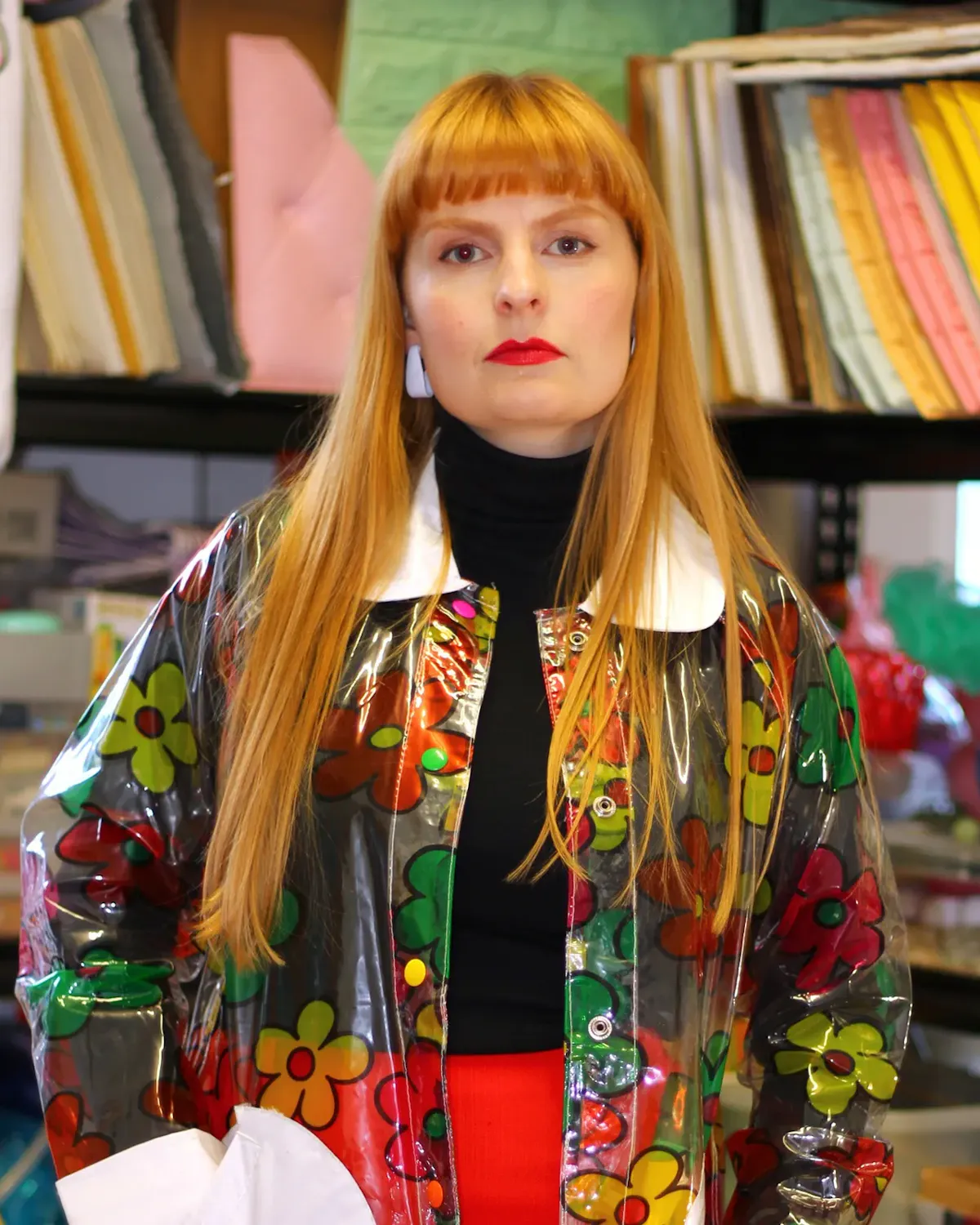
Emily Hartley-Skudder
Petite Spa, Aotearoa Art Fair 2025
1 — 4 April
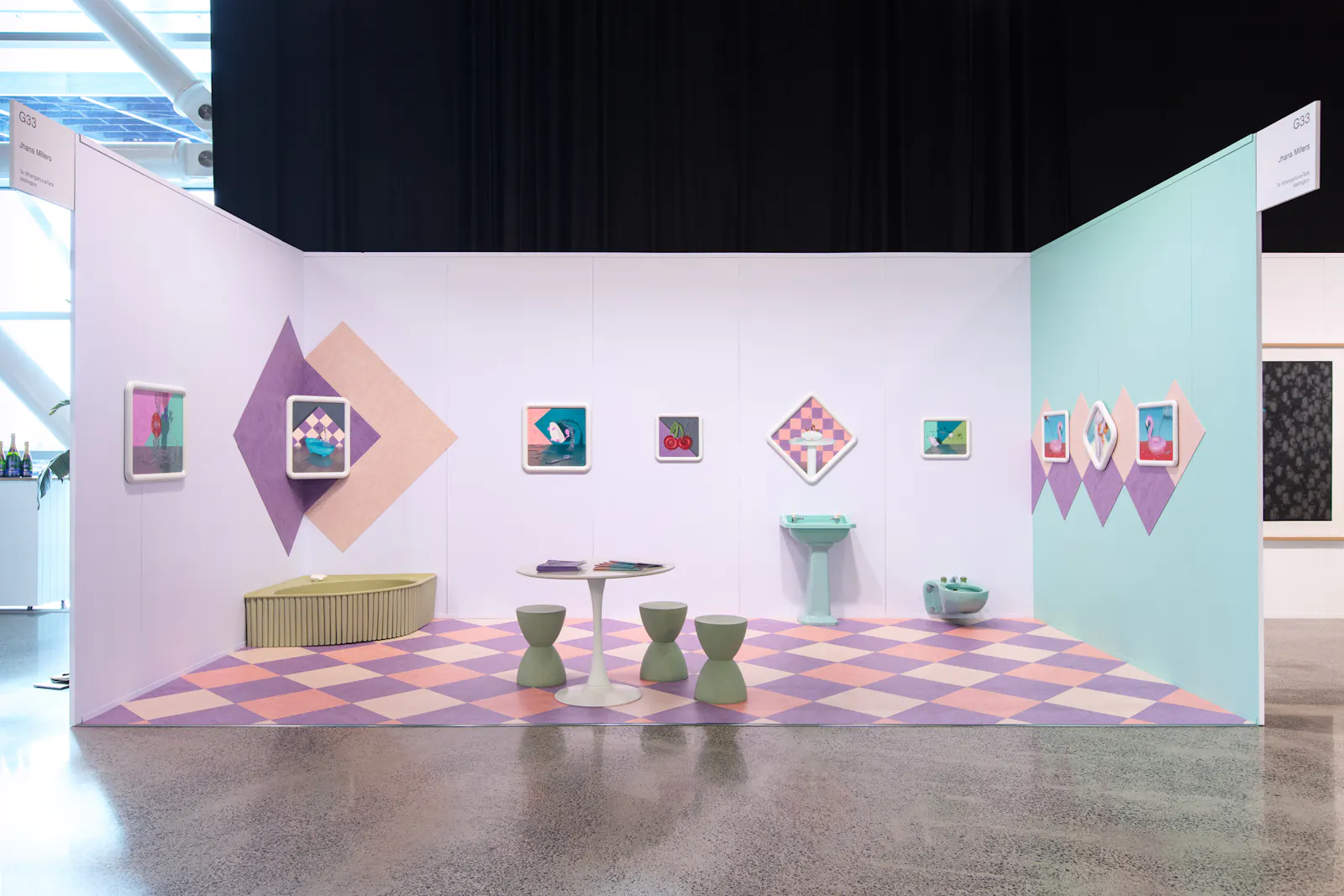
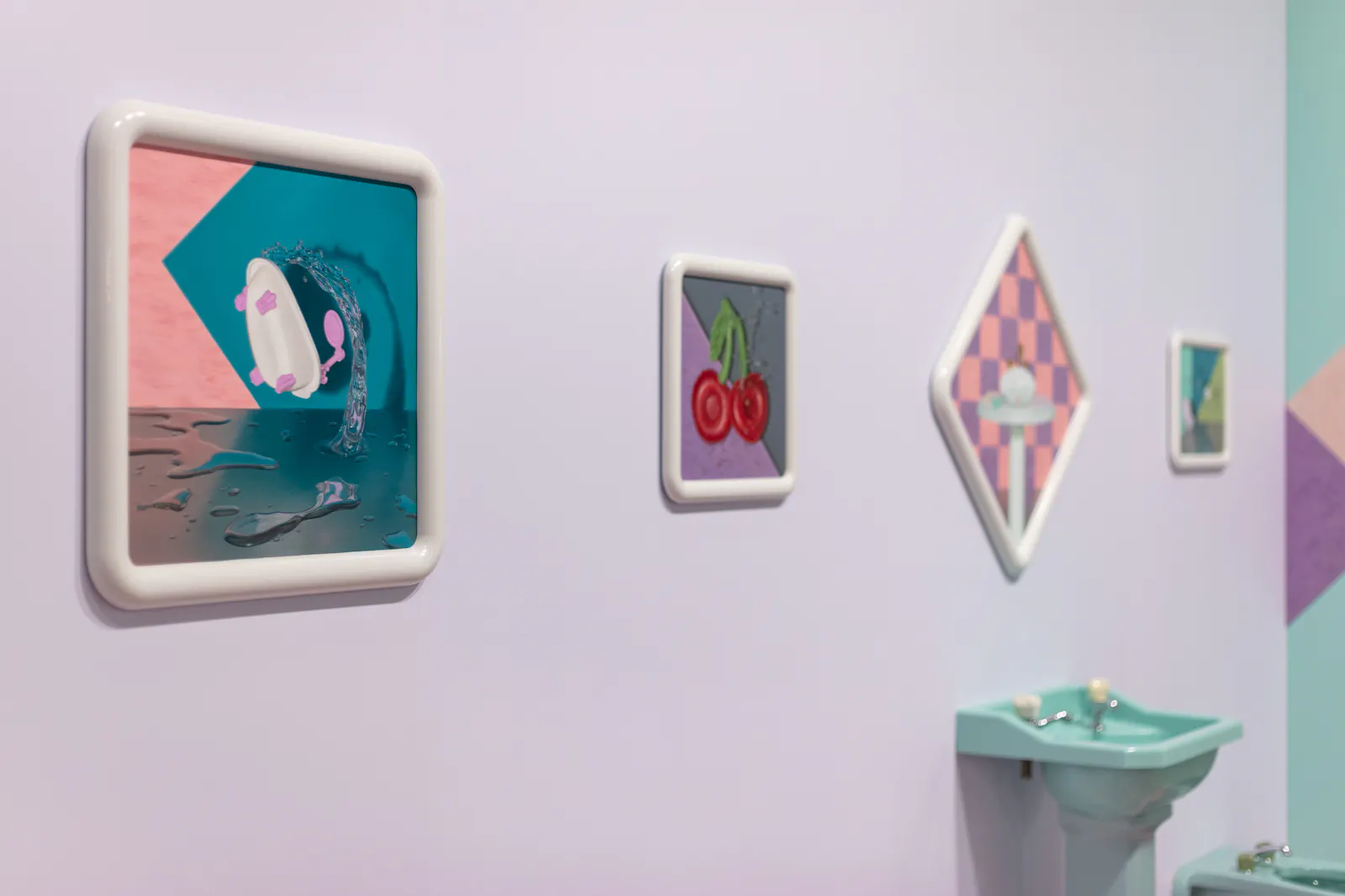
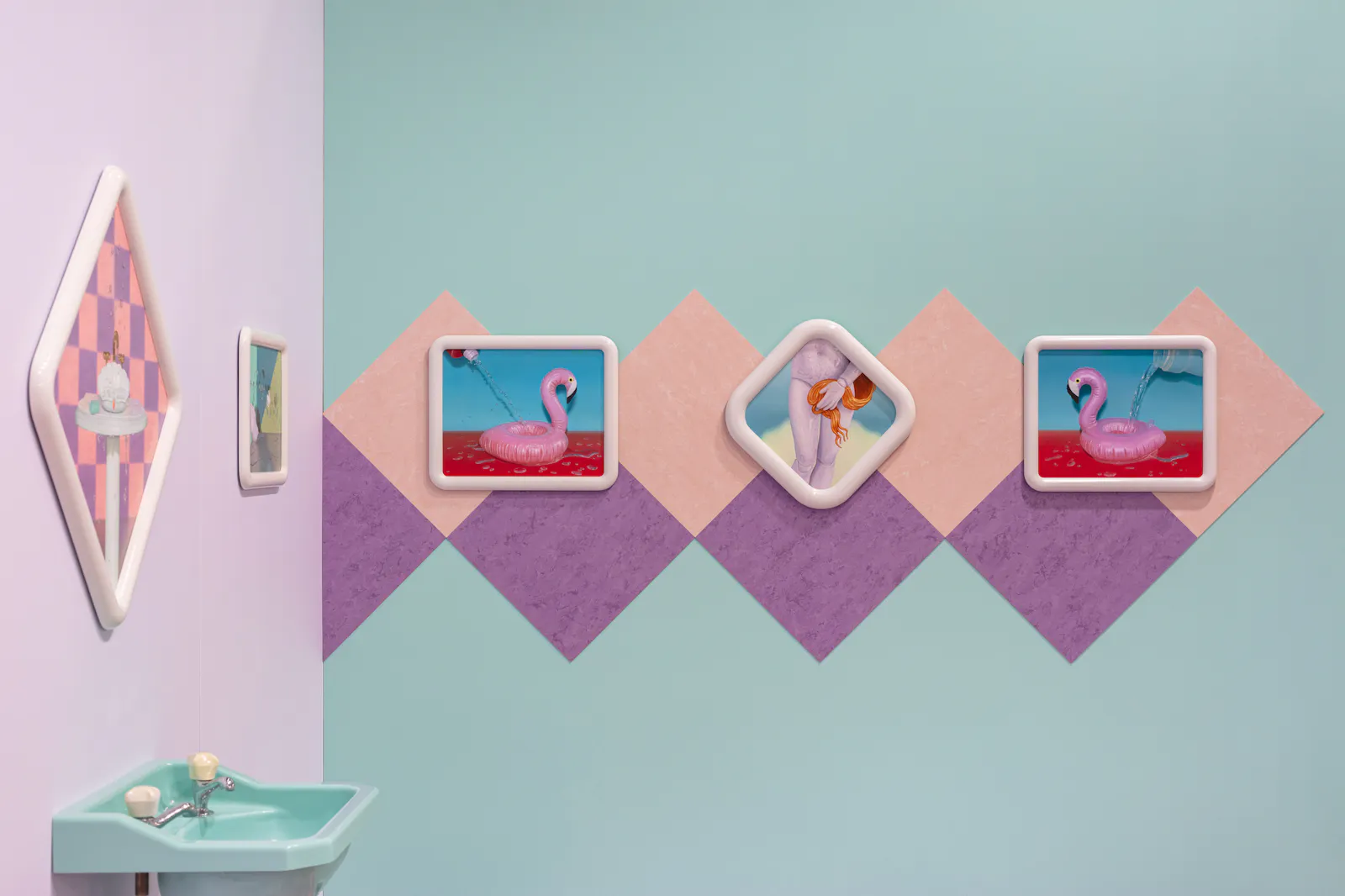
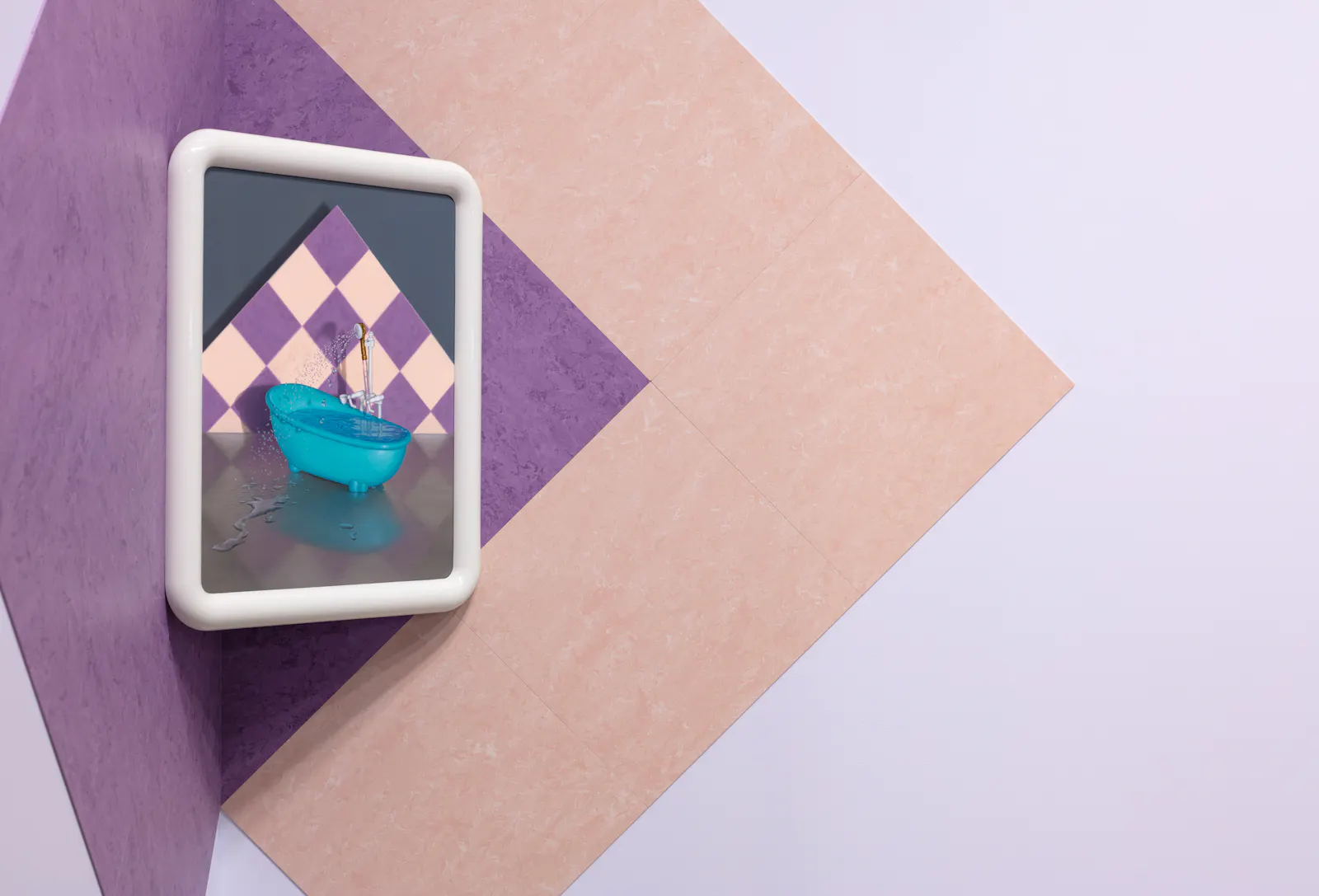
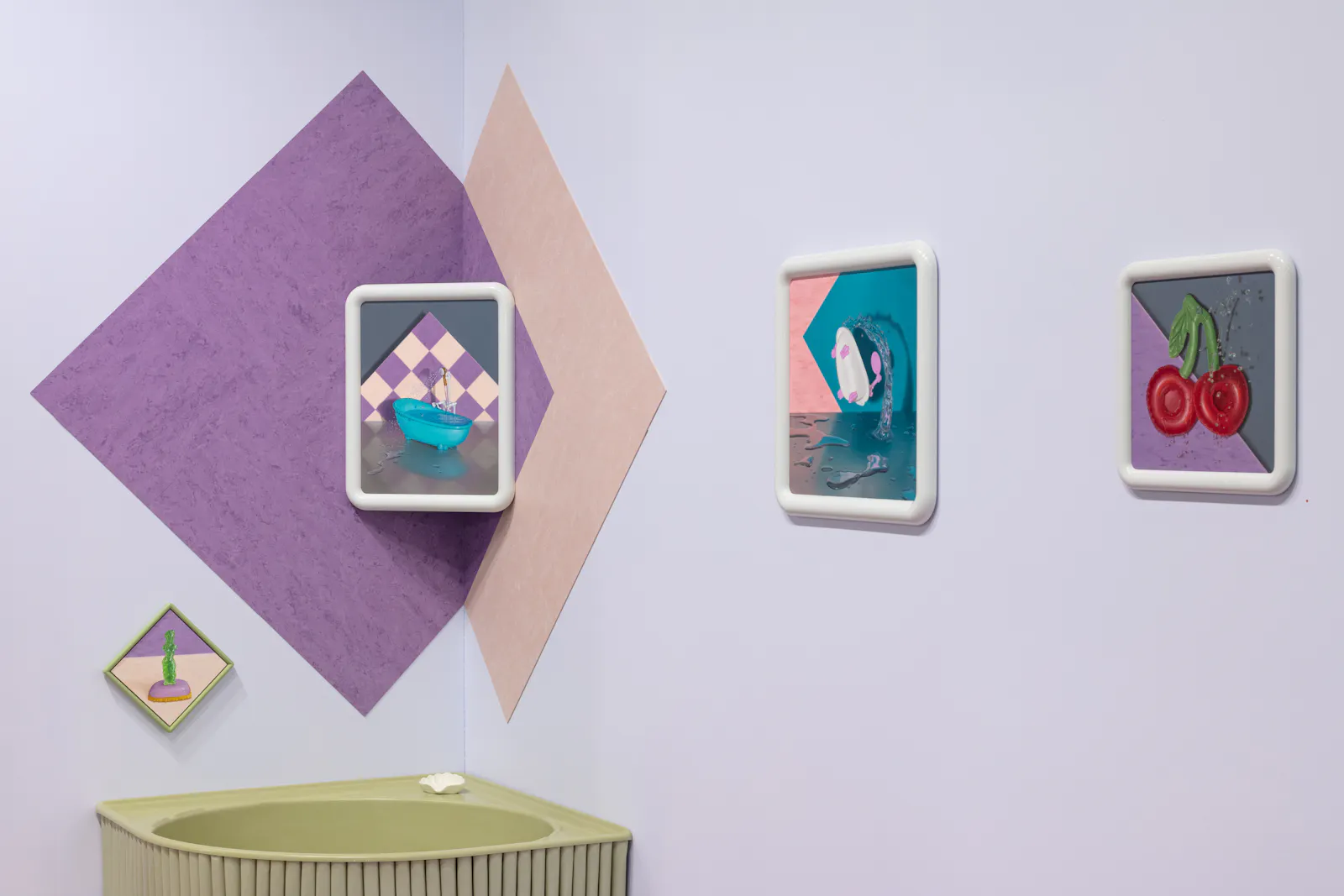
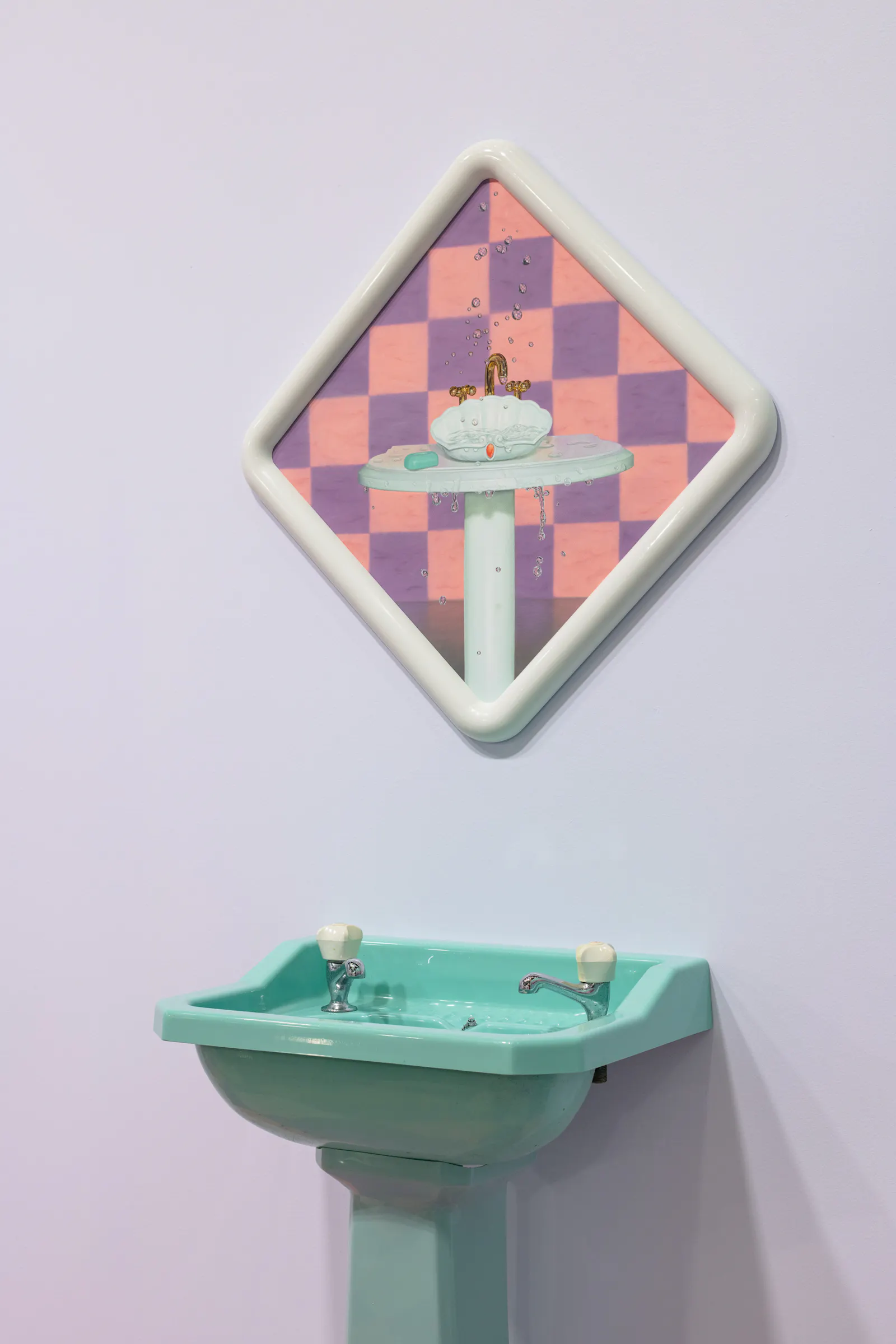
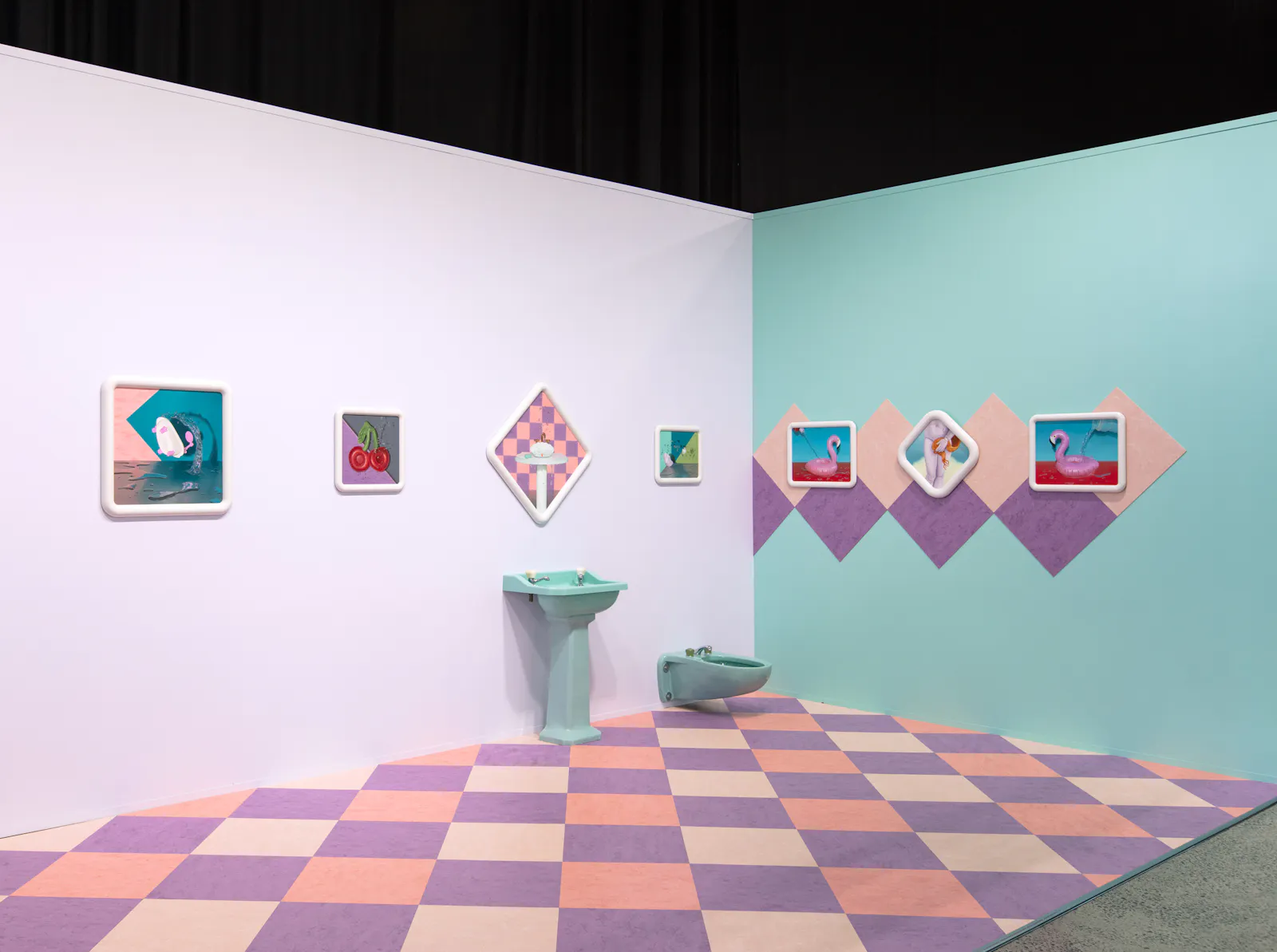
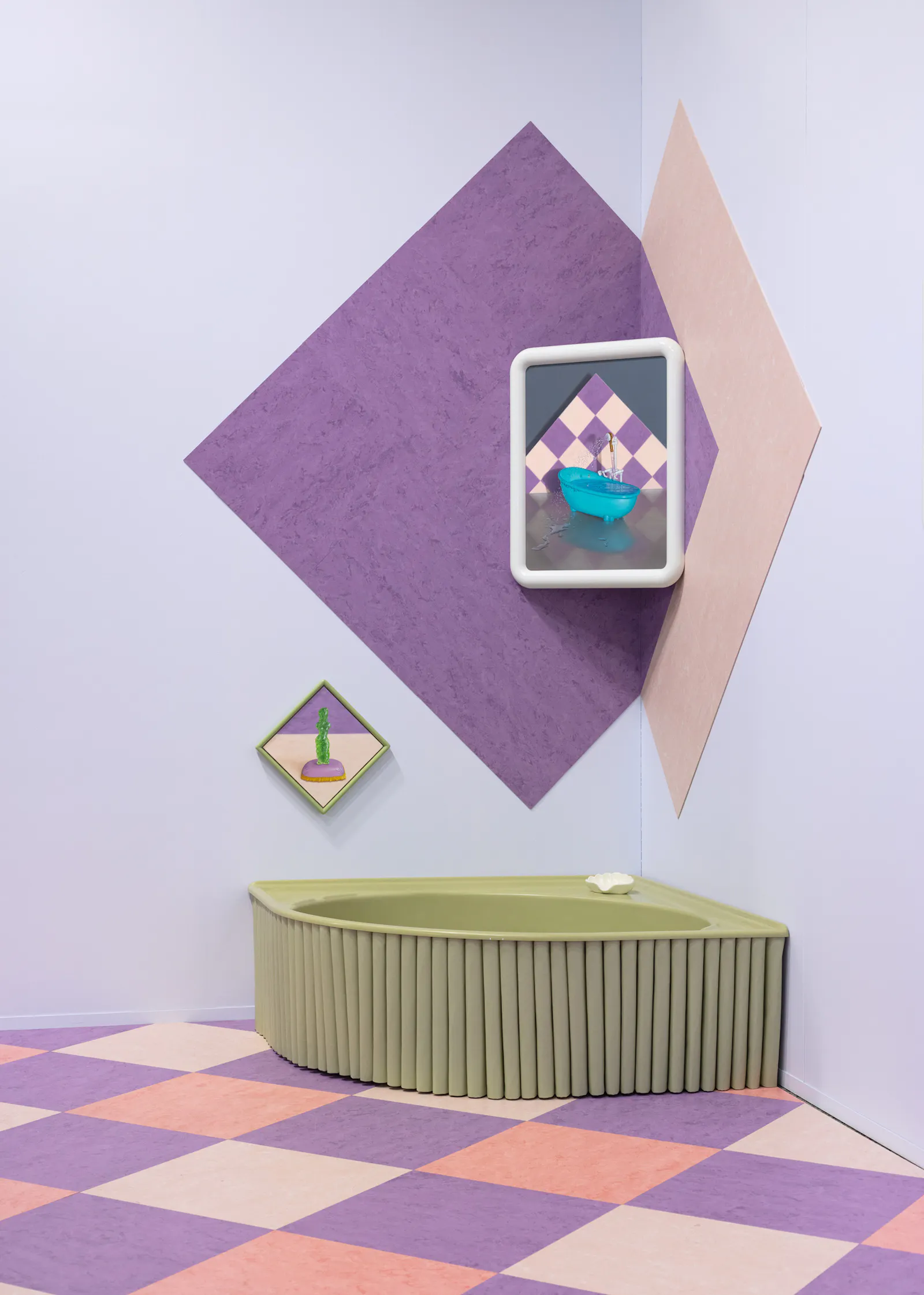
For the Aotearoa Art Fair 2025, Jhana Millers presents Petite Spa, a solo exhibition by Hartley-Skudder. The booth will become a dreamlike bathroom showroom: a rogue bidet, avocado shub, and pink-and- purple lino meet a suite of exquisite oil paintings. Hartley-Skudder’s chosen subjects have shrunk back down to a diminutive scale, captured mid-splash with high-speed flash photography and then made into paintings. Bathtubs fly, pool inflatables hover, and sinks fill from the sky.
These works riff on staged sets and advertising tropes, creating a surreal theatre of cleanliness, control, and excess. Named after a brand of single-use motel toiletries, Petite Spa invites us to reimagine our relationship with the domestic space, everyday ritual, and the commodification of care. Step inside—your bathroom will never look the same.
An essay by Megan Dunn accompanies the show and can be read below.
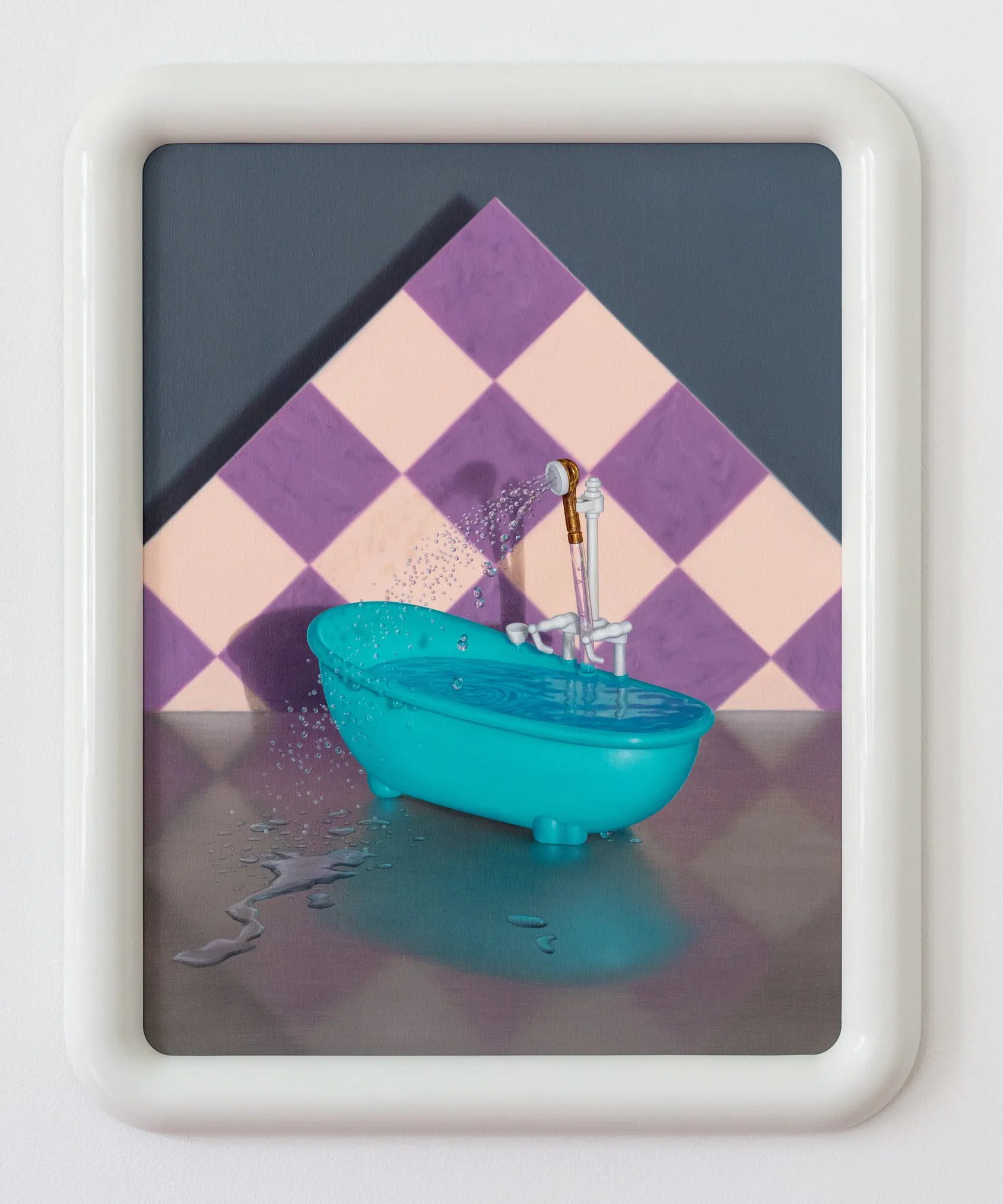
Electric Spray Tub, 2025
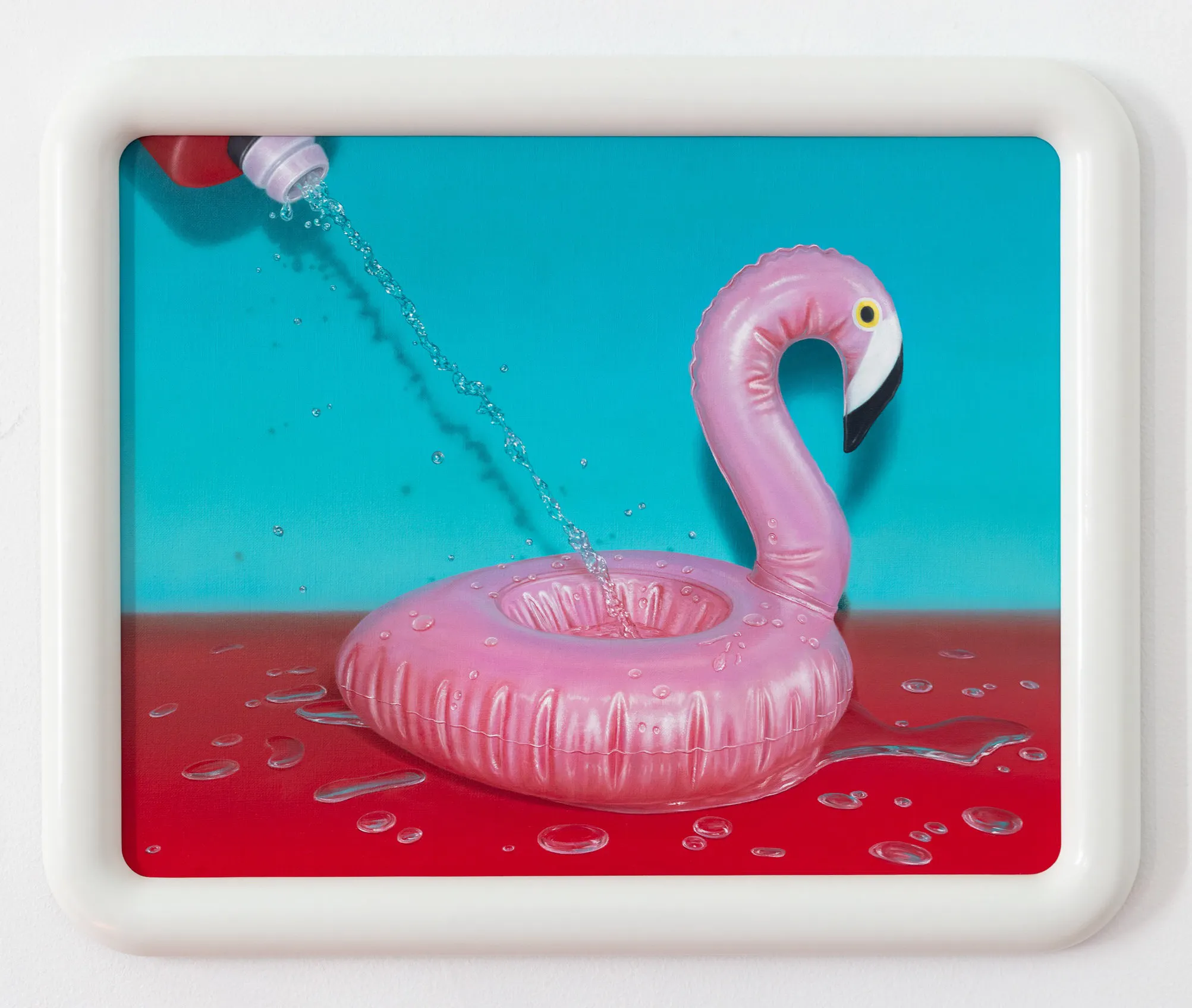
Flamingo Squirt, 2025
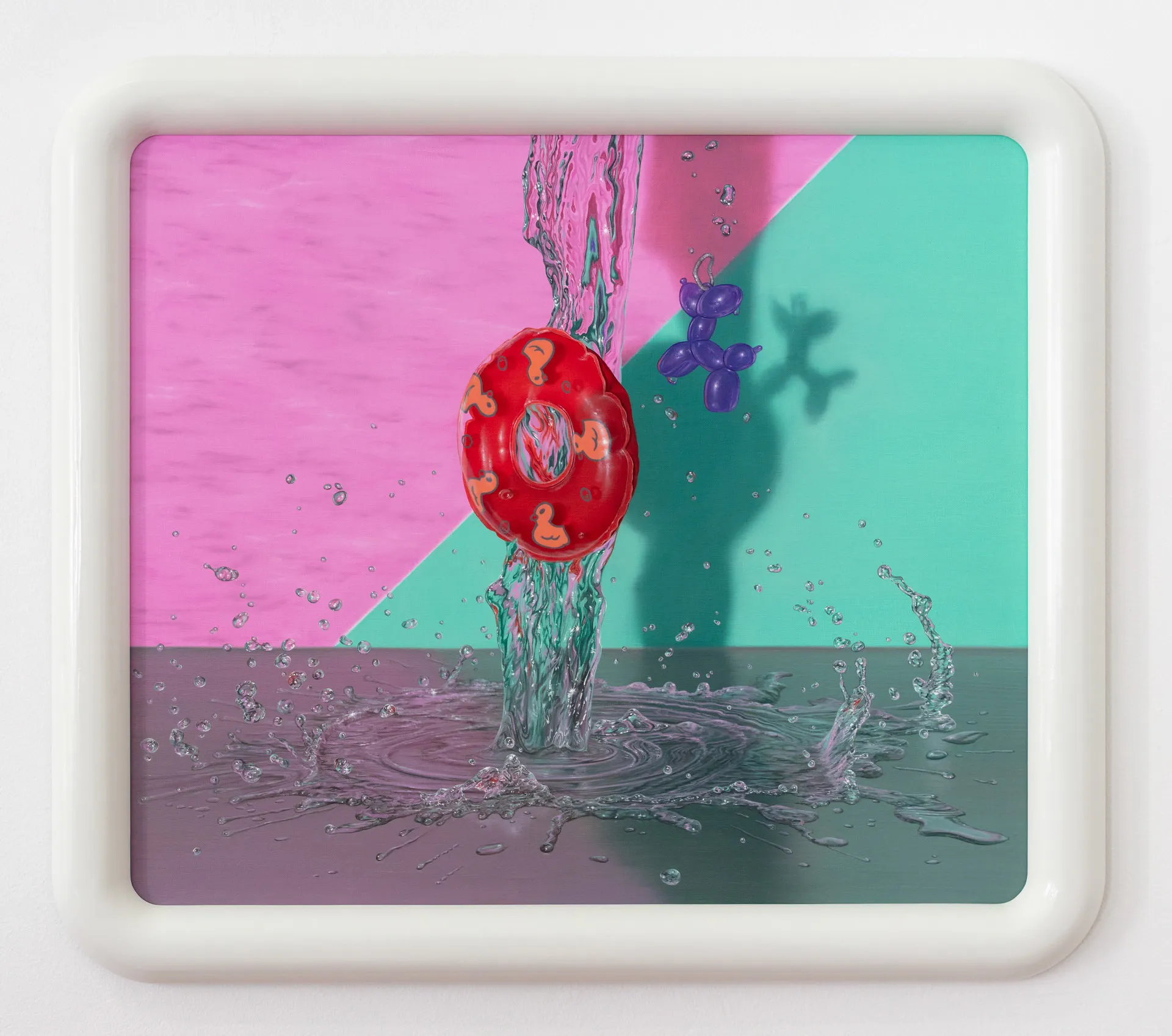
Deluge Zone, 2025
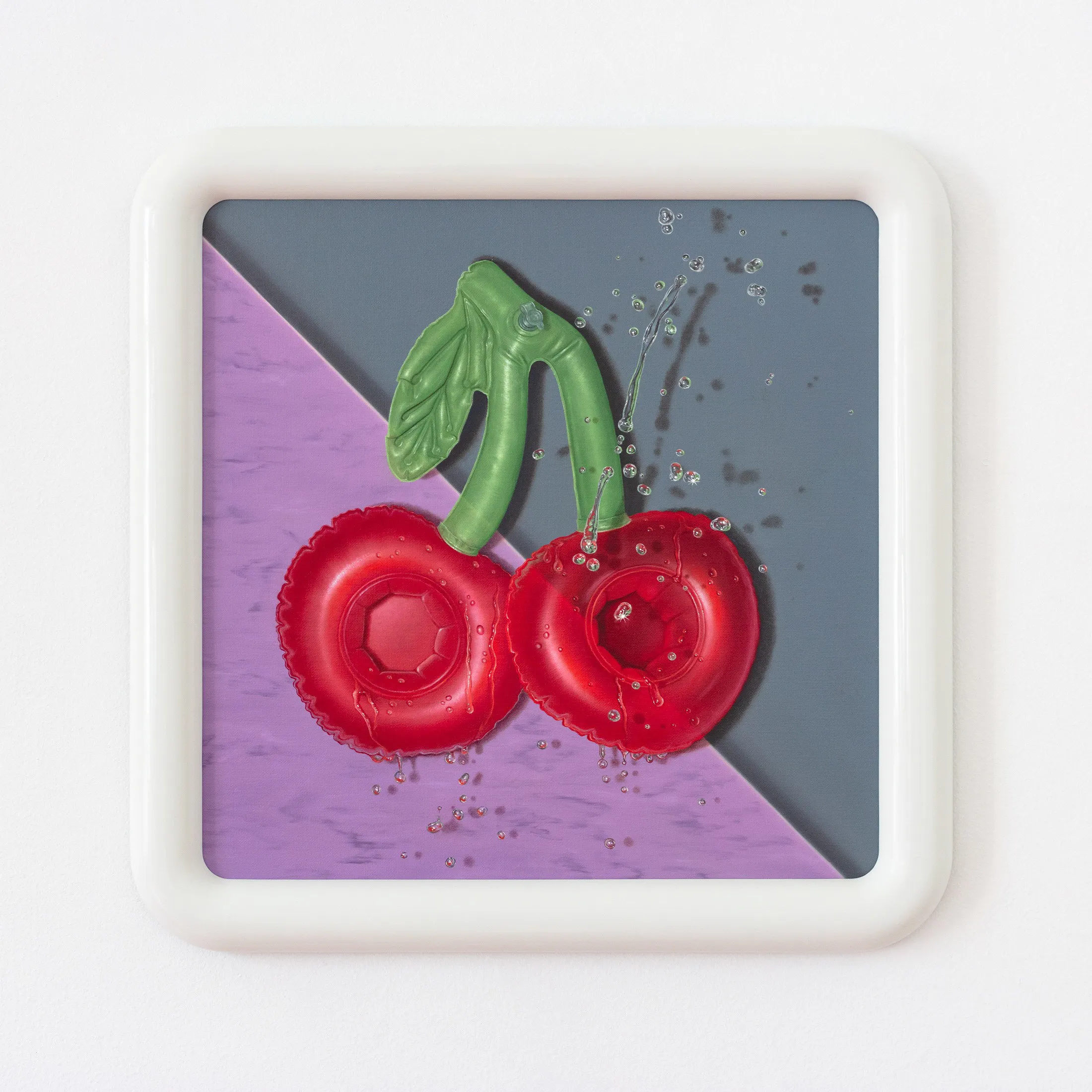
Lucky Fruit Machine, 2025
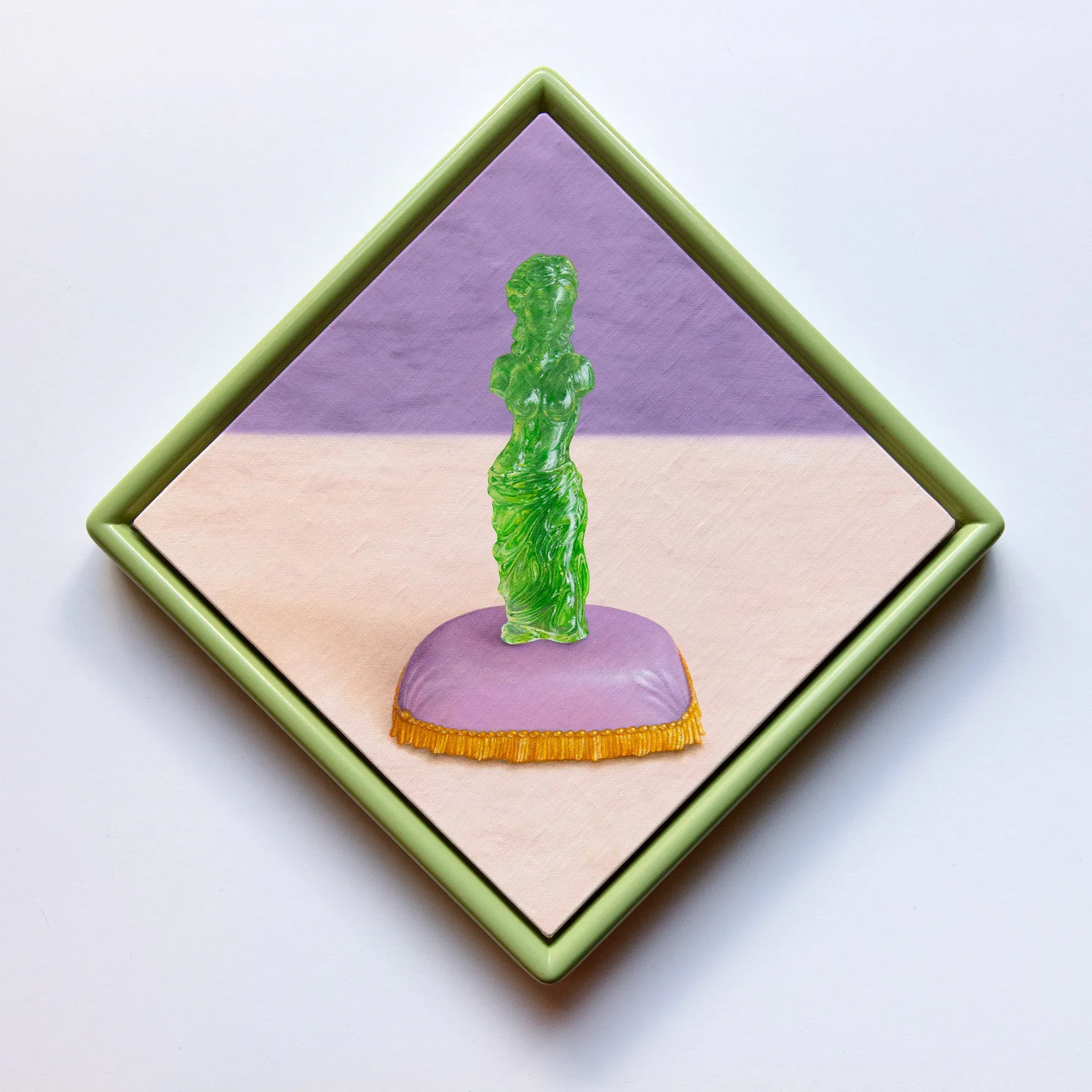
Gummi Venus, 2024
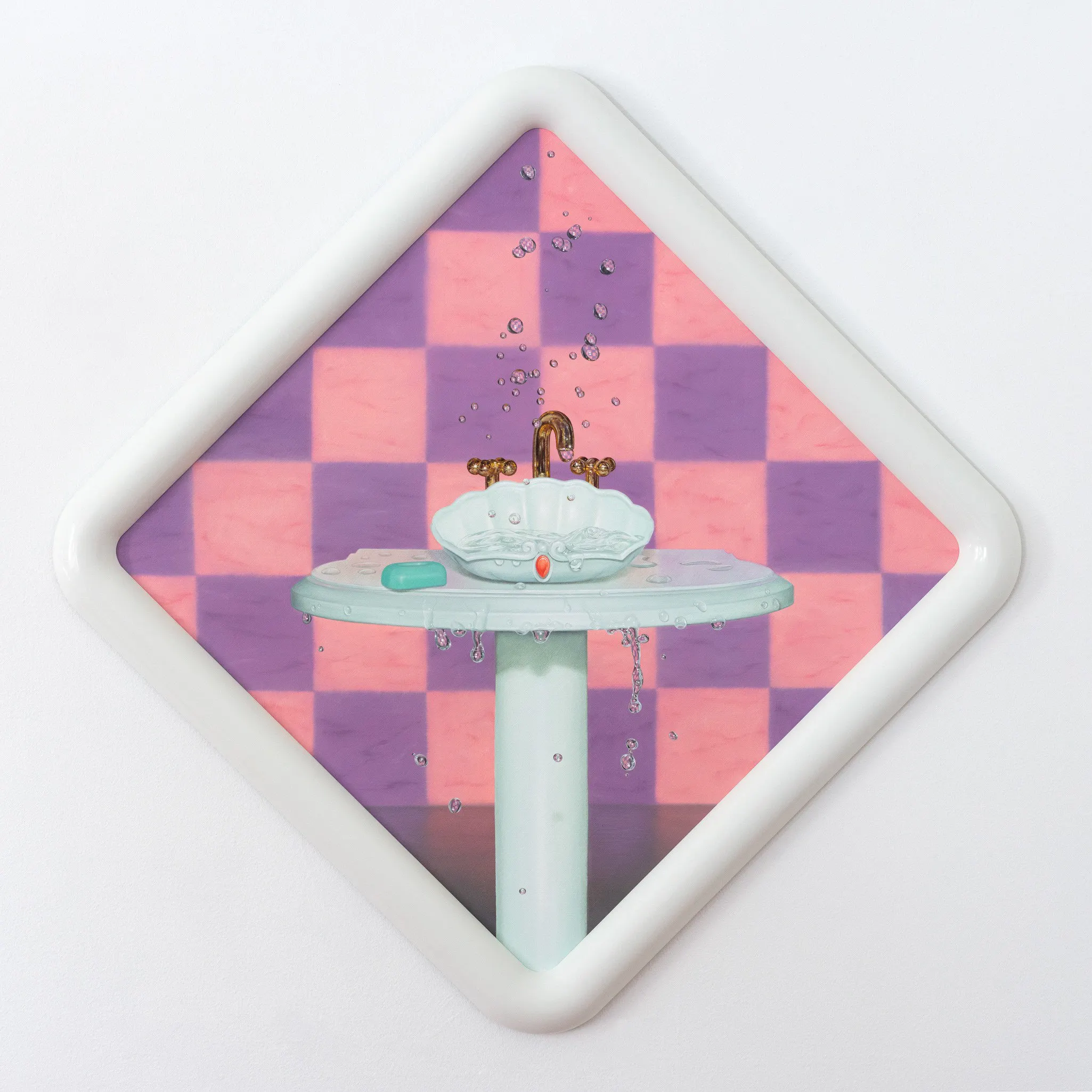
Aphrodite Drops, 2025
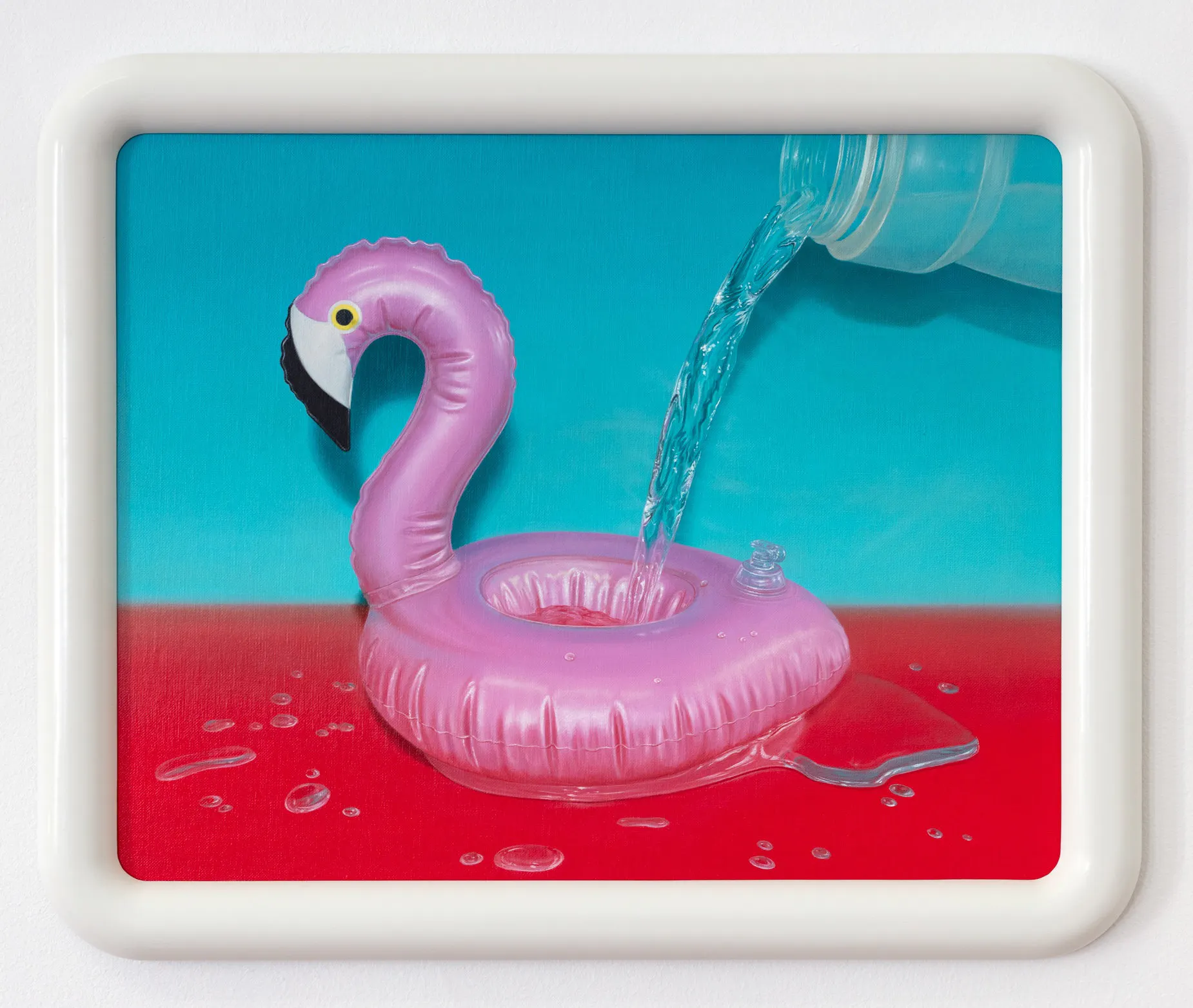
Flamingo pour, 2025
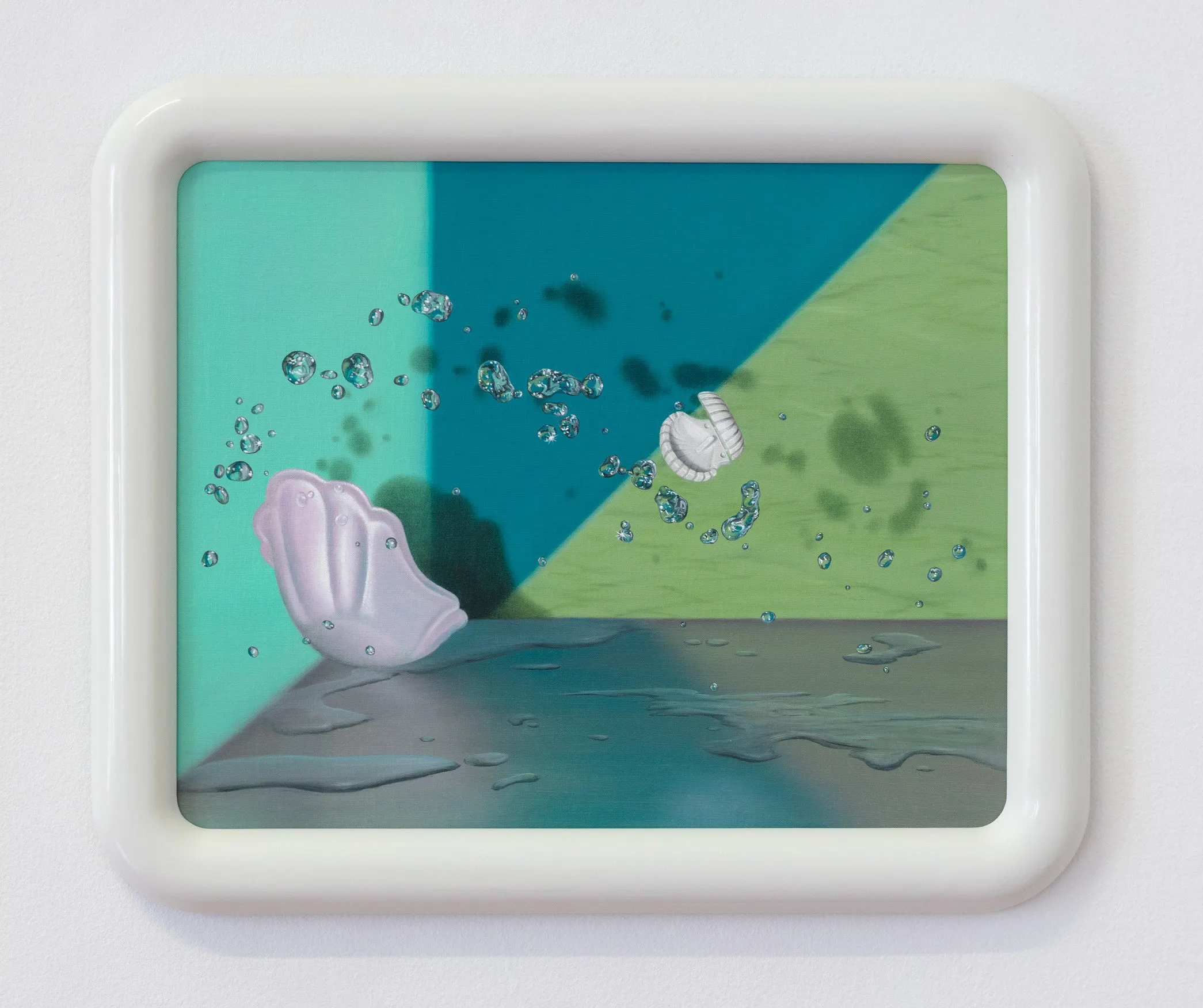
Flying Clams, 2025
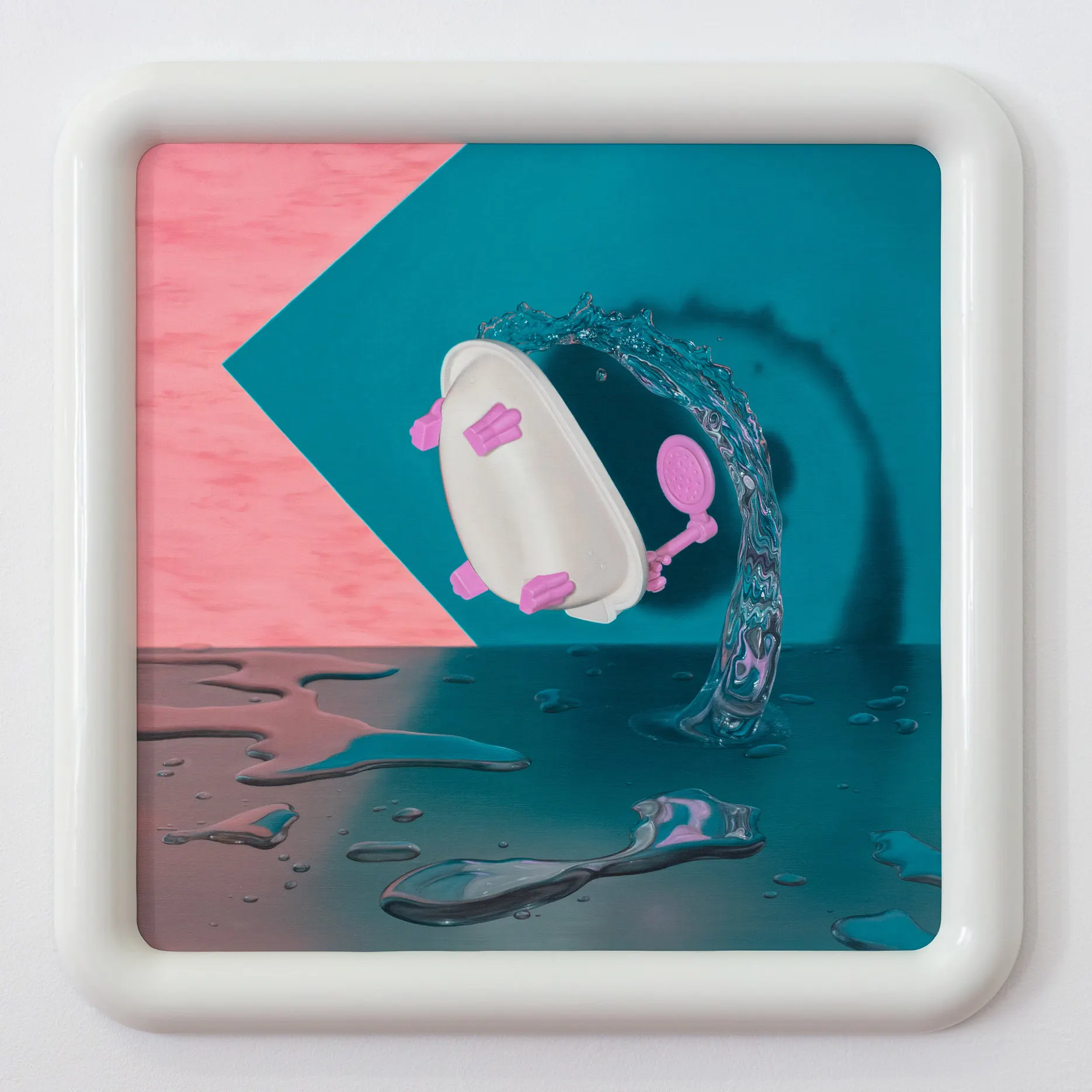
Petite Spa, 2025
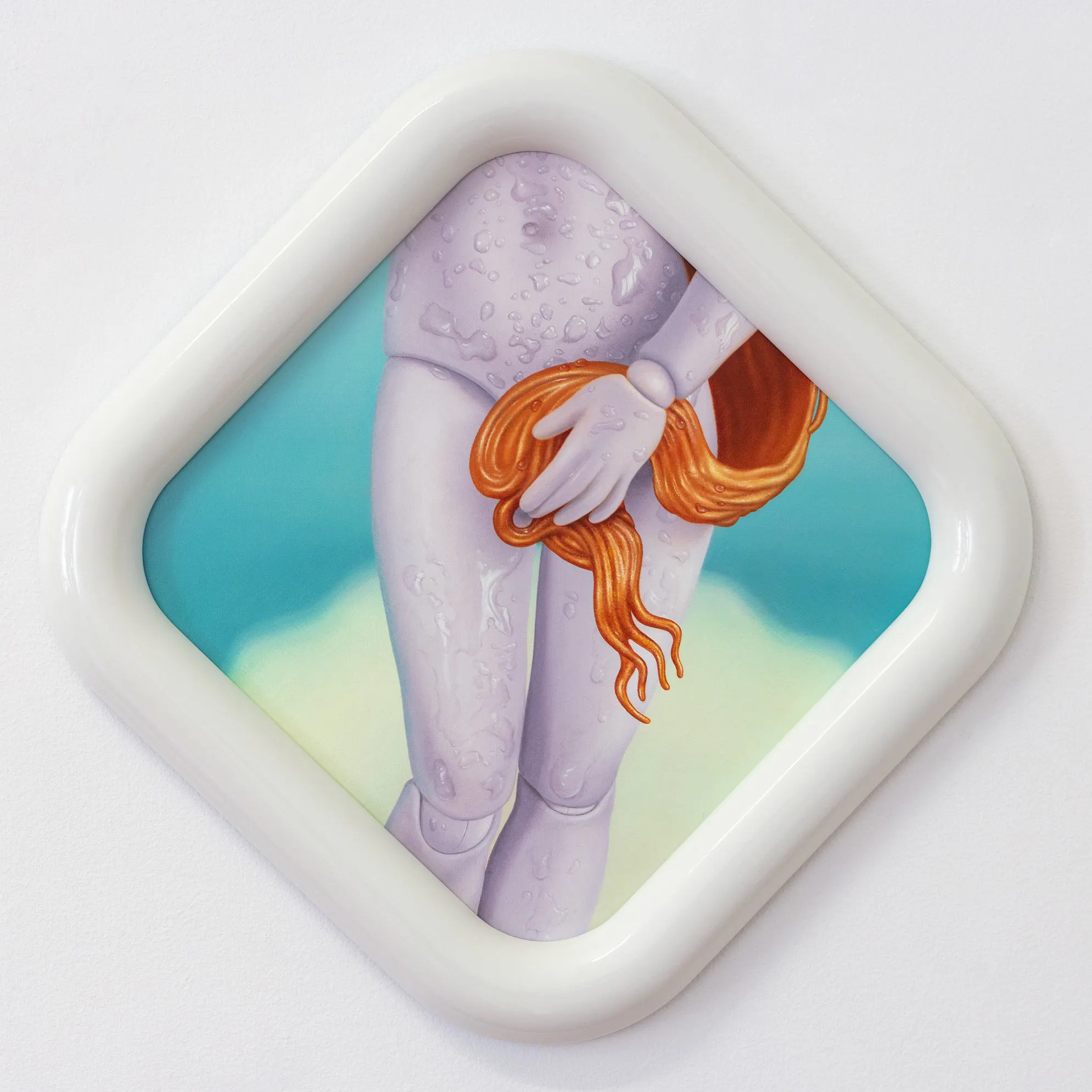
Nudie Rudie, 2024
I promised myself the next time I did an art fair, I’d go more hardcore,’ Emily Hartley-Skudder said, as I sat on a chair in the corner of her studio, beside the avocado bathtub.
Emily is a petite woman, in her mid-thirties, with long strawberry blonde hair that often dresses in vintage frocks and jumpsuits that colour-match her artworks.
The afternoon I arrived in her studio she was wearing a tunic printed with pink and purple peonies. ‘Great dress,’ I said. ‘This is my favourite, because it has pockets,’ Emily replied.
The Stand In, Megan Dunn.
The ‘Petite Spa’ paintings were in progress above the bath and an aqua life-sized bathroom sink. Emily collects miniatures, dinky dolls things, and vintage furnishings that she depicts in her oil paintings and installations. ‘I’ve wanted to paint a flamingo for a while.’ Sure enough, she has precisely captured the taut pink sheen of an inflatable flamingo cup holder, including the way its curved neck puckers at the seams. In the composition, a gush of water flows orgiastically and inexplicably into the flamingo.
In her perfectionism, Emily is hardcore. ‘I do strive to be seen as a really good painter, because painting is hard.’ She likens it to training for a marathon. ‘The first paintings in a series take the longest, then it gets easier and easier, and you get faster.’
I leaned forward and plucked a little orange chocolate Whittaker’s from a nearby bowl, unwrapped it and ate it. Sweetness is another one of Emily’s key ingredients. The colour palette in her paintings bursts with pastels and is often aggressively feminine.
Petite Spa will be presented as a showroom at the Aotearoa Art Fair, mimicking a bathroom expo. Emily has named the exhibition after a brand of mini 2-in-1 shampoo and conditioner she’s seen before in hotels. ‘And I’m small too,’ she joked.
Flash photography is a reference for the new work, and she recently spent an afternoon in her studio throwing a miniature pearlescent bathtub into the air.
‘I was pressing the shutter on a timer, chucking water and objects in front of the camera. I dropped the bathtub quite a few times. Bits were smashing off it and I lost the little bath feet somewhere in the studio, then the bath flew.’
On the wall was the painting of the miniature clawfoot bathtub in flight. A cascade of water loops out of the tub like a ribbon. Emily had even painted the shadow the water makes on the wall. It is a virtuoso composition only she could paint, but what does a flying bathtub mean? Who cares? It is Skudder-rific!
I have followed Emily’s work since Happiness World, her 2015 exhibition featuring paintings of hot pink dollhouses she’d collected in America. The plastic dollhouses themselves were also in the exhibition displayed under Perspex vitrines as though important museum artefacts. I knew that I was in the presence of a kindred spirit, and one that could paint the hell out of plastics. She can really nail the artificial sheen of an eighties’ dollhouse, a flamingo or two and even a cherry inflatable cup holder, right down to the tiny beads of water sitting on the ring.
‘How can I capture that tension of when you think something is real but it’s not?’ Emily said, explaining her attraction to miniatures.
Her projector was balanced on a plinth and rested on a red box for a retro ‘Heatwave’ hairdryer. A banana peel sat near her painting set up, next to abandoned glasses of water and empty mugs. First Emily photographs her subjects, then projects line drawings of her compositions onto linen and starts painting. I can sense her zeal and focus in the studio.
Emily remembers being taught the hierarchy of historical painting in an early art history lecture. The still life genre was allegedly at the bottom of hierarchy. Emily was struck by this quote—still life is only good for decoration. ‘I thought I could play with that,’ she said. ‘I could pander to that expectation.’
Emily has never painted people, she prefers objects and material culture. Even at high school she opted out of doing her own self-portrait, getting her best friend to paint her instead.
I got up and wandered over to a rectangular table covered in a cornucopia of dolls bathtubs, and Barbie knock-off swimming pools, a see-through dragon floatie with a mauve tail, little itty-bitty doll sized blue scissors, and perfume bottles, a pink soap, a hairdryer and more. I felt as gleeful as the flying bathtub, I could gush over the contents of that table forever, but I had to get to the nub of things.
‘So, collecting started for you with Sylvanians?’ I asked. ‘Yes.’ As a child, Emily had visited her older cousins in England and played with their Sylvanian toys, a series of small, flocked animals grouped into nuclear families by species: lambs, mice, rabbits, hedgehogs etc. The Sylvanians also had neat accessories like a Ferris wheel and even a hot air balloon.
When Emily returned home, her Aunt, ‘very sweetly’ sent her lots of second hand Sylvanian houses. That’s when her bug for collecting began.
‘Did you have a favourite Sylvanian?’ I asked.
‘Yes, a grey mouse, called Laura.’
I nodded sagely, feeling like Freud. ‘I was an only child,’ Emily confessed. More nodding, I too was an only child. ‘I was very spoiled by my grandparents,’ Emily said. Perhaps it is the inheritance of the only child to believe that they alone were spoiled? Because I was told I was spoiled too. A small psychic wound prised open again. Emily was close to her grandmothers, Enid and Doris. Enid made clothes for the Sylvanians, and doll carpets on a loom. Doris was the same build as Emily who still wears some of her old vintage dresses. Emily’s 2018 exhibition was titled Blue Rinse. ‘That was my first plunge into using basins and tiles and creating contained installations for my paintings. I’d moved away from miniatures and I was really excited about putting those new works out there.‘I do sense a bit of ‘granny core’ in your work,’ I said, remembering the closeness between my own daughter and my mother. ‘Mum always had infinite patience for playing dolls,’ I said. For a moment I saw beyond the slick vanity surfaces of Emily’s bathroom installations to a world of water play and familial love, my adult cynicism dropped away. The paraphernalia of childhood has a long shelf life. Mine does anyway.
‘Why do I always think you were into Polly Pocket dolls?’ I asked suddenly, looking around her studio. Polly Pocket was one of the biggest selling toys of the nineties. Each tiny doll came in her own dinky compact case: Polly’s Secret Garden, Polly’s Hair Salon and Tiny Trinkets Playset etc.
I never owned one—I was a teenager when they came out—but I’d developed a theory that Emily was the Polly Pocket of the Aotearoa art world as though that explained her attachment to décor and domestic interiors. Perhaps her bathroom installations were a tribute to Polly’s Water World? It was ingenious how the designers fit whole rooms into the size of a makeup compact. Polly’s superpower was always being petite.
‘Oh, I LOVE Polly Pocket,’ Emily said. ‘My cousins had them, but for some reason I never did.’
I sat back in my seat, deflated.
Our conversation moved onto Emily’s mum who had worked for the television series Hercules filmed in New Zealand in the mid 1990s. Emily sometimes visited the studios during filming. ‘My mum was a stand-in,’ Emily said. ‘What’s that?’ I asked. The stand in functions as a proxy for the actors so the technical team can block in the lighting and camera setups for the film. Her mum kept a book with the actors’ heights written in it and she adapted multiple pairs of shoes, adding resin, foam and even jandals to their soles, anything to pump up her height. ‘The main thing is the height,’ Emily said.
One summer holiday when she was at art school, Emily got a job as the stand-in for Anna Faris, the lead actress on Yogi Bear. Emily got the job because she was short and so was Anna. There were two teams on set: A team, the actors; and B team, the stand-ins. The cameras were huge because it was filmed in 3D and Emily could see her face in the monitors all around. ‘It felt like being a prop,’ she said.
That’s it. Petite Spa finally clicked into focus. Whenever I stand in an Emily Hartley-Skudder installation I feel like a prop, inert, unable to feel real water rush over my skin. I am Polly Pocket opening the lid of my compact—
come on in.