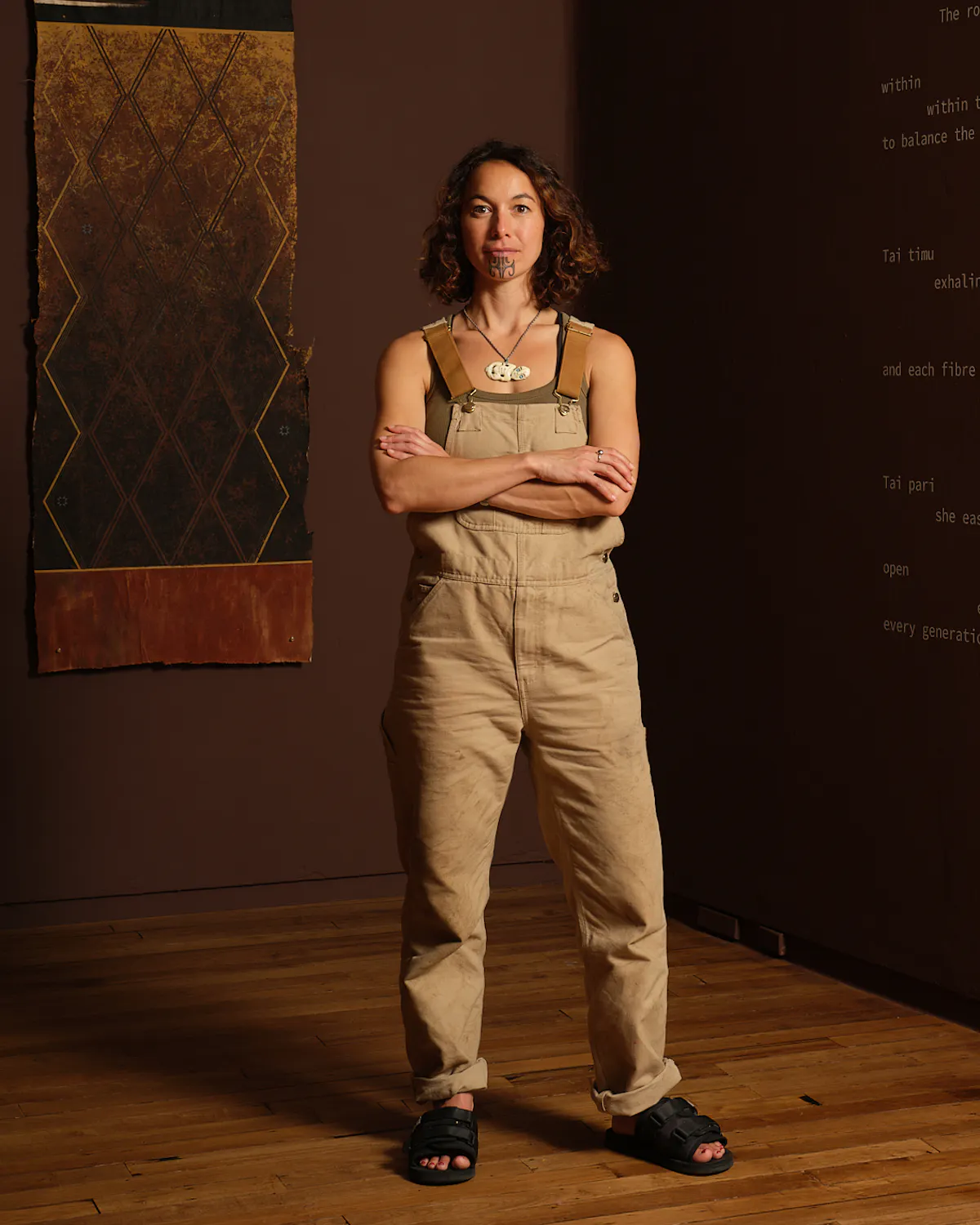
Nikau Hindin
Kimihia ngā Whetū Pukepoto
10 September — 3 October
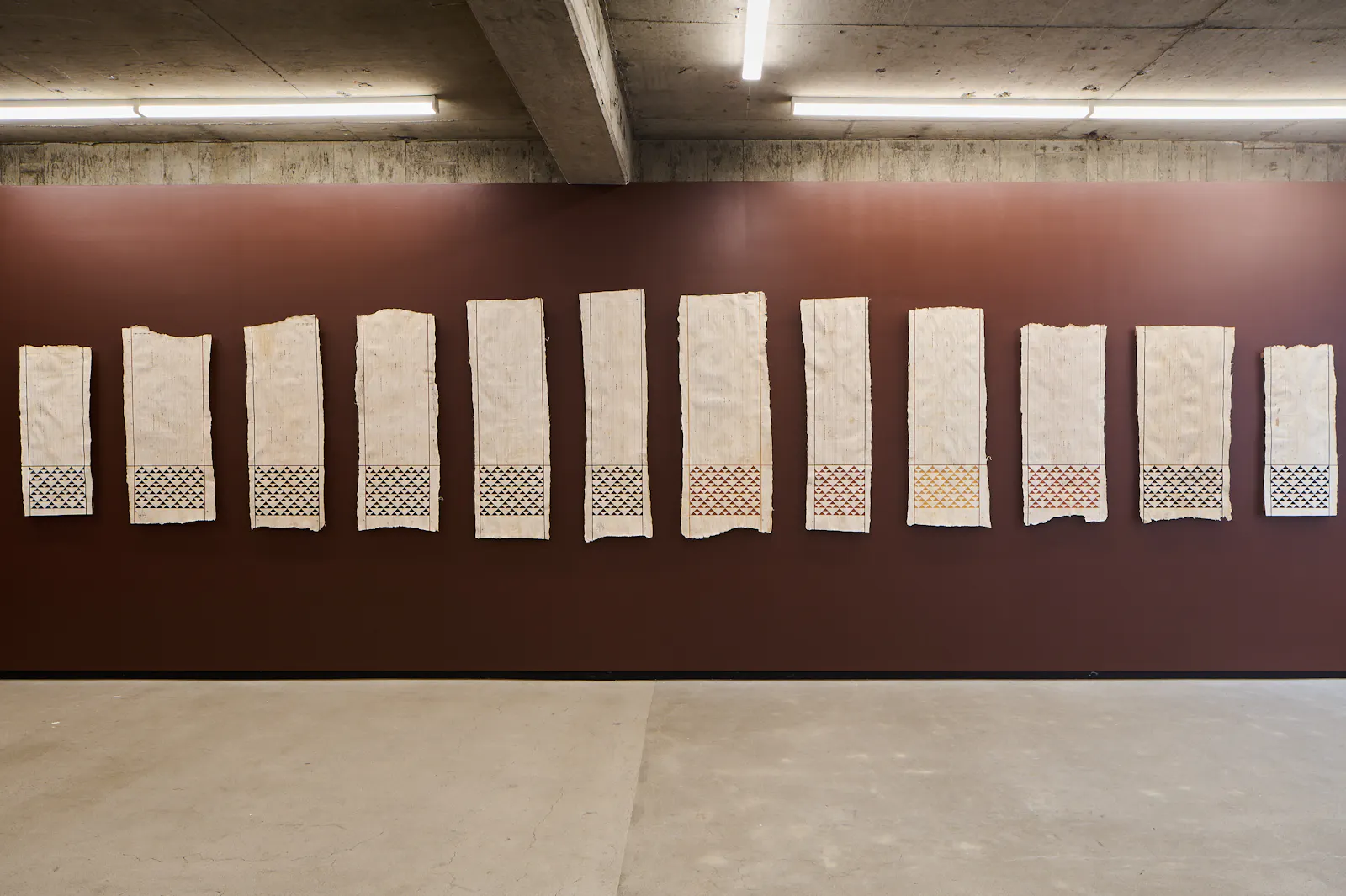
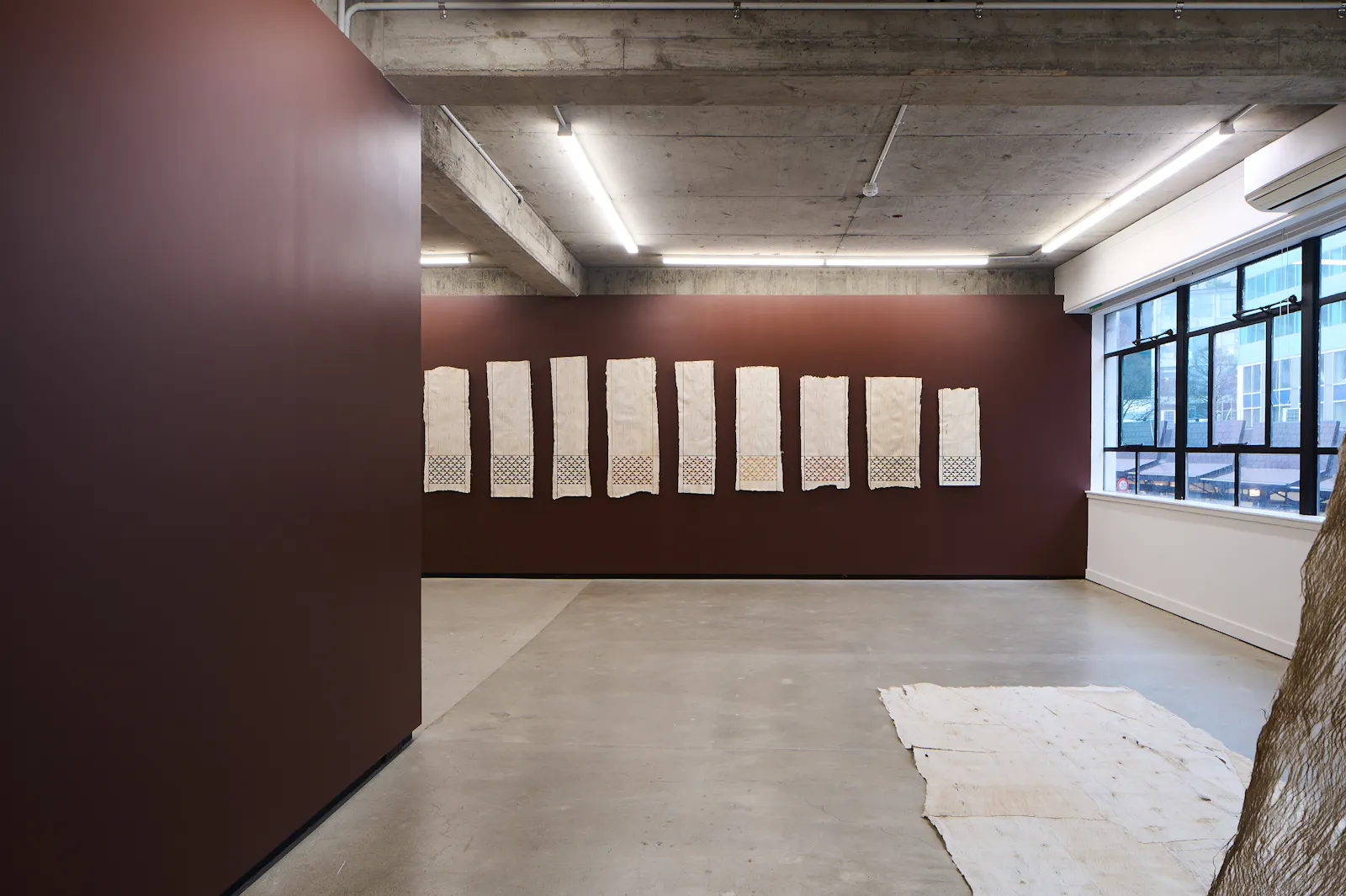
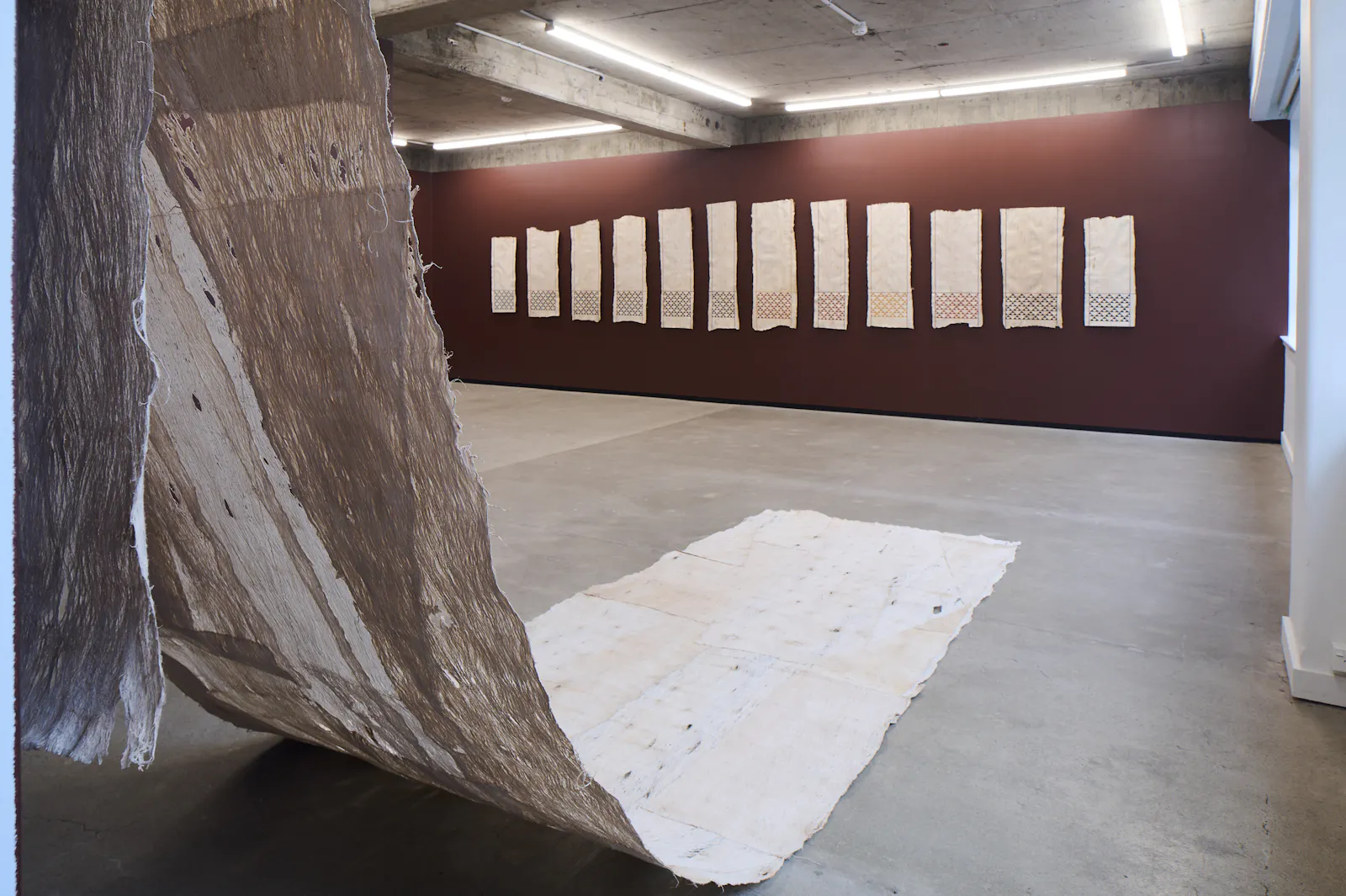
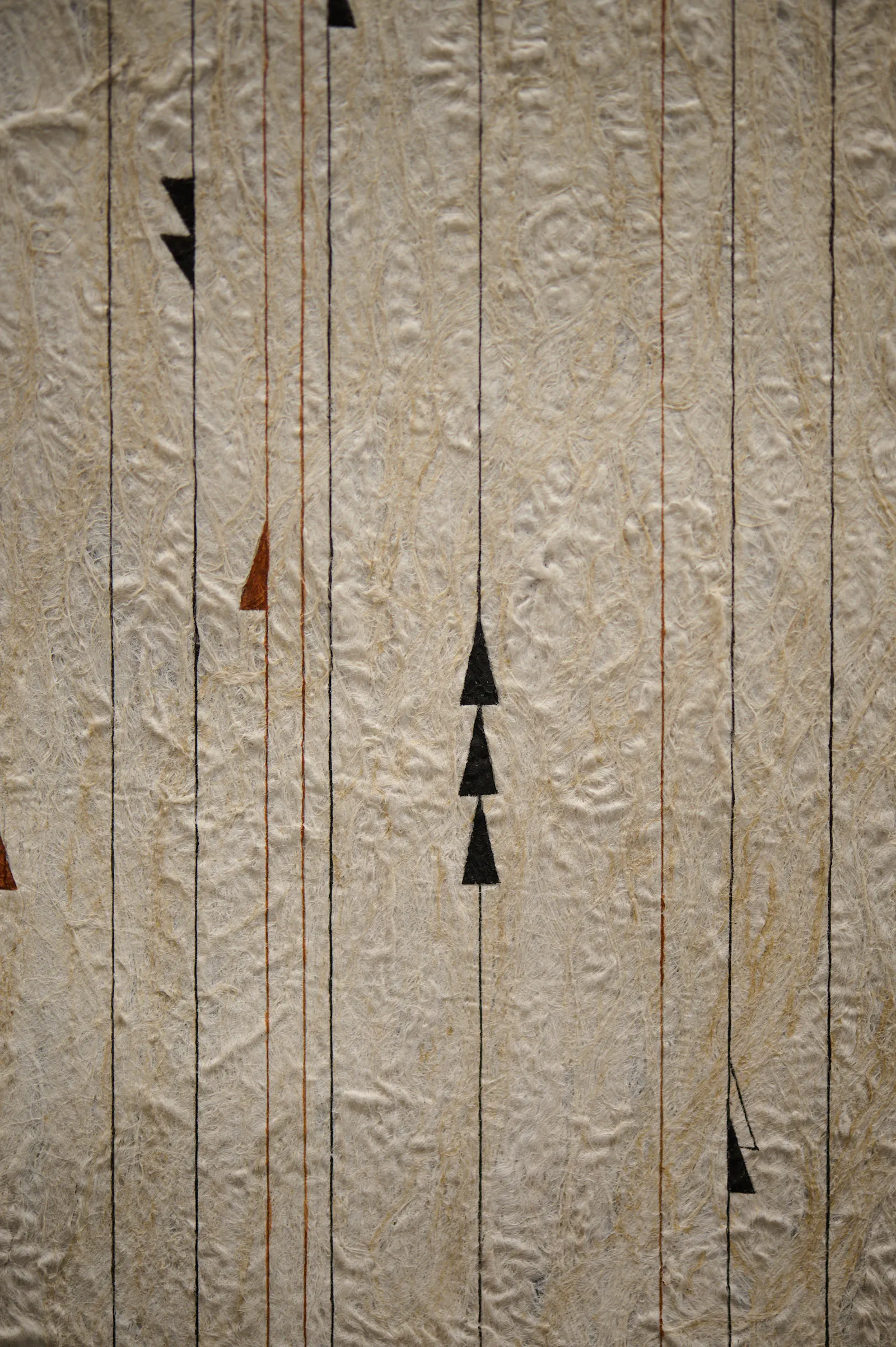
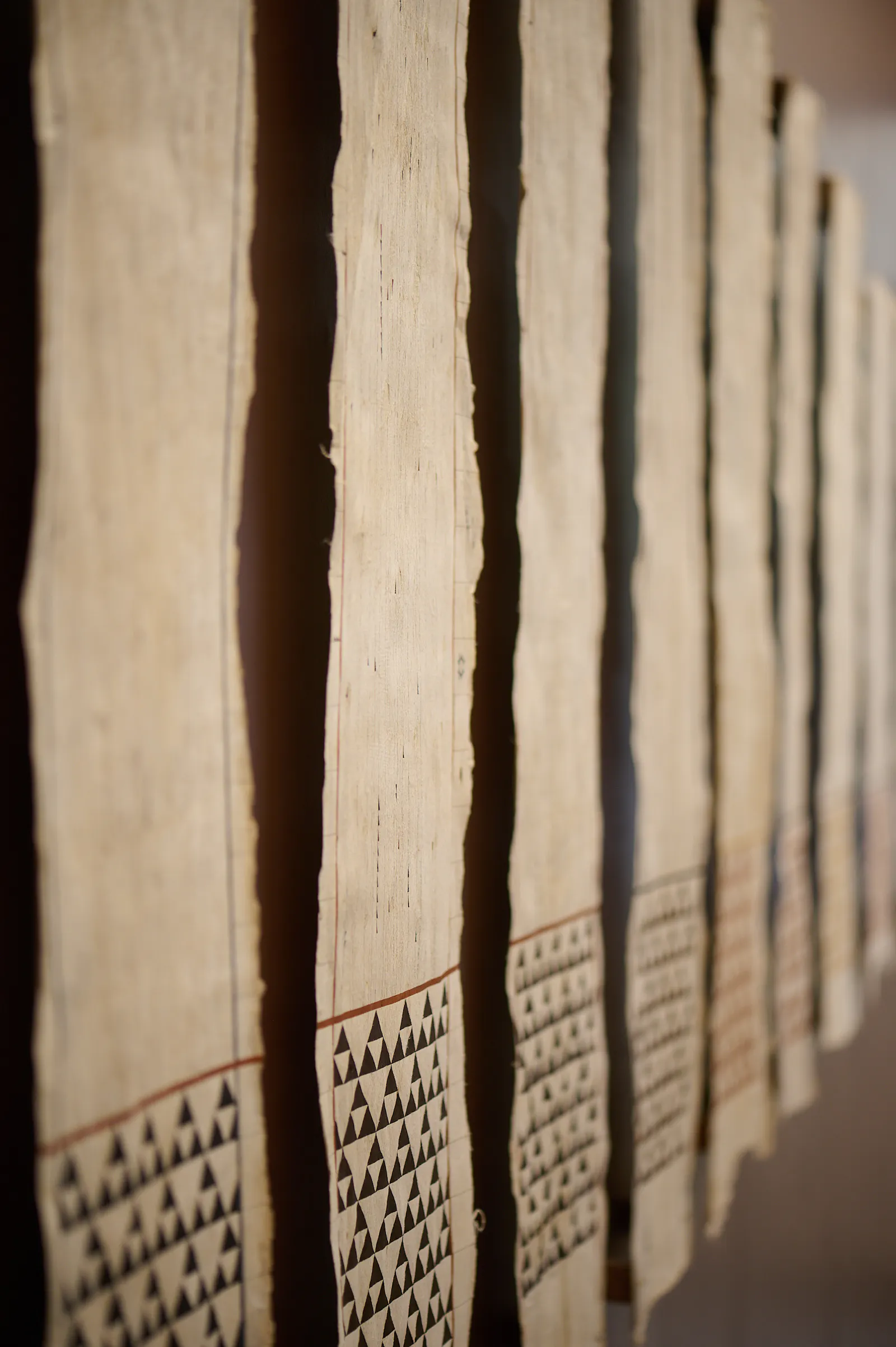
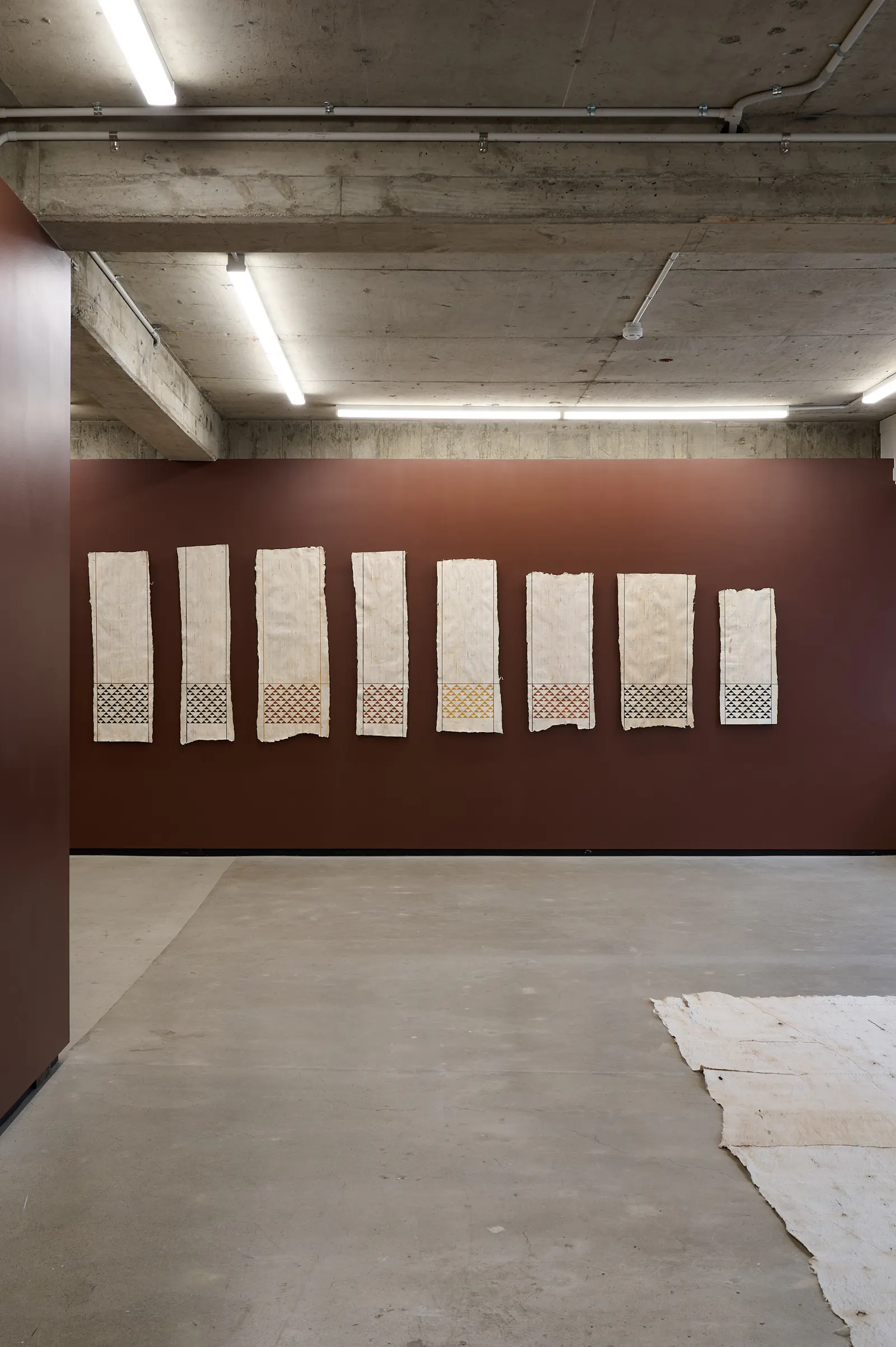
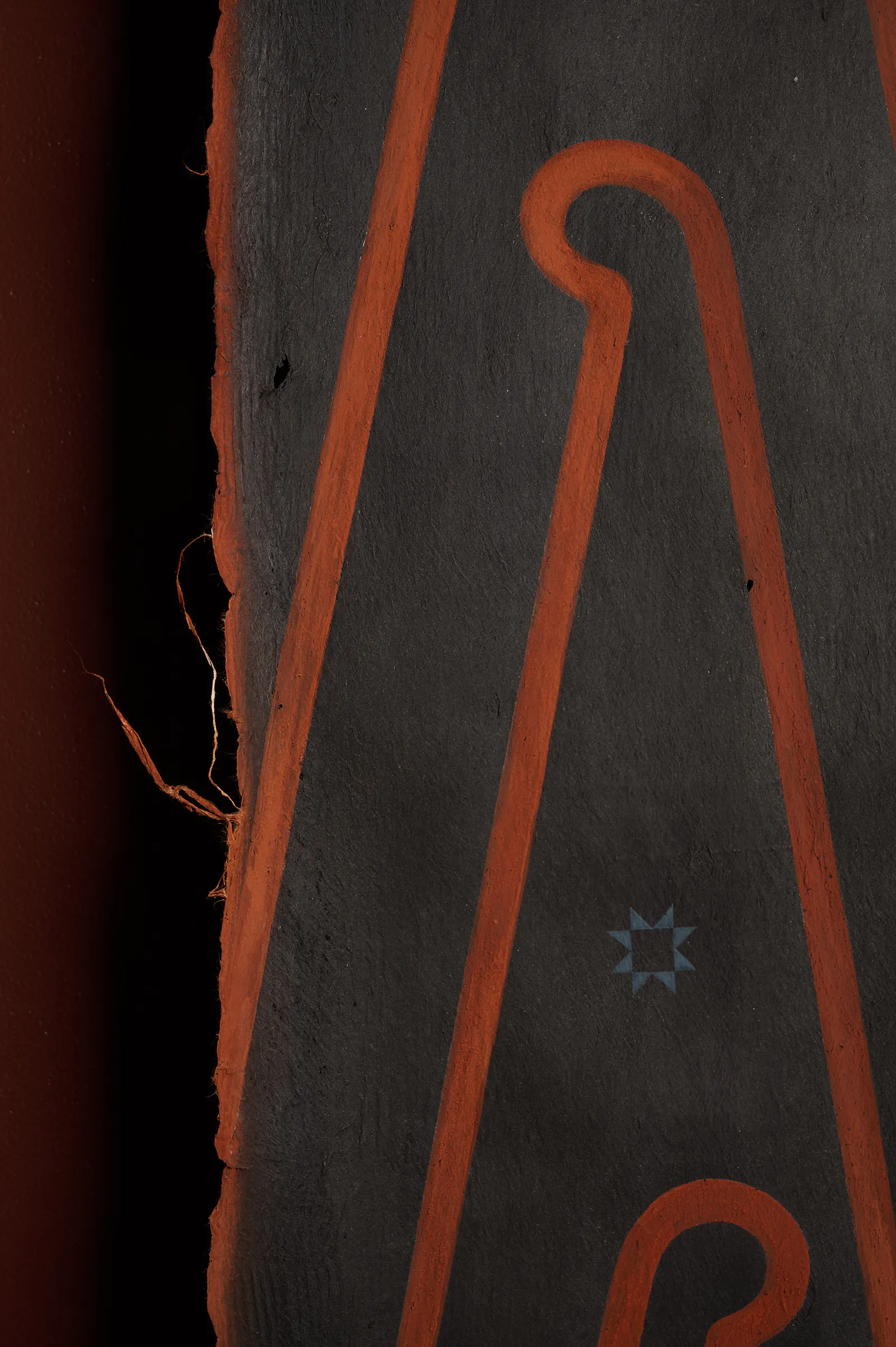
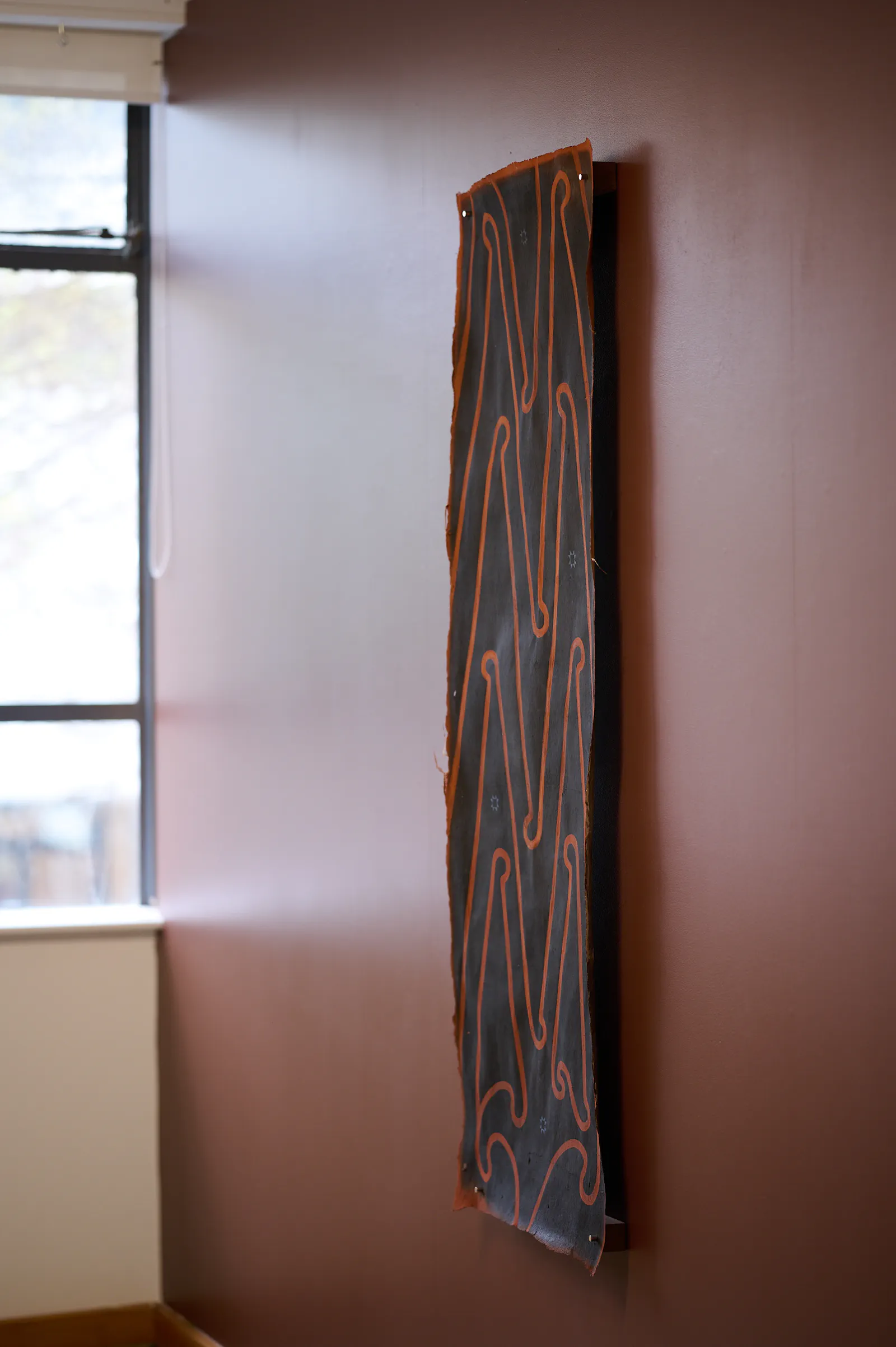
The exhibition centres on a suite of twelve star maps, Ngā Whetū Maiangi II: The Rising Stars of the Stellar Lunar Calendar, recently shown in COSMOLOGIES at Te Uru Waitākere Contemporary Gallery. The works are a new iteration of ideas first developed for Ngā Whetū Maiangi o te Maramataka, Hindin’s major installation at the 35th Bienal de São Paulo in 2023.
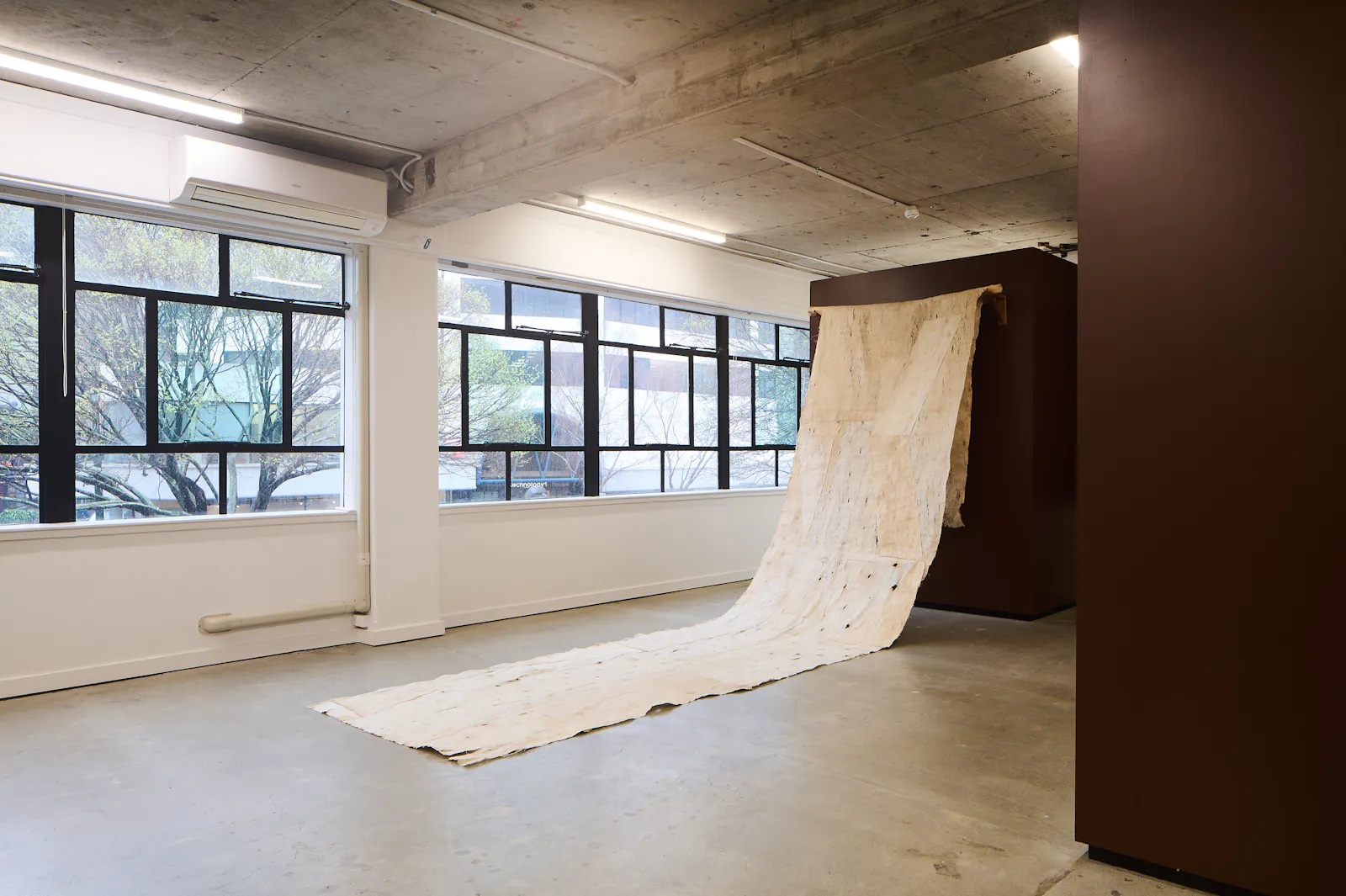
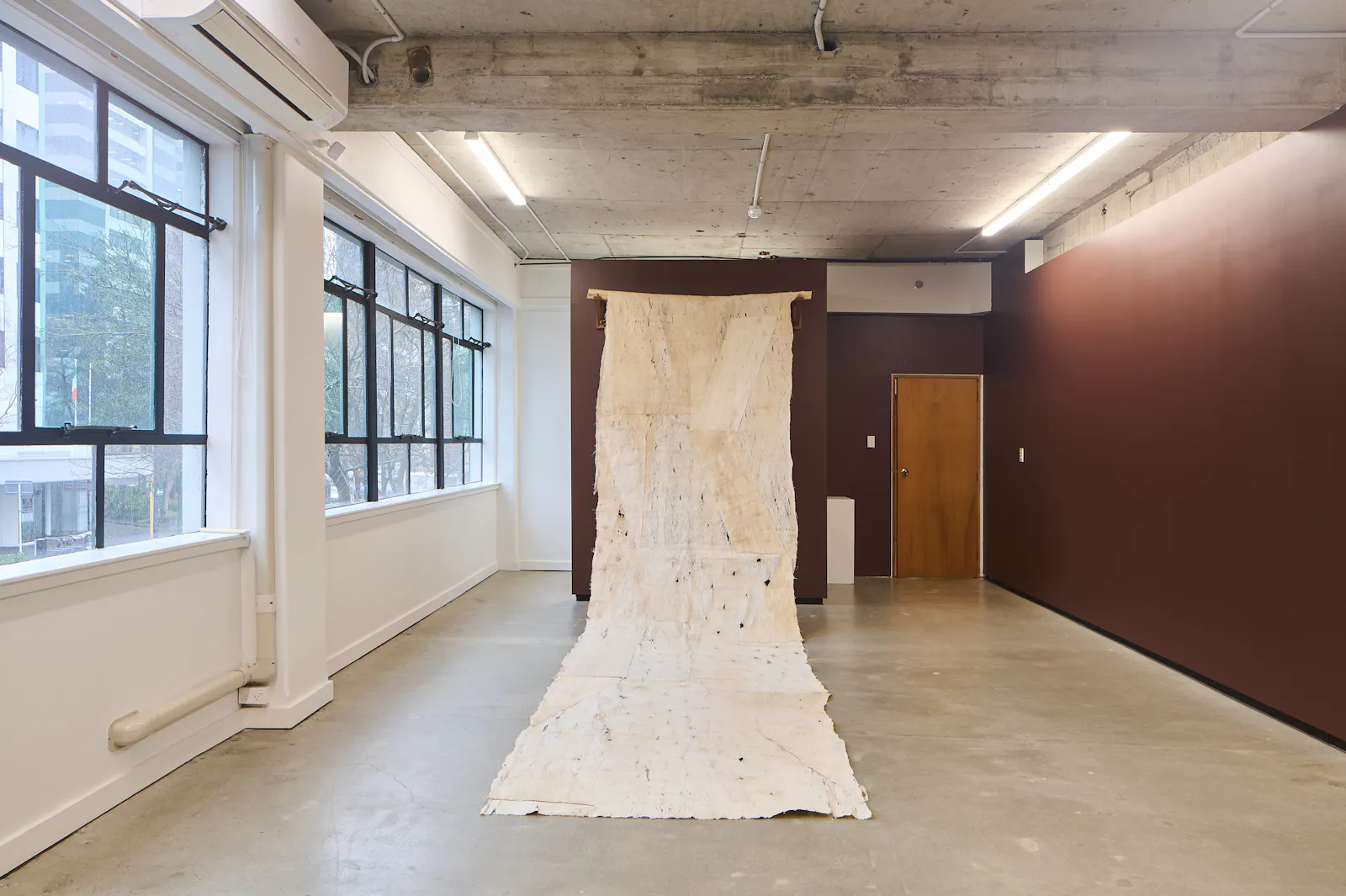
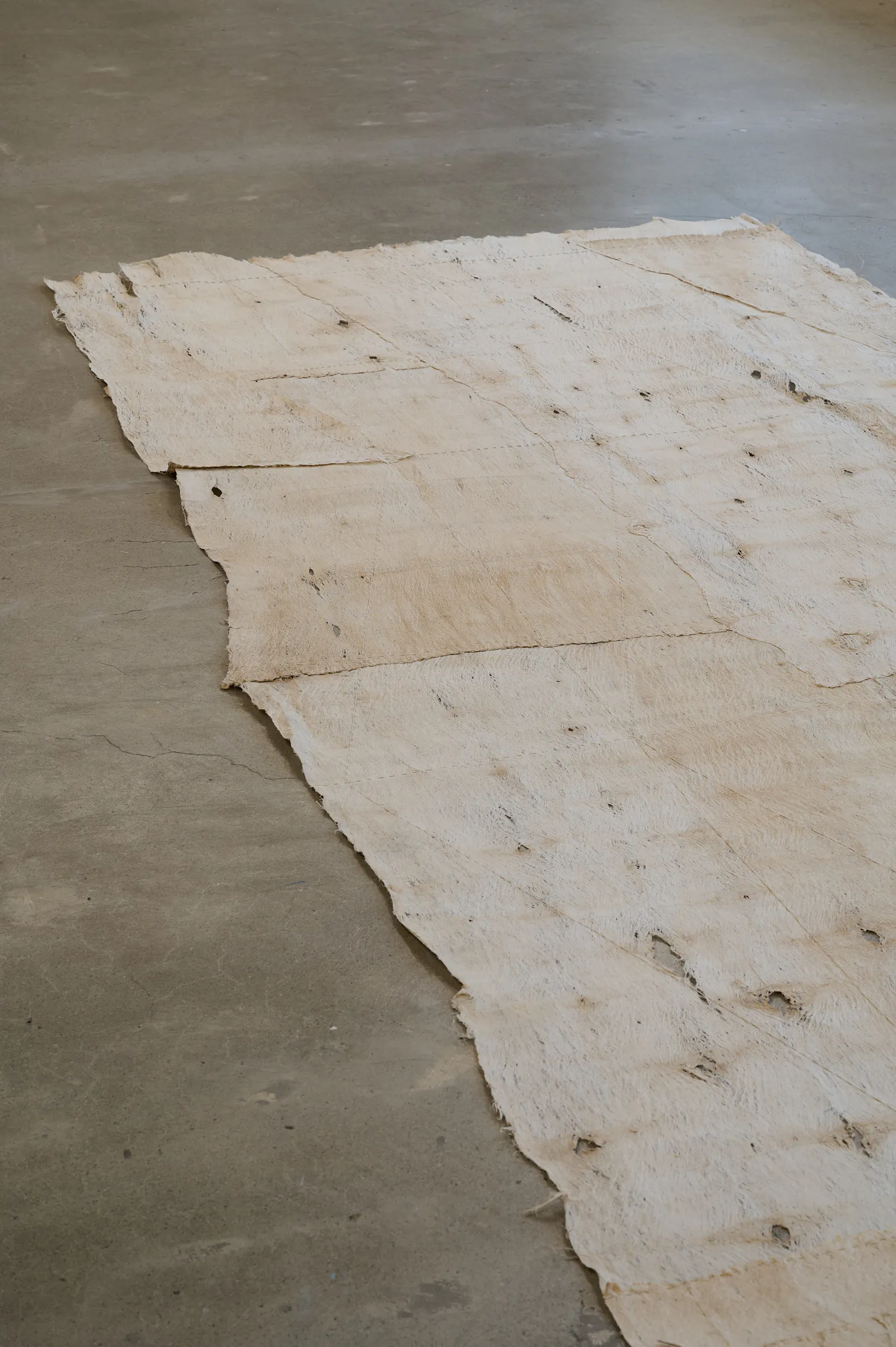
The new series follows twelve successive Whiro, new moons, from Matariki 2025 to Matariki 2026. Each star map records the rising and setting of stars during Whiro, with the heliacal rising star that announces each lunar month distinguished by a blue symbol in the composition. The monumental aute quilt, Rākau Nui, was originally created for the São Paulo installation and, together with the star maps, draws on the full spectrum of the maramataka.
This major body of work grounds astronomical knowledge in aute, whenua, whakapapa and lived experience. In Hindin’s practice, cosmology is not metaphor but method: a way of mapping relations across generations and more-than-human worlds, and of locating our own position in this world and in this life.
An essay by Anja Lückenkemper, curator at Te Uru, accompanies the exhibition and can be read below. Special thanks to the team at Te Uru for all their work on the COSMOLOGIES exhibition.
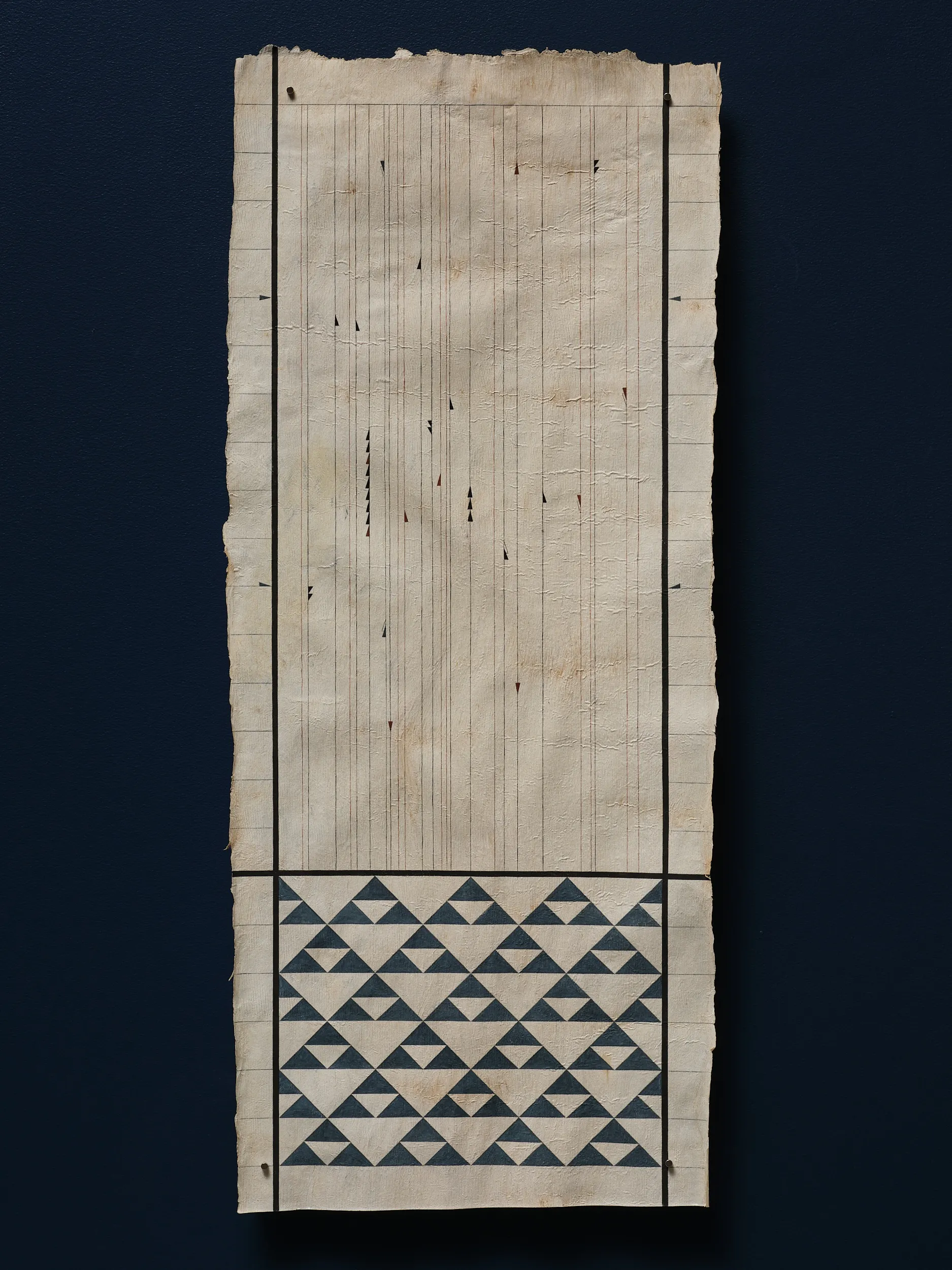
Whiro, Te Tahi o Pipiri | New Moon, The First…, 2026
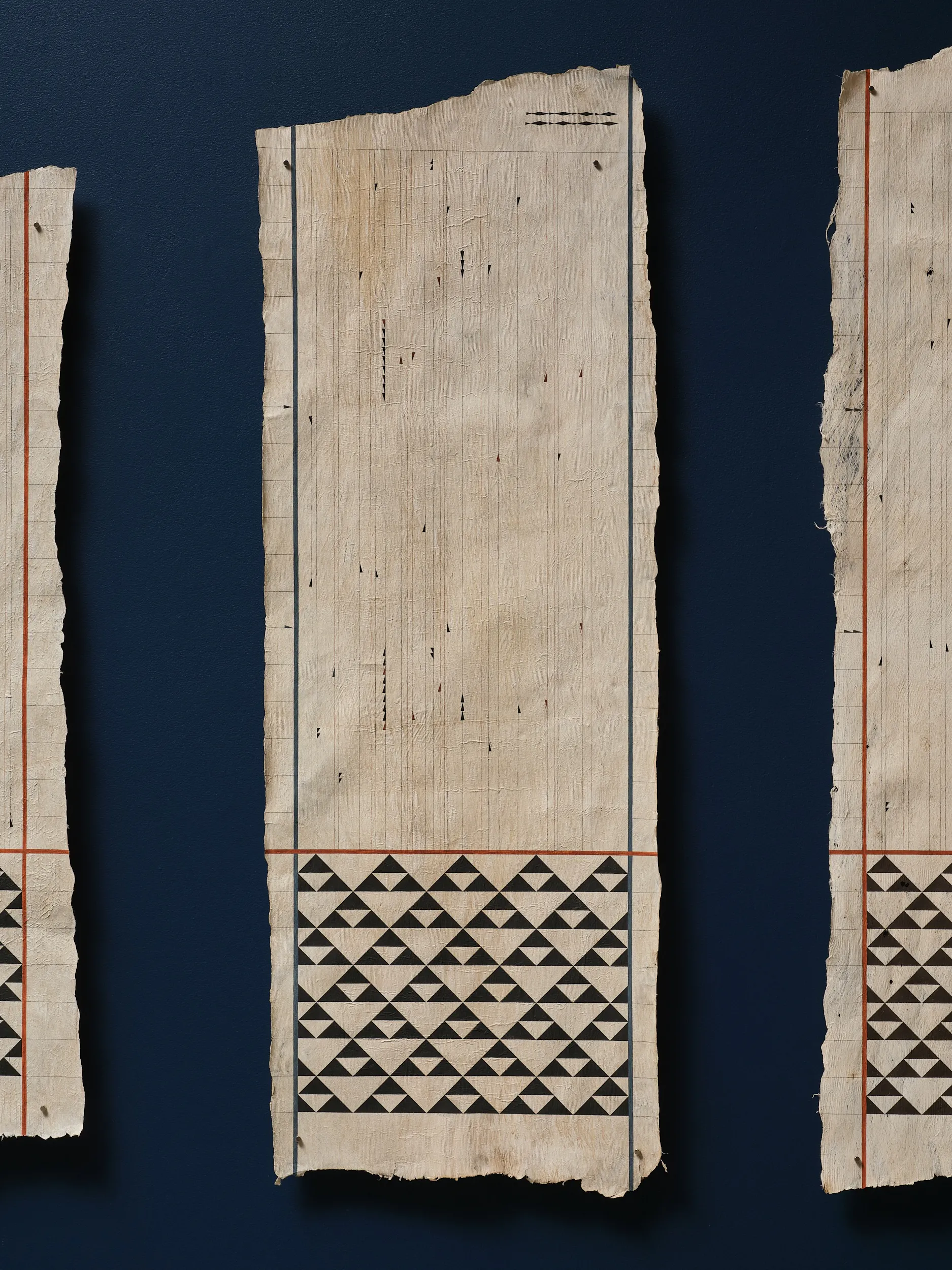
Whiro, Te Toru Here o Pipiri | New Moon, The…, 2026
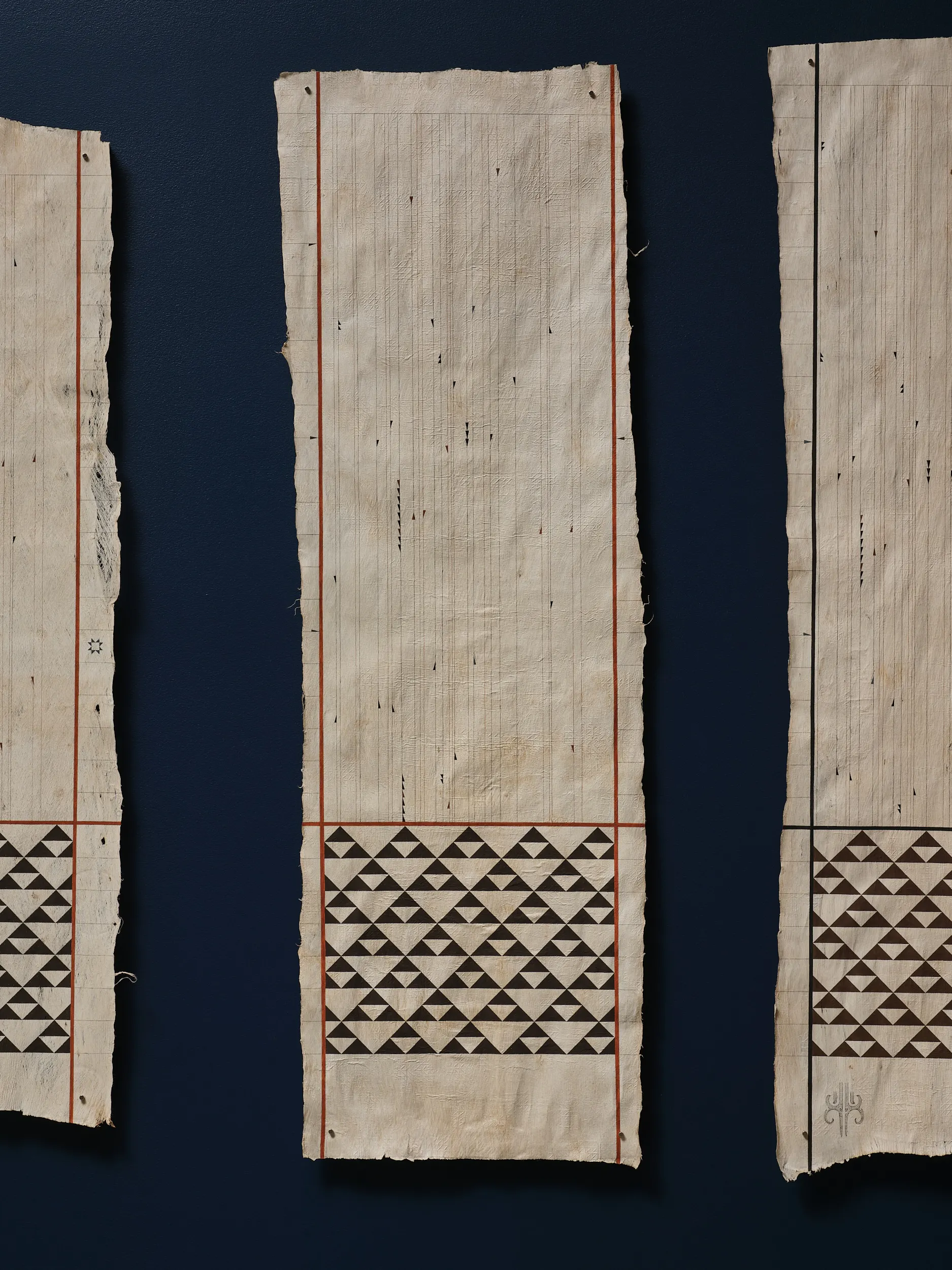
Whiro, Te Rima o Köpü | New Moon, The Fifth…, 2026
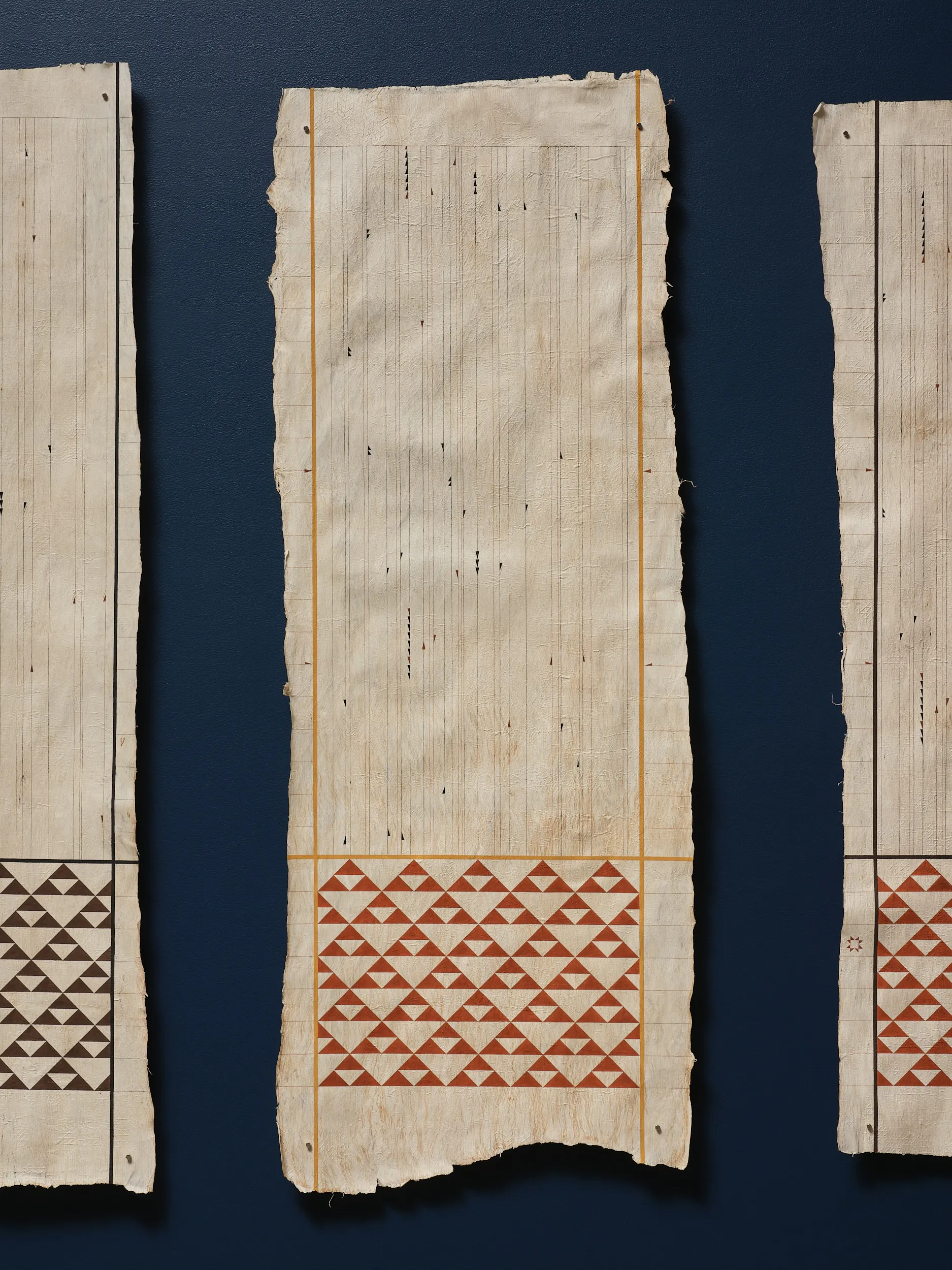
Whiro, Te Whitu o Hakihea | New Moon, The Seventh…, 2026
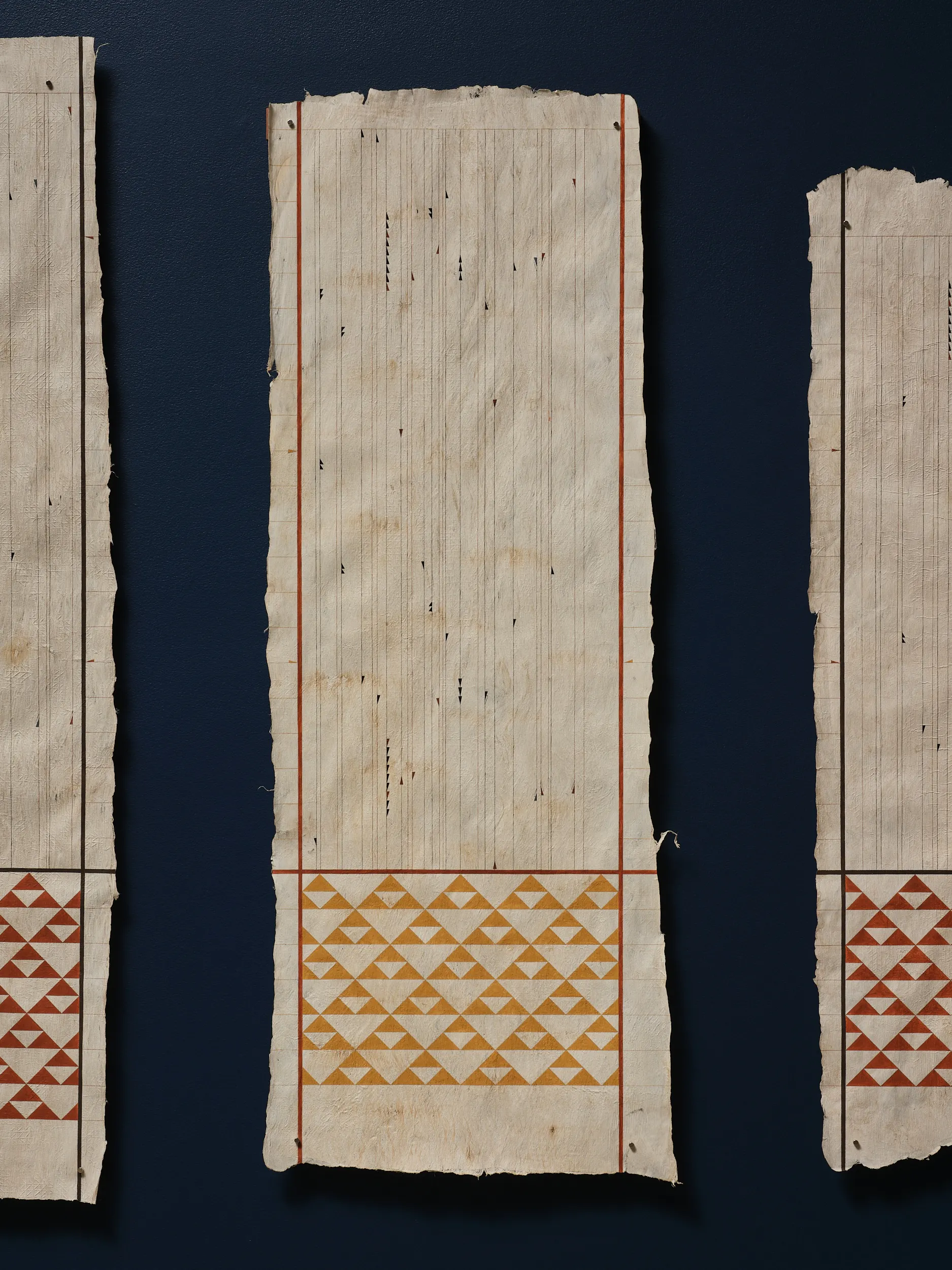
Whiro, Te Iwa o Rühiterangi I New Moon, The Ninth…, 2026
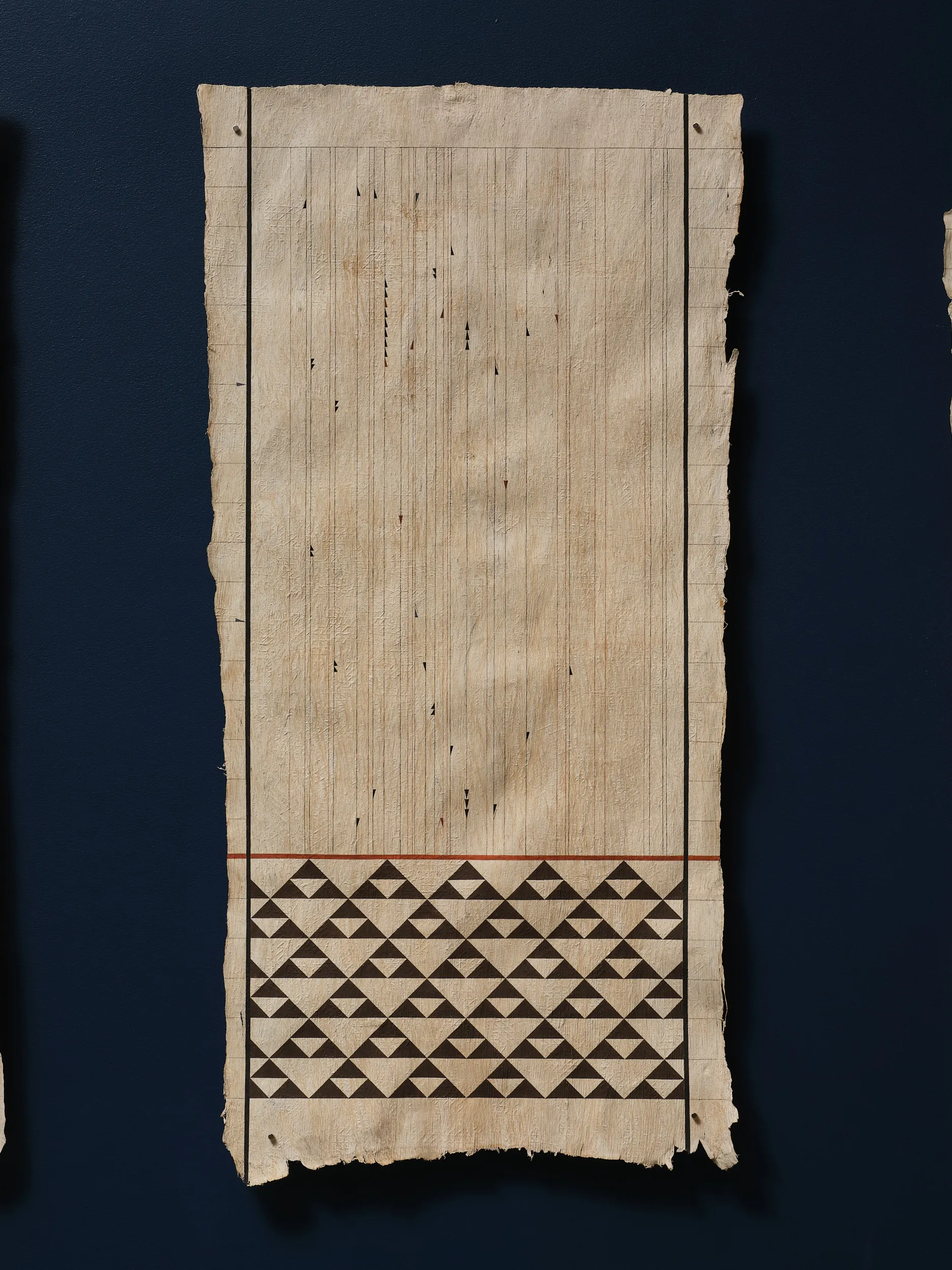
Whiro, Te Ngahurumātahi o Paengawhāwhā I New Moon, The Eleventh…, 2026
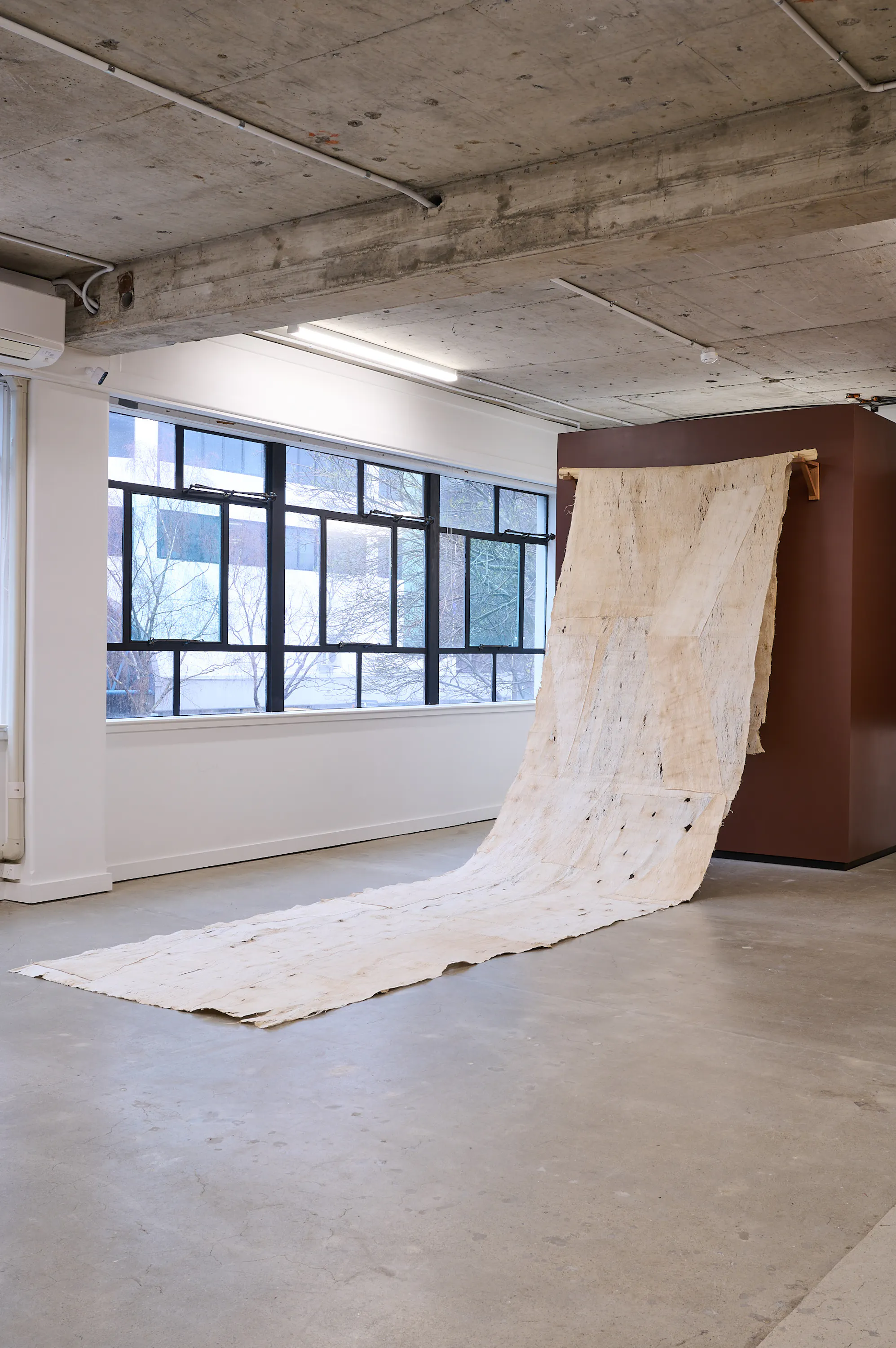
Te Ahurewa o Hineteiwaiwa, 2026
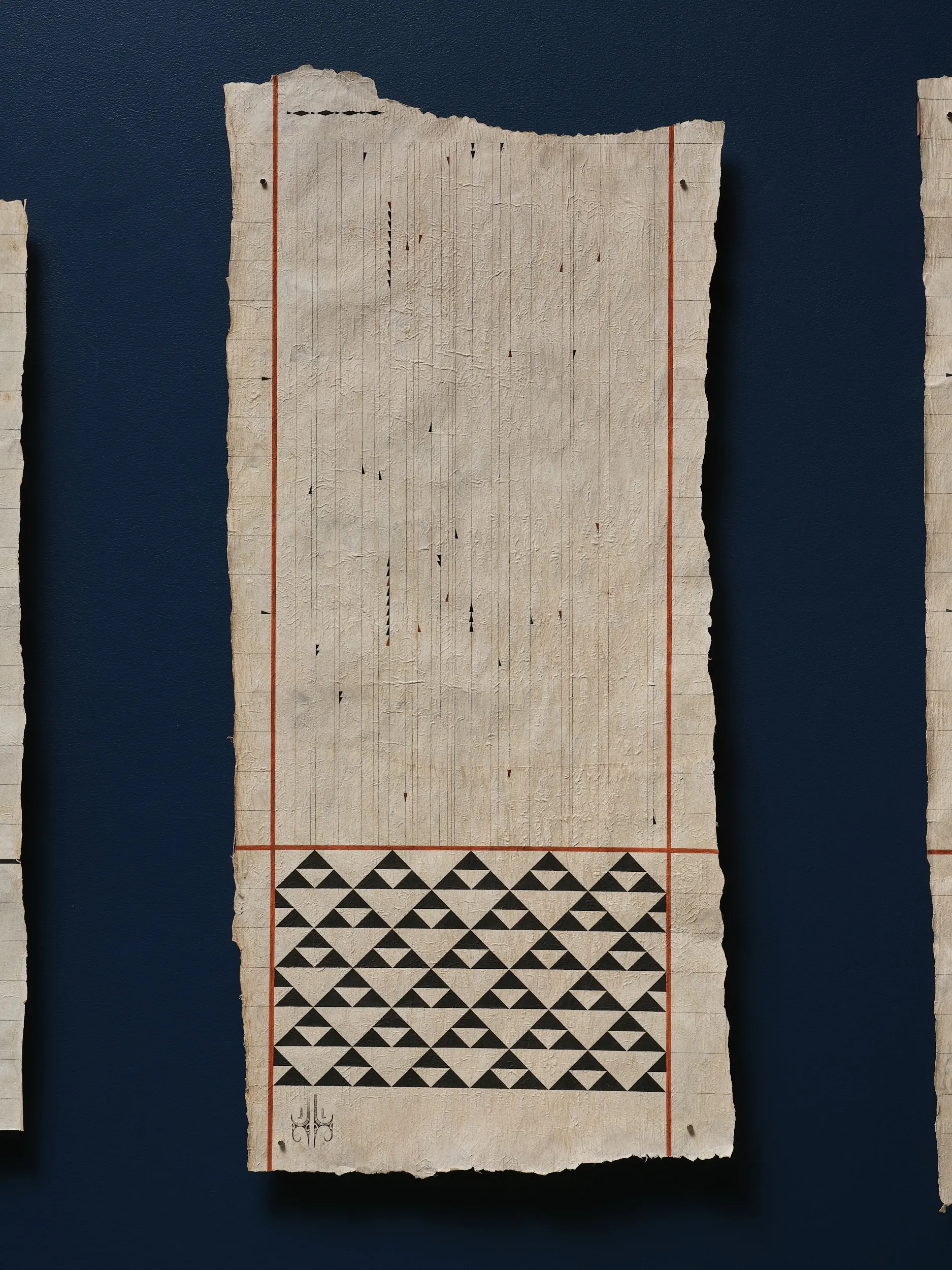
Whiro, Te Rua o Takurua | New Moon, The Second…, 2026
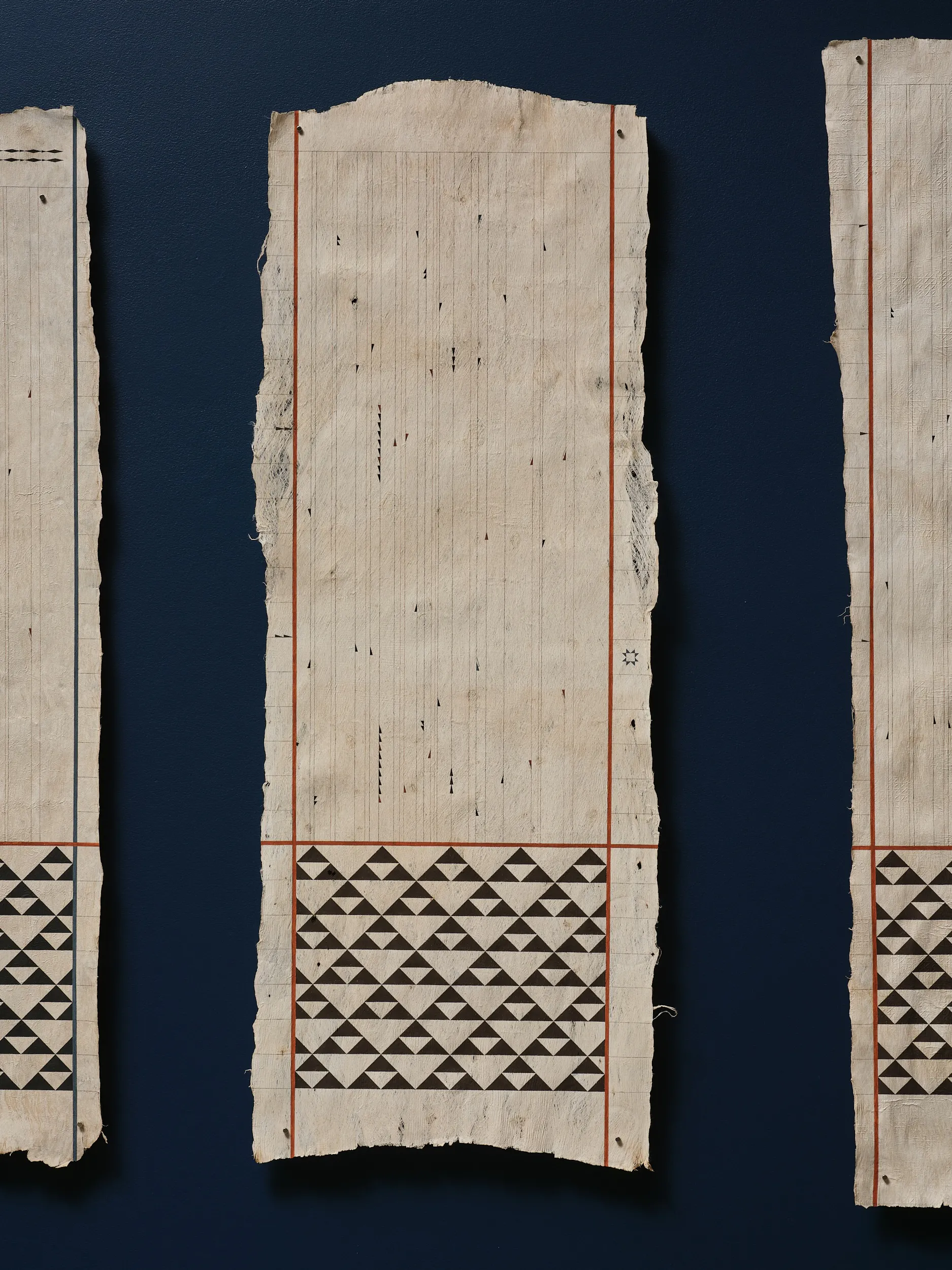
Whiro, Te Whã o Mahuru | New Moon, The Fourth…, 2026
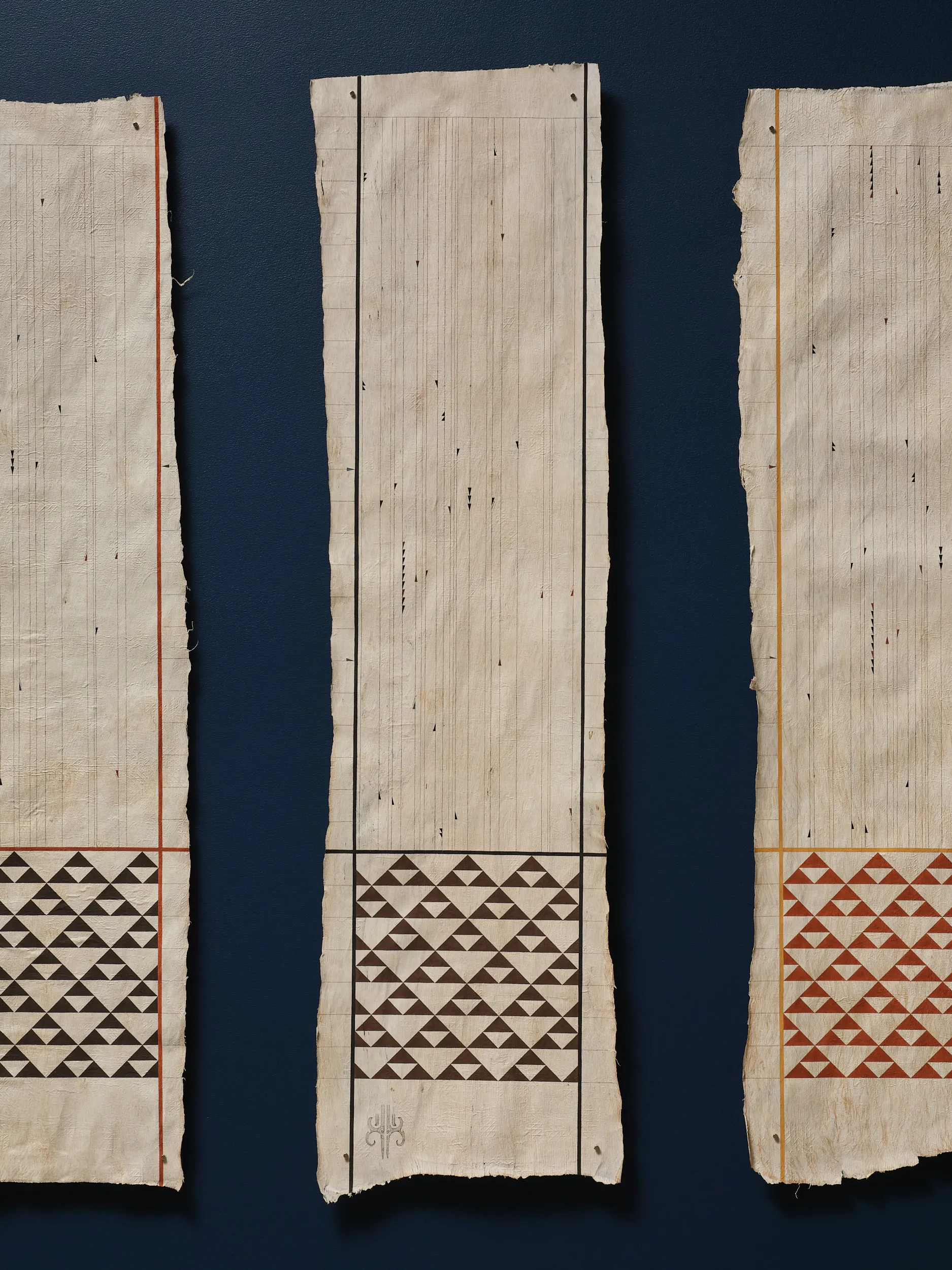
Whiro, Te Ono o Whitiänaunau | New Moon, The Sixth…, 2026
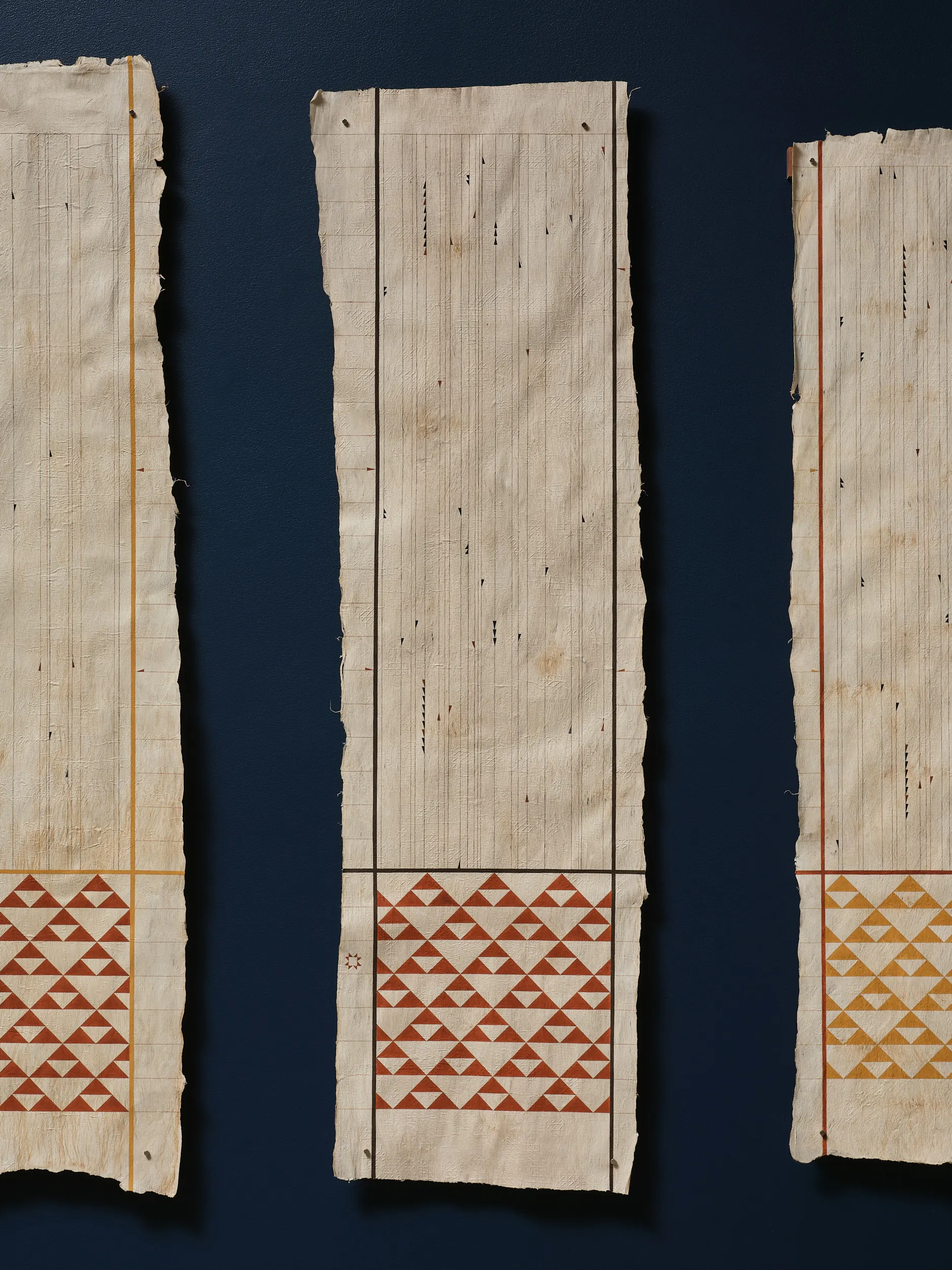
Whiro, Te Waru o Rehua | New Moon, The Eighth…, 2026
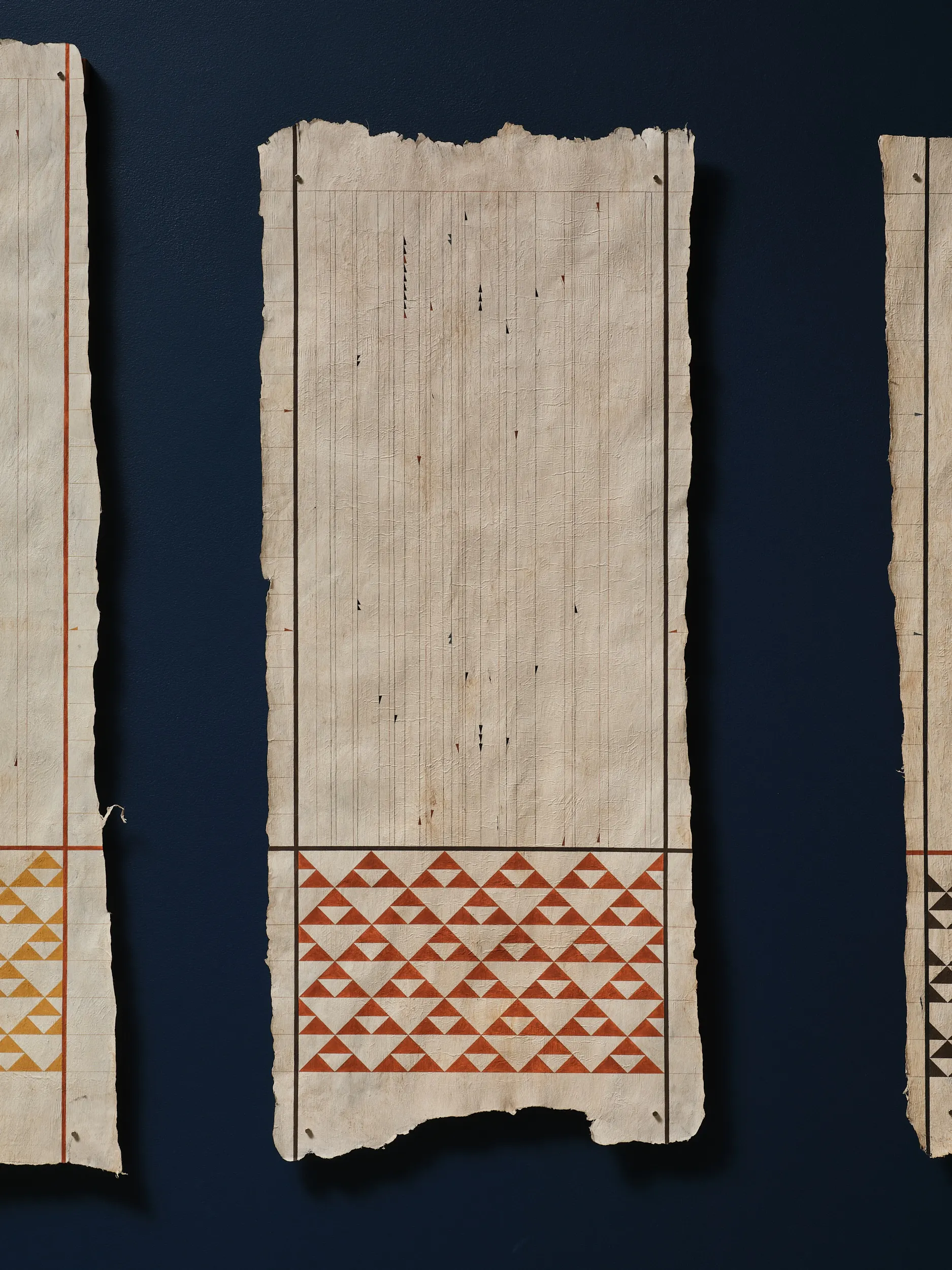
Whiro, Te Ngahuru o Poutüterangi | New Moon, The Tenth…, 2026
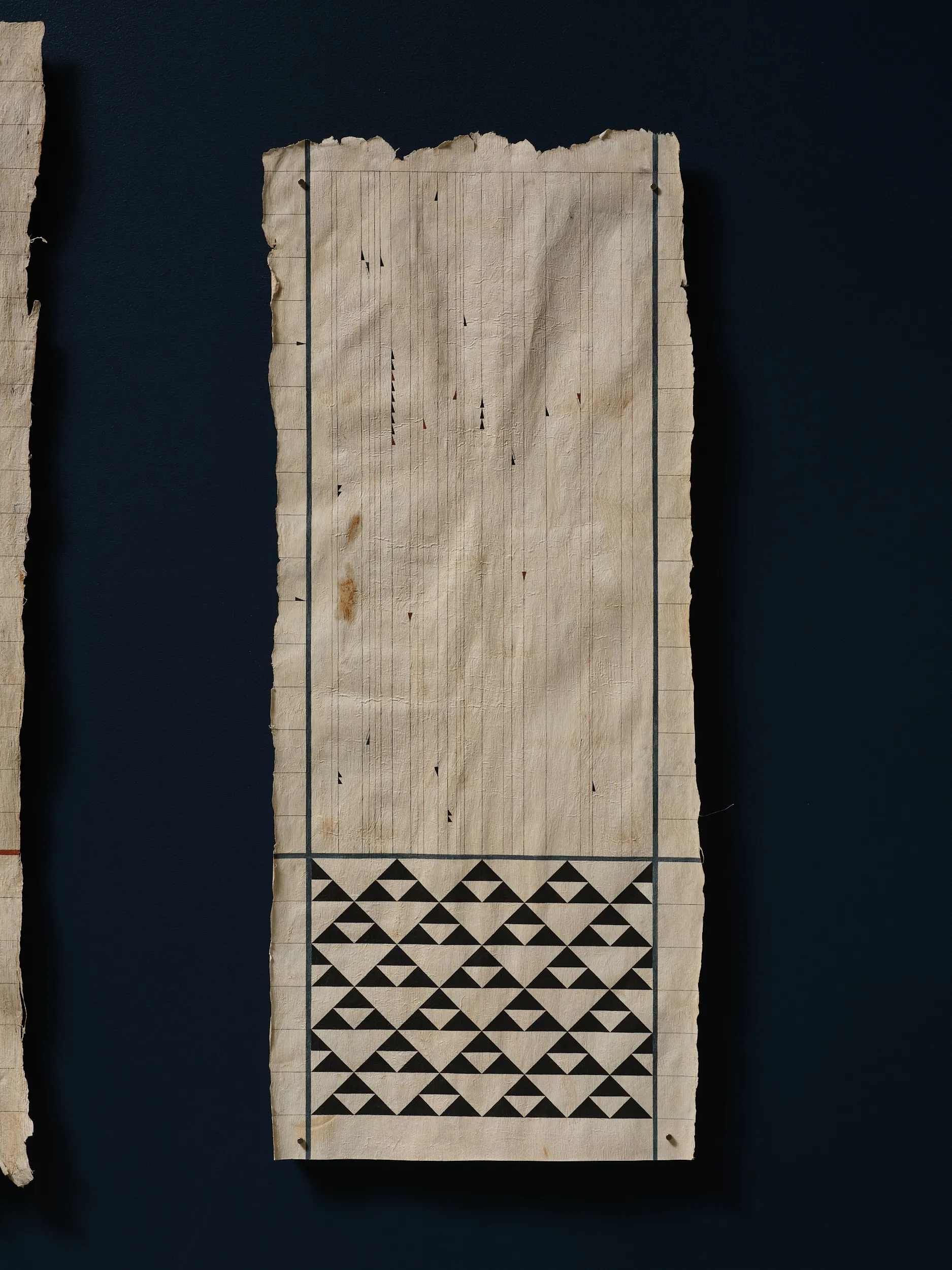
Whiro, Te Ngahurumãrua o Haki Haratua | New Moon, The…, 2026

He Au Ripo no Uruao, 2026

Nikau Hindin, Star Maps
Humans, it seems, have forever been fascinated by the stars. No matter where or when, we can find evidence that the night sky has been and is full of stories, mythologies, hopes, and dreams, full of romance, adventure, and superstition. Stars, or stories around the stars, have guided us in our lives, from poetry to navigation to astrological whimsies. While millions of light years away, stars feel close to human existence. They feel close to me, too, so I am going to start this text on a personal note. In the Central European tradition in which I grew up, in a country once divided into East and West, stars were also a symbol of progress, of political power and warfare—think about the space race, astronauts vs cosmonauts. Yet this fascination has often been shaped by (colonial) ideas of distance, mastery, and conquest: the sky imagined as a frontier to be claimed, measured, and possessed. It’s the same old tendency to distance oneself, to imagine oneself removed from the more-than-human world, rather than as embedded within it. Set against this, the cosmologies brought together in this exhibition offer another proposition entirely—one grounded not in expansion but in relation, where the night sky is not ‘out there’ but already part of the living fabric of place, ancestry, and responsibility. My own infatuation with the night sky, I am sad to say, had dimmed for quite a significant period. In a literal way, spending most of my life in a large and heavily light-polluted city, I didn’t encounter many stars. But also, I didn’t like the way I received stories of stars anymore. There was a disconnect between the stories, the news on stars and space, and my relation to—or rather my feelings towards—them. And quite frankly, if I read another news story about the space-travelling follies of a superrich patriarchy or their plans to colonise Mars—all while, environmentally and socio-culturally, causing life on Earth to become even more precarious for humans and more-than-humans—my frustration will turn into a scream that might very well be heard in space.¹
But more recently, I navigated my way back to the stars: reading theory that resists the cosmic distance and the fantasy of a disembodied universal gaze, avoiding the so-called ‘god-trick’.² And more importantly, encountering—often through artworks—Indigenous perspectives on the night sky. Cosmologies from the Northern and Southern Hemispheres. These perspectives brought the stars back into my focus, and I am grateful for that. They brought them back not as something distant, far away, abstract, but as something that grounds us. Something that talks about orientation: a way of understanding oneself as always situated within relations of land, sky, genealogy, and time. To return to the stars in this sense is to move away from abstraction and toward forms of embodied knowledge that insist we are always somewhere, and always accountable to that somewhere. Last year, after a lecture, Cree astrologer Wilfred Buck explained: “When you look at the stars, you always know where and when you are. The before and the after. You are never lost when you look at the stars.” A few months ago, having switched hemispheres and visiting artist Nikau Hindin in her studio, she said something very similar: “Stars ground us in life.”
Across Indigenous knowledge systems, celestial bodies are not distant matter but living presences, they are repositories of law, memory, navigation, spirit energy, and ecological care. Stars orient seasonal cycles and kinship structures, binding people to whenua, moana, rangi. ‘Being’ is always ‘being in relation’. I’ve since learned that in te ao Māori, thinking about one’s tūpuna and mokopuna is a constant, because they are always with you.³ In knowing your past, you know your future, and thus, maybe most crucially, you know your present. Intimately related to the rest of existence, past and future cease to be something unknown: You are never lost when you look at the stars. Orientation here exceeds wayfinding alone; it becomes an ethical and ecological practice, a mode of attending to cycles, obligations, and interdependence. The stars do not simply tell us where we are in space, but how to move through life in right relation with human and more-than-human worlds.
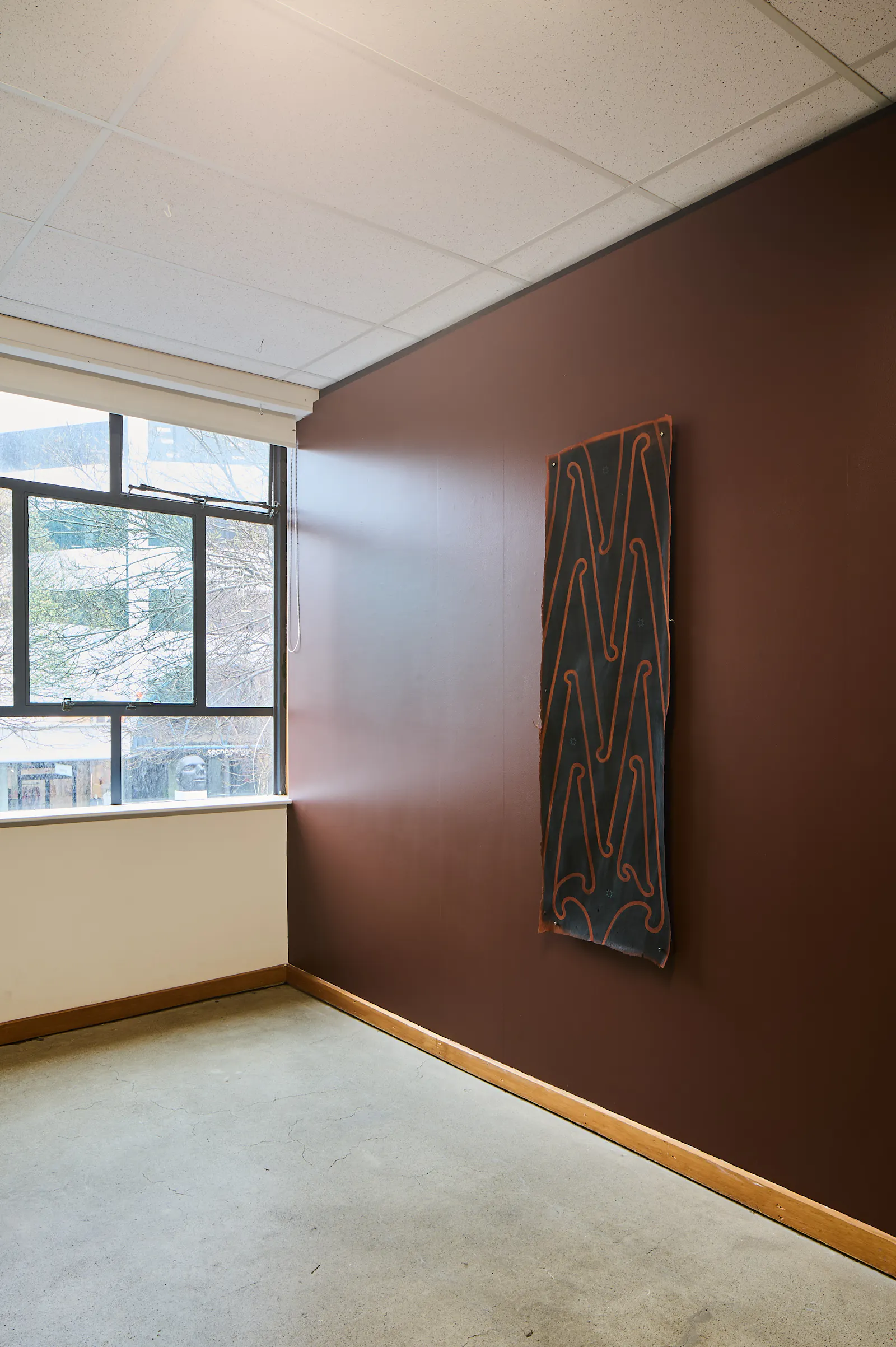
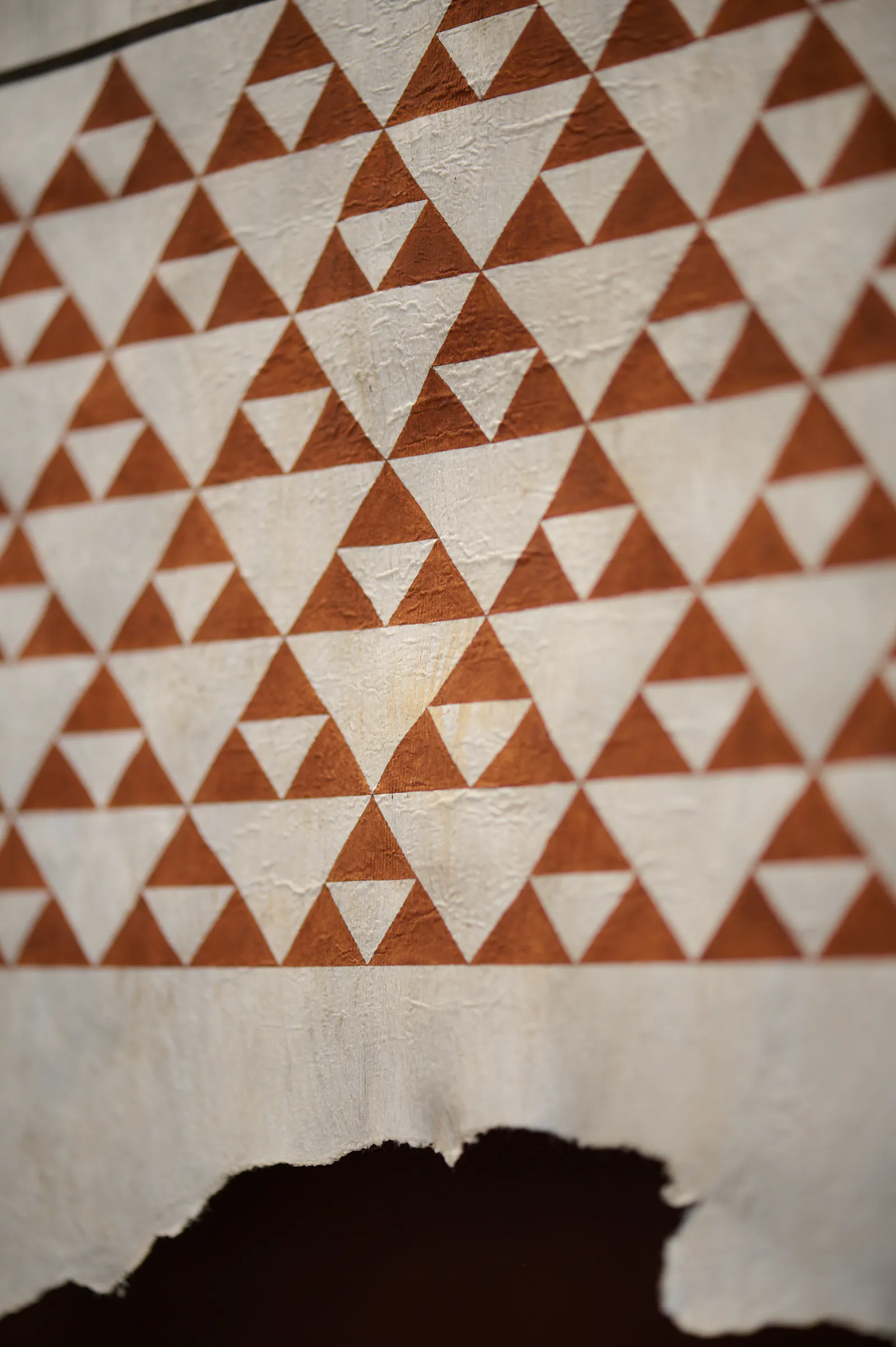
Emerging from sustained engagement with te ao Māori, specifically cosmological knowledge, Hindin’s work centres on the reinvigoration of traditional cultural practices. Inscribing natural pigments onto aute—barkcloth made from paper mulberry by the artist herself—she charts stellar movements in alignment with the maramataka, the Māori lunar calendar. Lines extend across the cloth as diagrams of time, translating navigational knowledge into material form. The compositions function as both star maps and environmental compasses, encoding rising and setting points of stars along the horizon. Hindin reactivates systems of orientation, but also techniques disrupted by colonial imposition. Mapping here is an act of remembering—locating knowledge in the body, in material, and in time.
At the centre of Kimihia ngā Whetū Pukepoto is Ngā Whetū Maiangi II: The Rising Stars of the Stellar Lunar Calendar 2025–2026, a suite of 12 star maps produced for Hindin’s recent exhibition COSMOLOGIES at Te Uru Contemporary Gallery, where they were originally presented alongside Yolŋu artist Naminapu Maymuru-White. The works begin on the first Whiro (new moon) of the Stellar Lunar Calendar before Matariki 2025 and continue through to Matariki 2026. Each map documents the rising and setting of stars during Whiro, with the heliacal rising star — the morning star that announces each lunar month — distinguished within the composition. Hindin describes these as “land stars”: where navigational stars can locate us in space and direction, land stars locate us in time.
In Hindin’s practice, cosmology is not metaphor but method: a way of mapping relations across generations and more-than-human worlds. A way to locate our own position in this world and in this life. Working with aute, Hindin shapes lived astronomical knowledge into contemporary abstraction while remaining grounded in ancestral responsibility. As such, she creates work that sits staunchly and rightfully within a contemporary art context, powerfully, confidently effortlessly counterbalancing a discourse that too often continues to relegate Indigenous art-making techniques to the realms of craft, ethnography, or the historical past. In doing so, she insists, if ever there was doubt, not only on the contemporaneity of their cosmological knowledge systems, but on the continued[4] critical failure of Western art histories to fully recognise these practices as rigorous, conceptually expansive, and future-facing forms.
Indigenous knowledge systems, Hindin asserts, are dynamic, sovereign and contemporary. Kimihia ngā Whetū Pukepoto invites viewers to encounter the night sky as a living archive: a continuum of story, of life force and movement, and of responsibility that continues to shape ways of being in the present. At a moment marked by ecological instability, political disorientation, and renewed struggles over land and futurity, the works remind us that orientation is never merely spatial. It is also cultural, ethical, and existential. Stars are the root for home. To look to the stars through Hindin’s practice is to be returned to Earth differently: more grounded in place, more attentive to relation, and perhaps less willing to imagine the future as anything other than a shared responsibility.
Anja Lückenkemper
An earlier version of this text was published on the occasion of COSMOLOGIES at Te Uru Contemporary Gallery (31 MAY - 9 AUG 2026). This version includes additions and editing by Jhana Millers.
___
¹ “In space, no one can hear you scream” is the famous tagline for Ridley Scott’s 1979 sci-fi horror film Alien.
² See, for example, Donna Haraway’s Situated Knowledges: The Science Question in Feminism and the Privilege of Partial Perspective (1988), as well as Bruno Latour’s Facing Gaia: Eight Lectures on the New Climatic Regime (2017), and Down to Earth: Politics in the New Climatic Regime (2018).
³ See Hana Burgess and Te Kahuratai Moko-Painting’s Onamata, Anamata: A Whakapapa Perspective of Māori Futurism (2026).
4 Though, of course, there are and have been contemporary art exhibitions and biennials that have displayed a shifting towards a different understanding. It still feels, unfortunately, like a lot of work needs to be done before this shift will manifest in a paradigmatic reconfiguration and rewriting of museologies, art histories, and art canons as well.