Caroline McQuarrie
How deep into the earth we sink
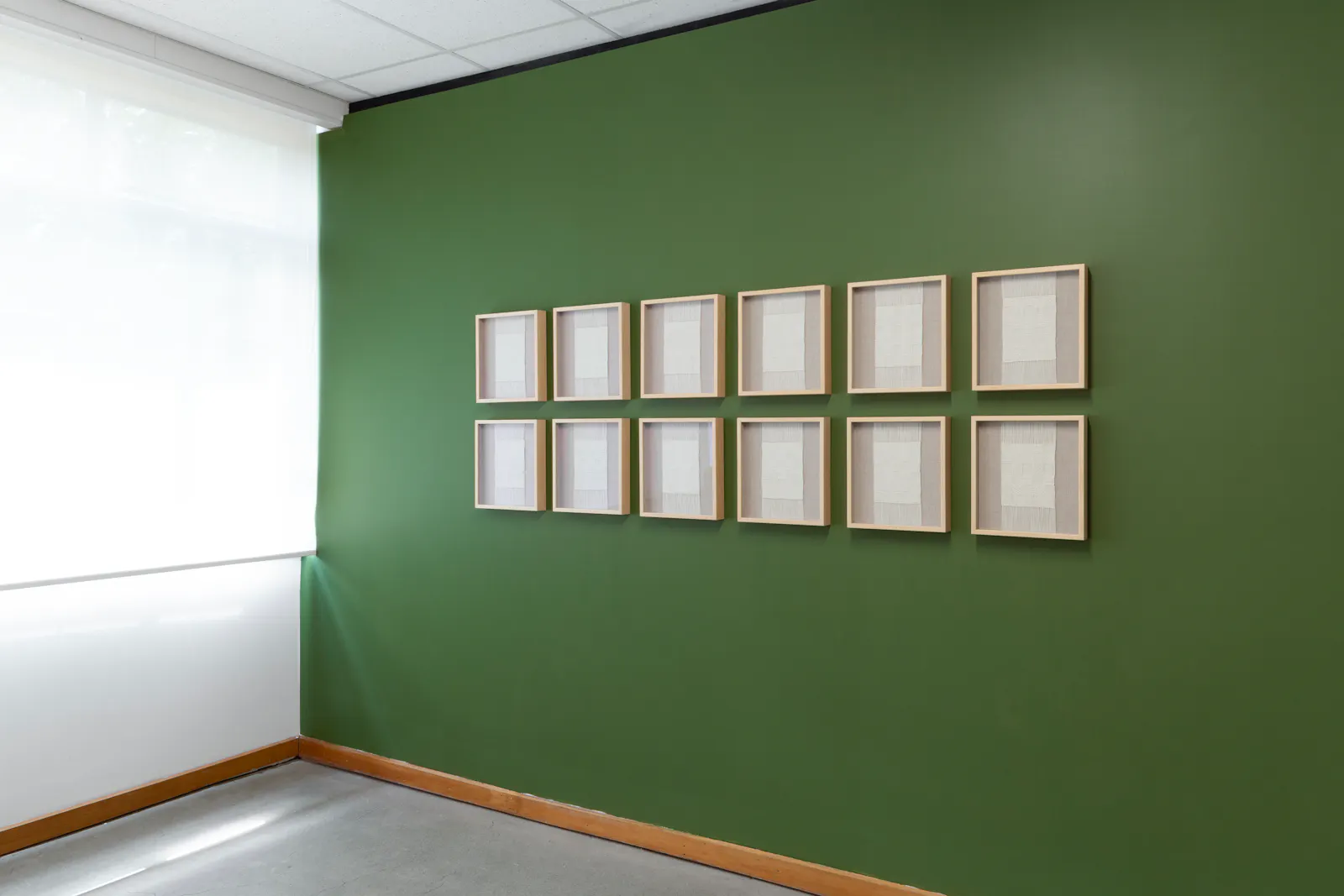
15 February — 9 March
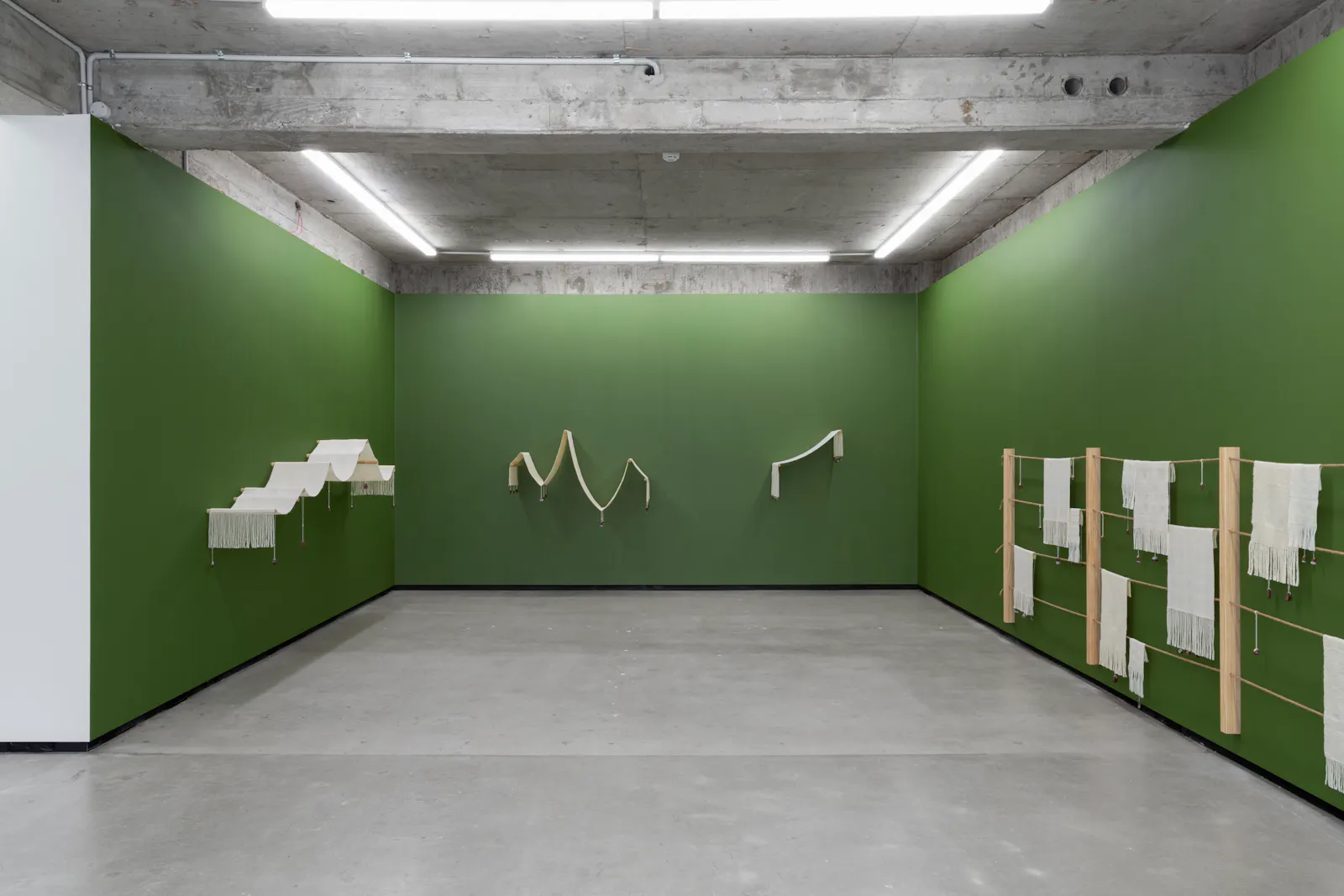
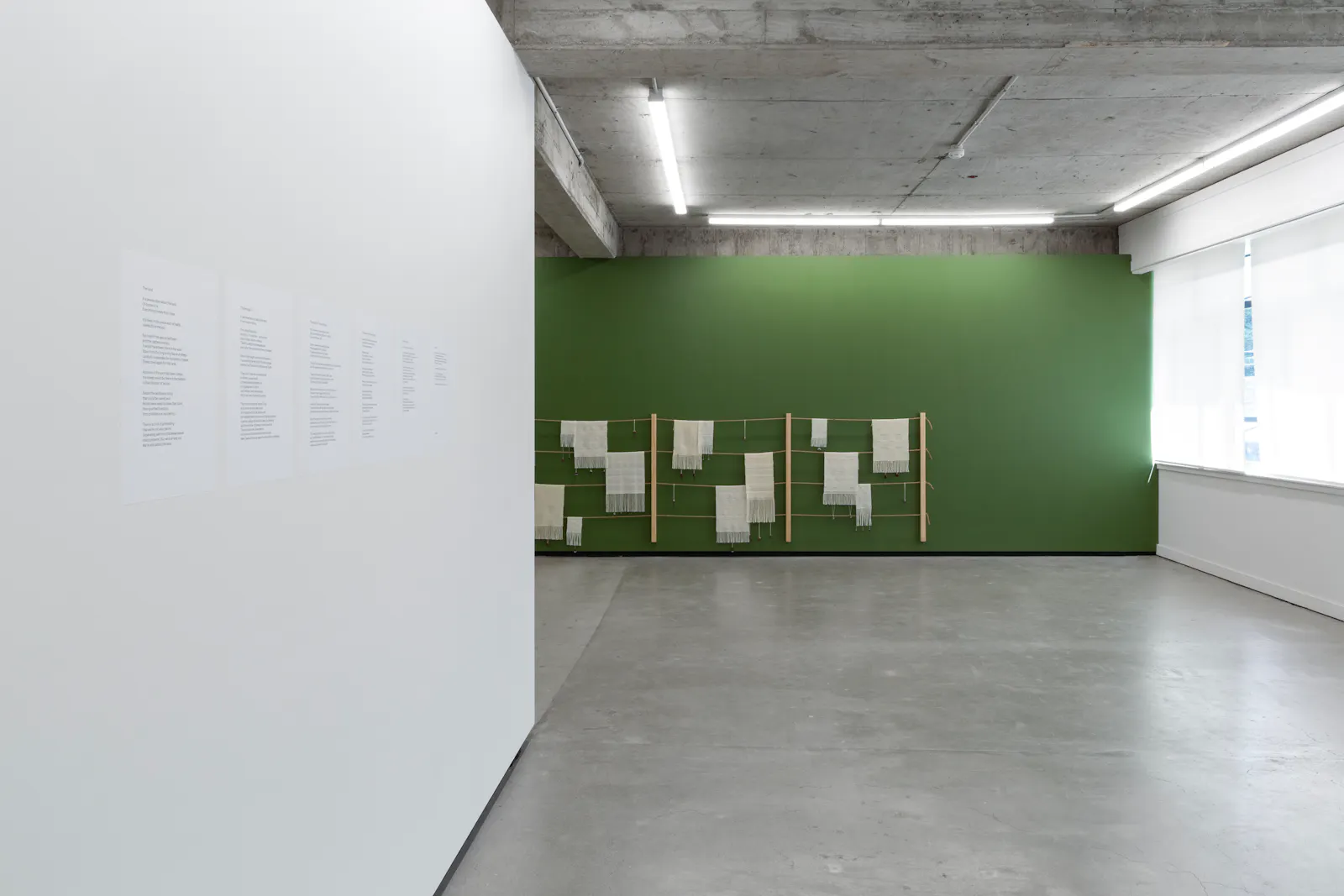
How deep into the earth we sink is a solo exhibition of woven works by Gallery artist Caroline McQuarrie. This exhibition is a response to Caroline's time spent at The Gullies Arts Residency in the Rangitīkei over winter 2023. A piece of writing by Caroline can be read below and a selection of poems from Ish Doney accompany the exhibition.
The land
It is always also about the land.
Of course it is.
Everything comes from there.
It’s there in the piece work of fields,
viewed from the sky.
But even if the weave had been
another pattern entirely,
it would have been there in the wool.
Spun from the long white fleece of sheep
carefully husbanded for hundreds of years.
Sheep bred again for this land.
And even if the yarn had been cotton,
the sheep would be there in the pattern,
in that division of fences.
Before the land was a thing
that could be owned and
fences were used to stake that claim,
they guarded livestock
from predators or wandering.
There’s a trick of pretending
that we’re not also nature.
Separating self from the dense weave
of ecosystems. But we live here too.
We’re also about the land.
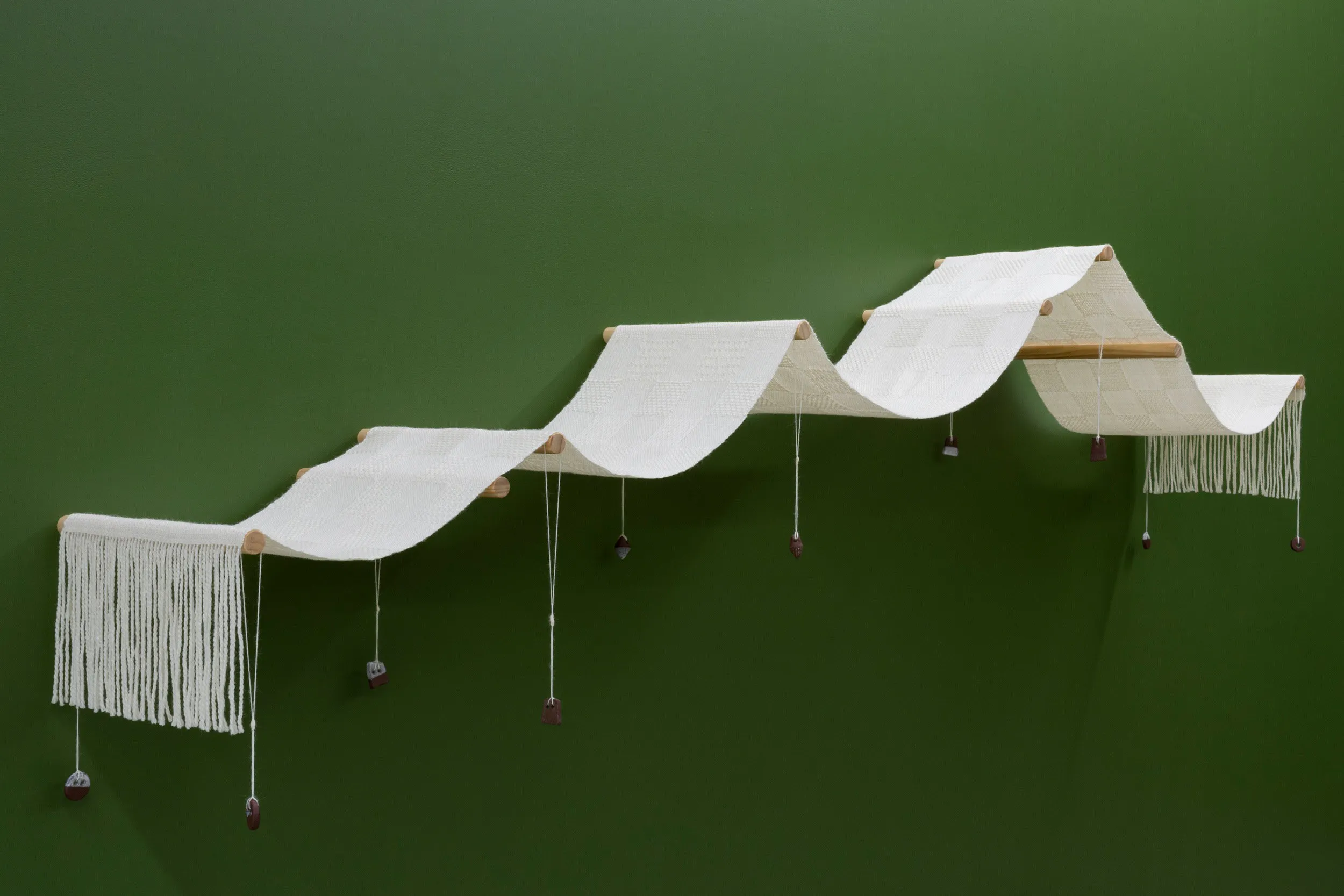
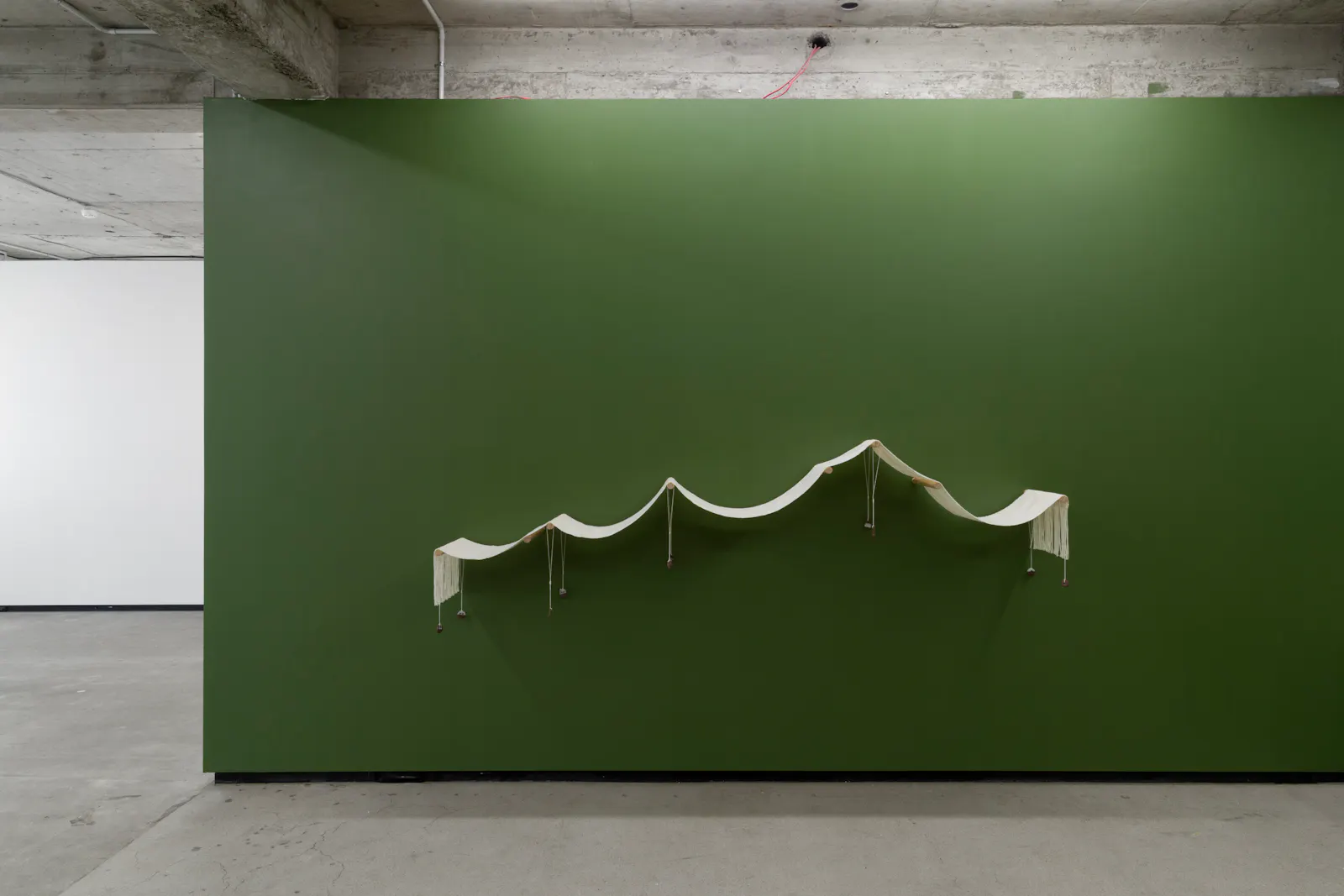
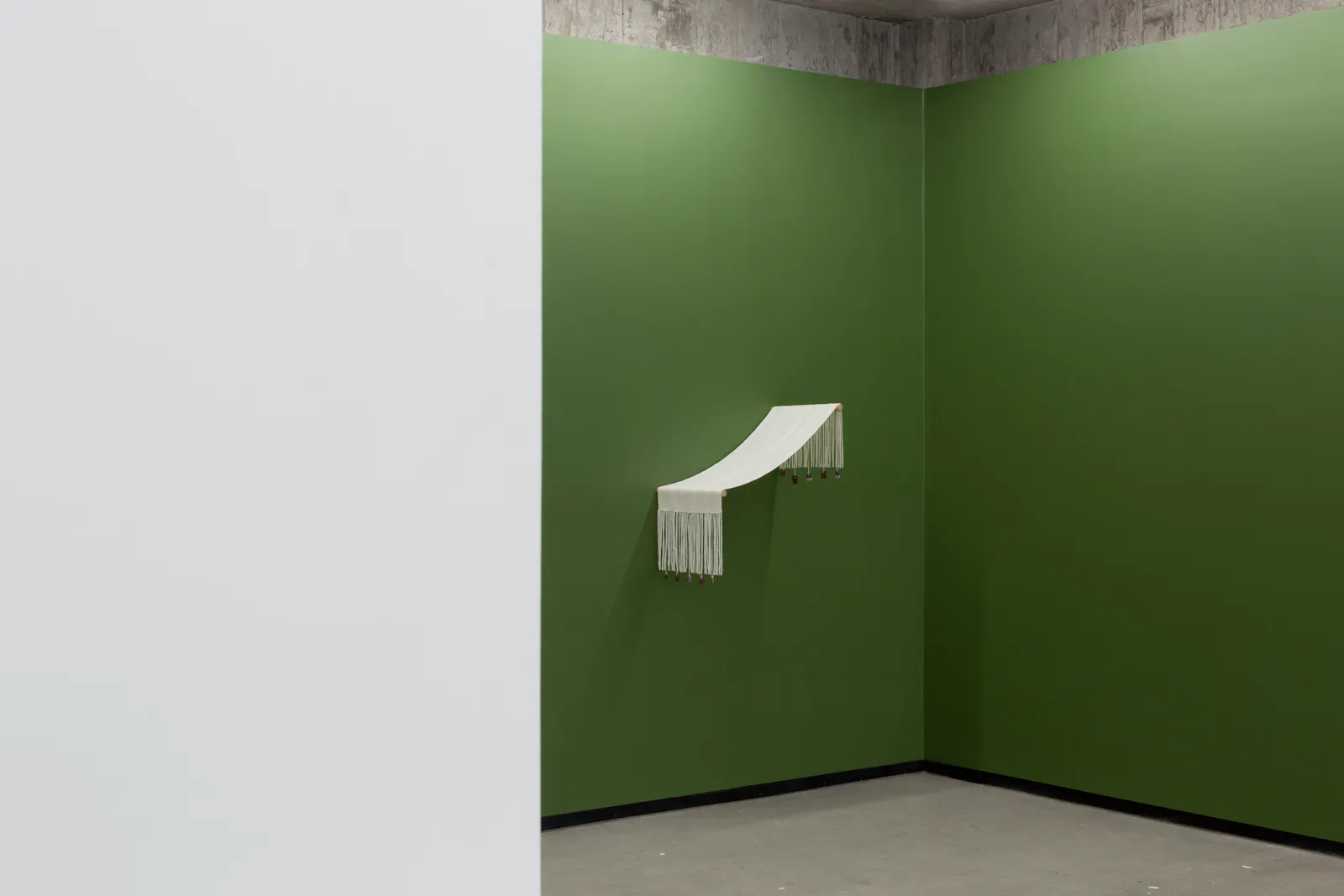
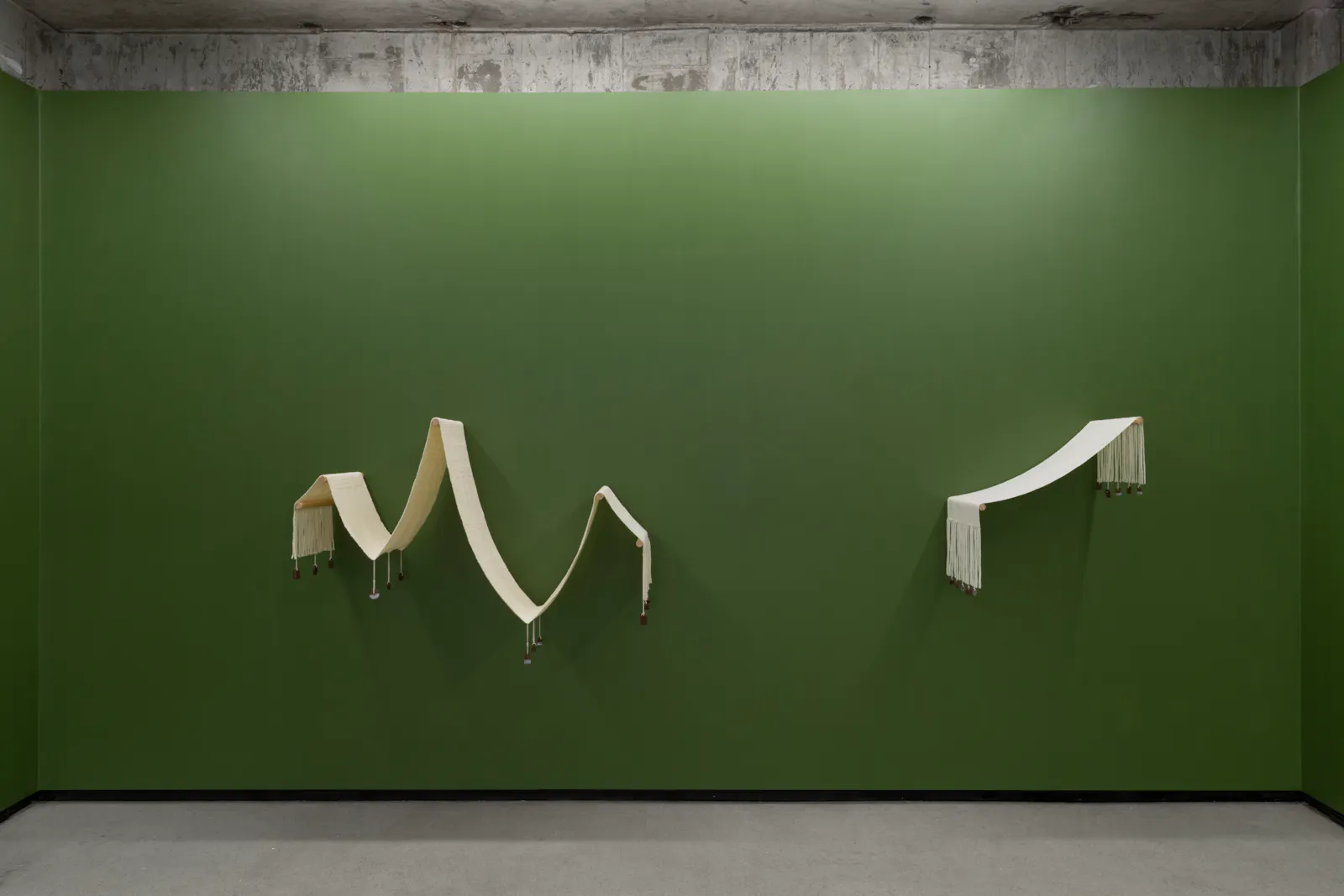
Hills, 2024
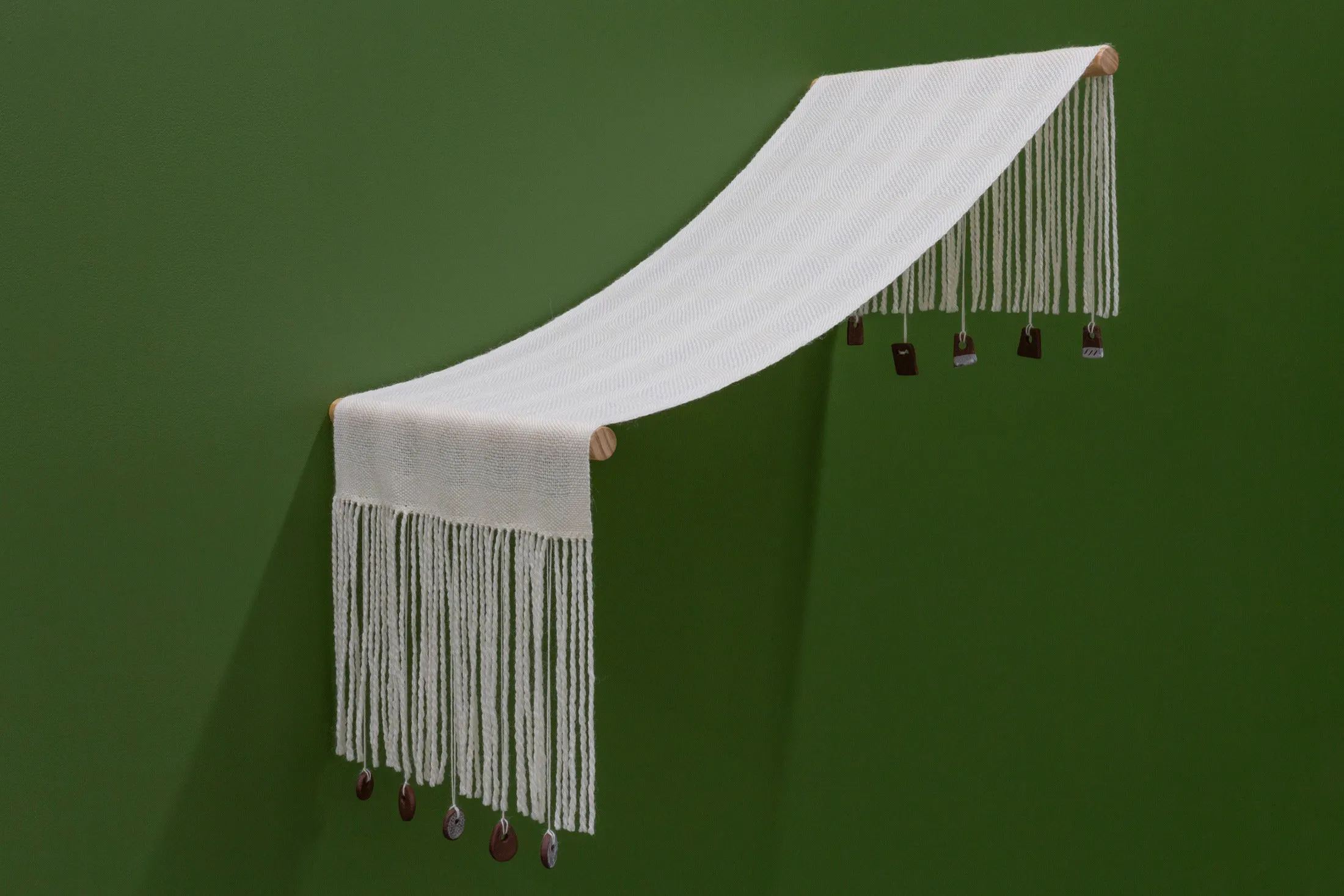
Incline, 2024
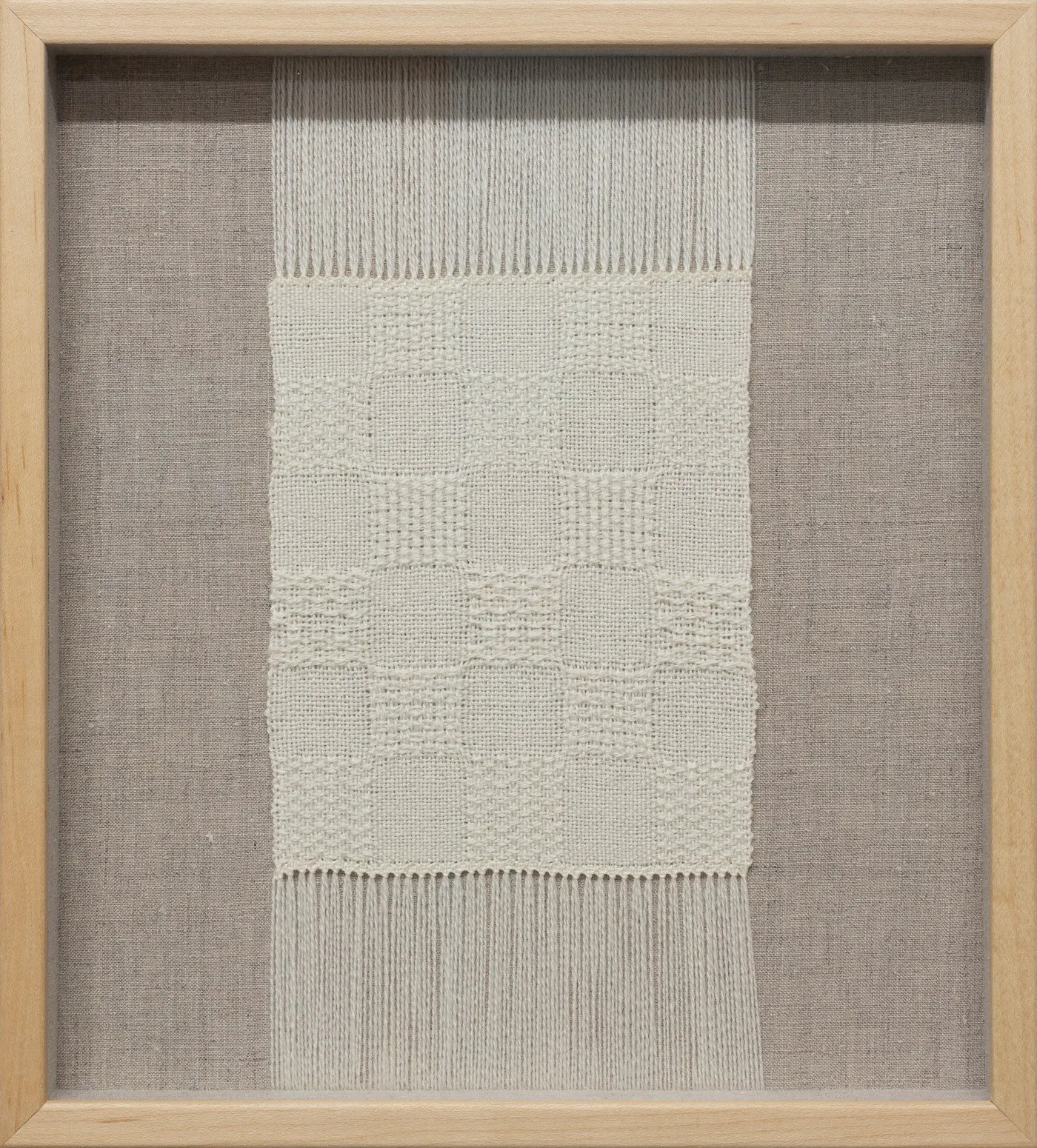
Woven sampler 1, 2024
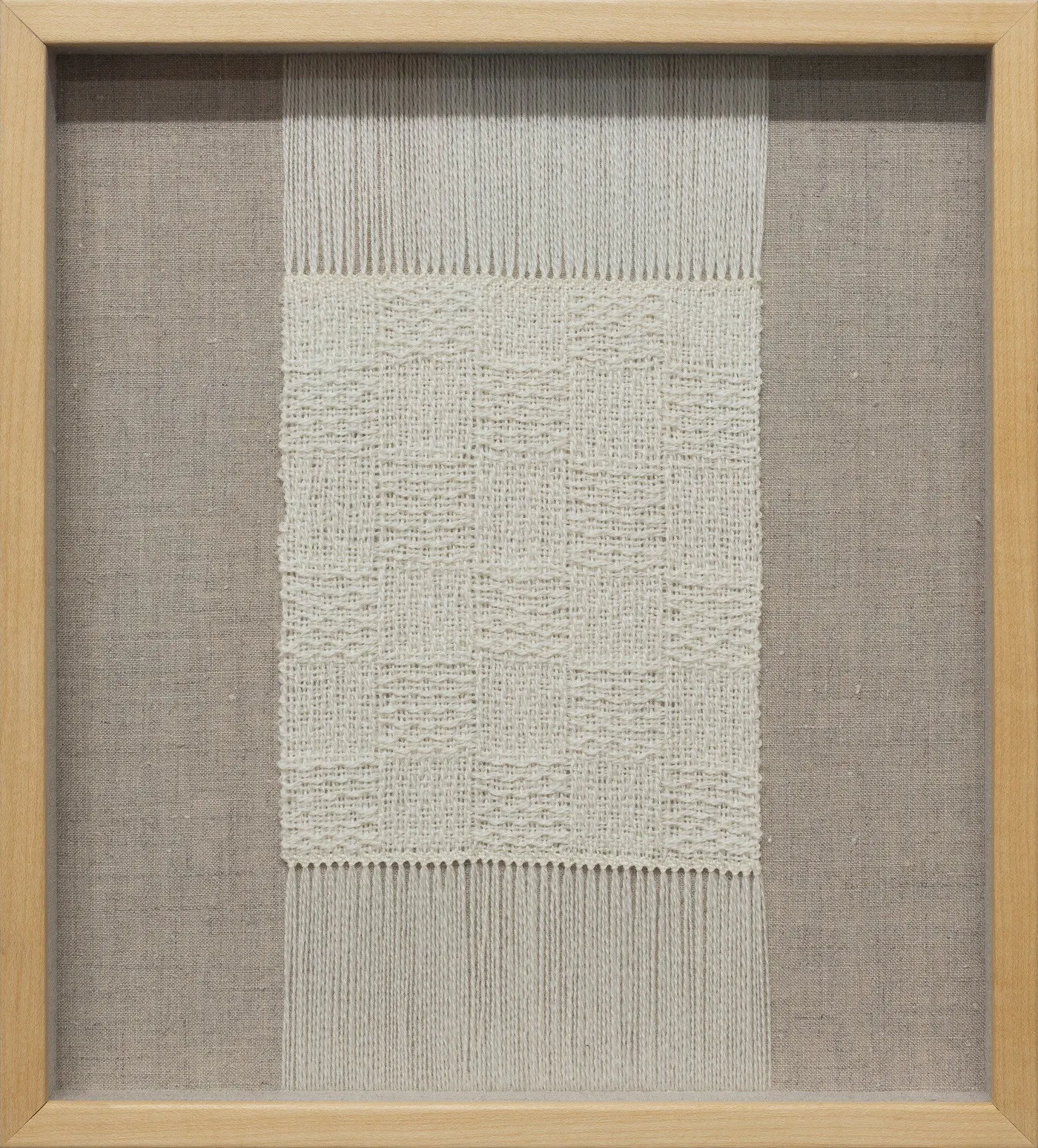
Woven sampler 3, 2024
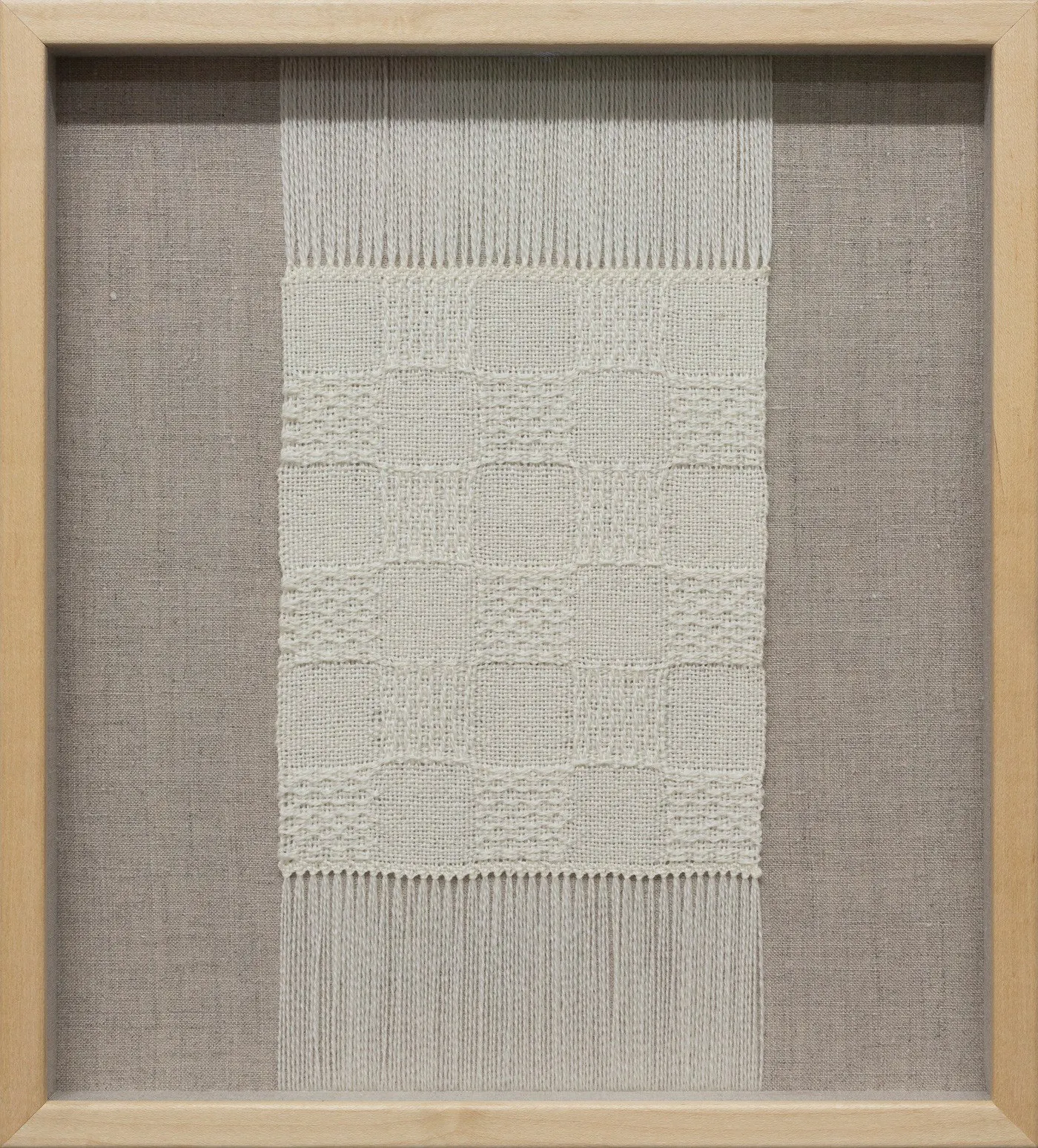
Woven sampler 5, 2024
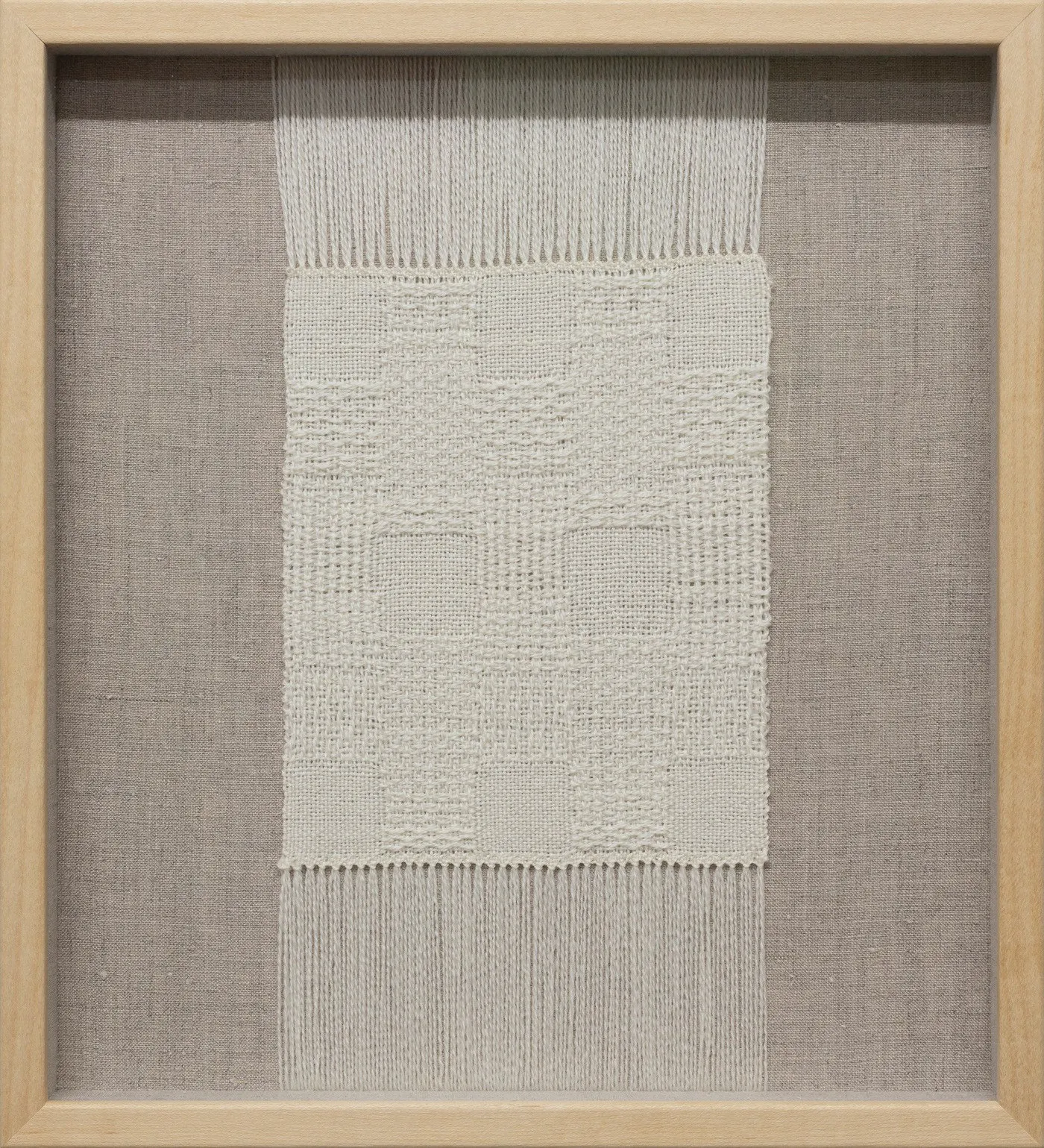
Woven sampler 7, 2024
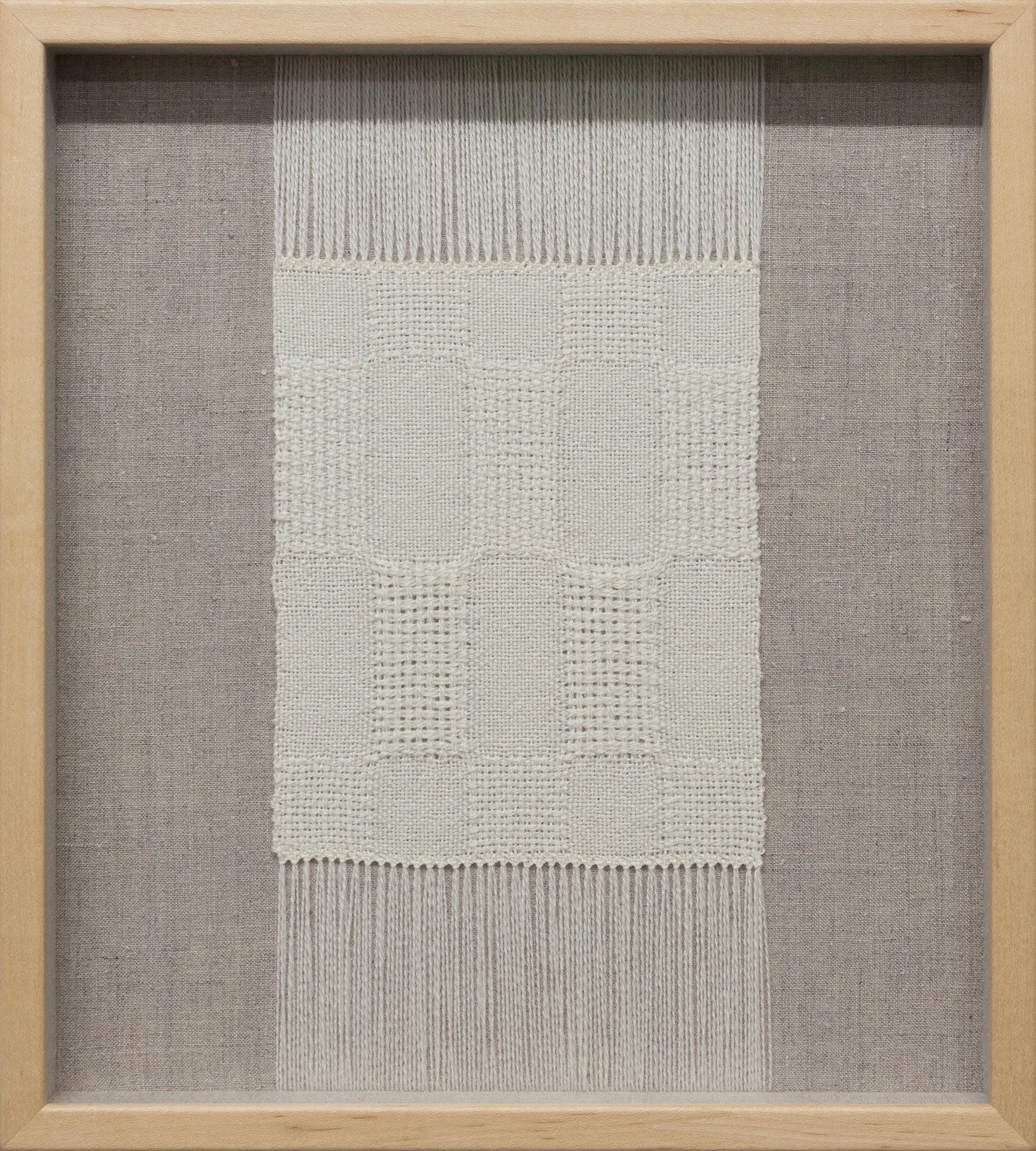
Woven sampler 9, 2024
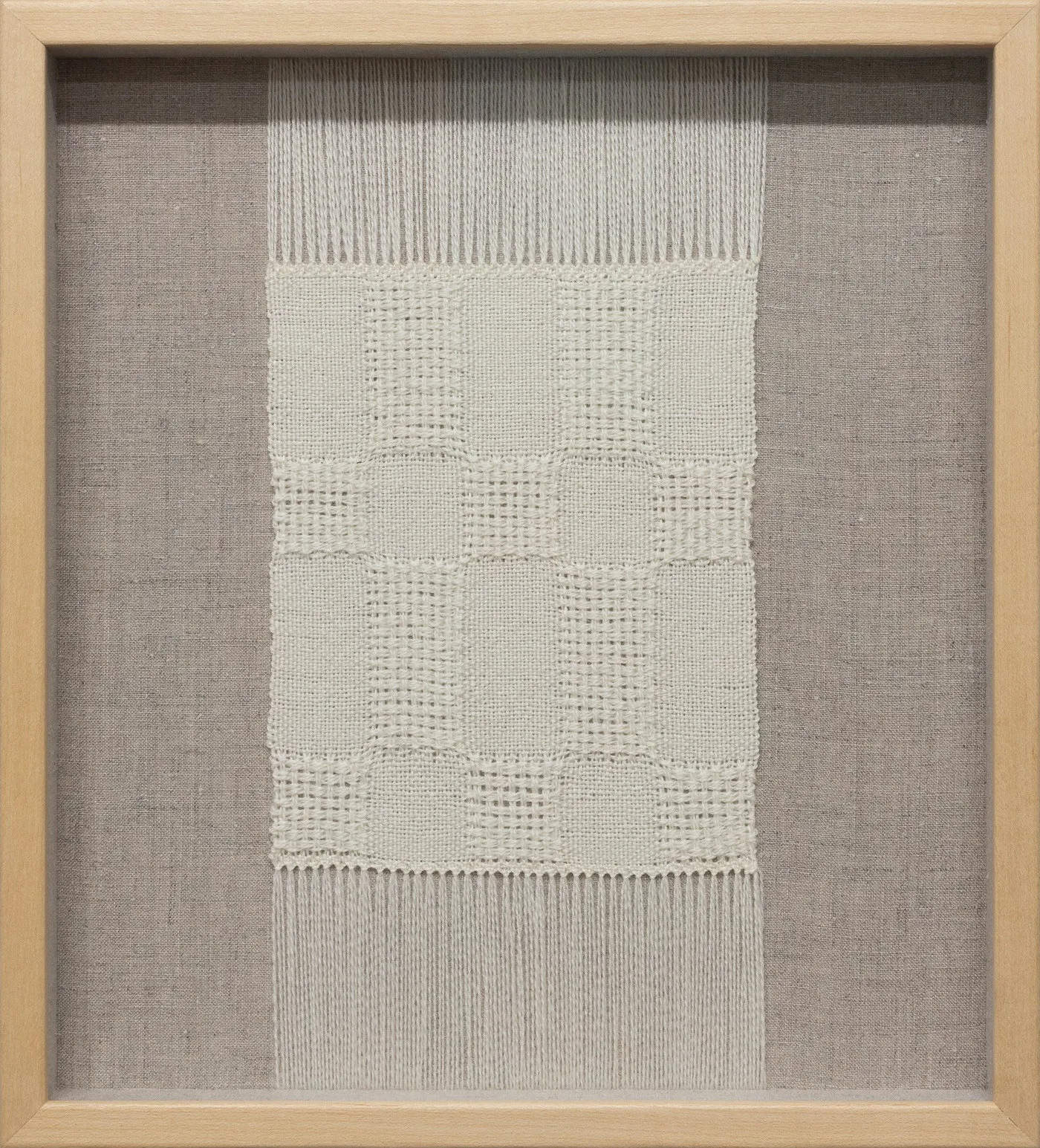
Woven sampler 11, 2024
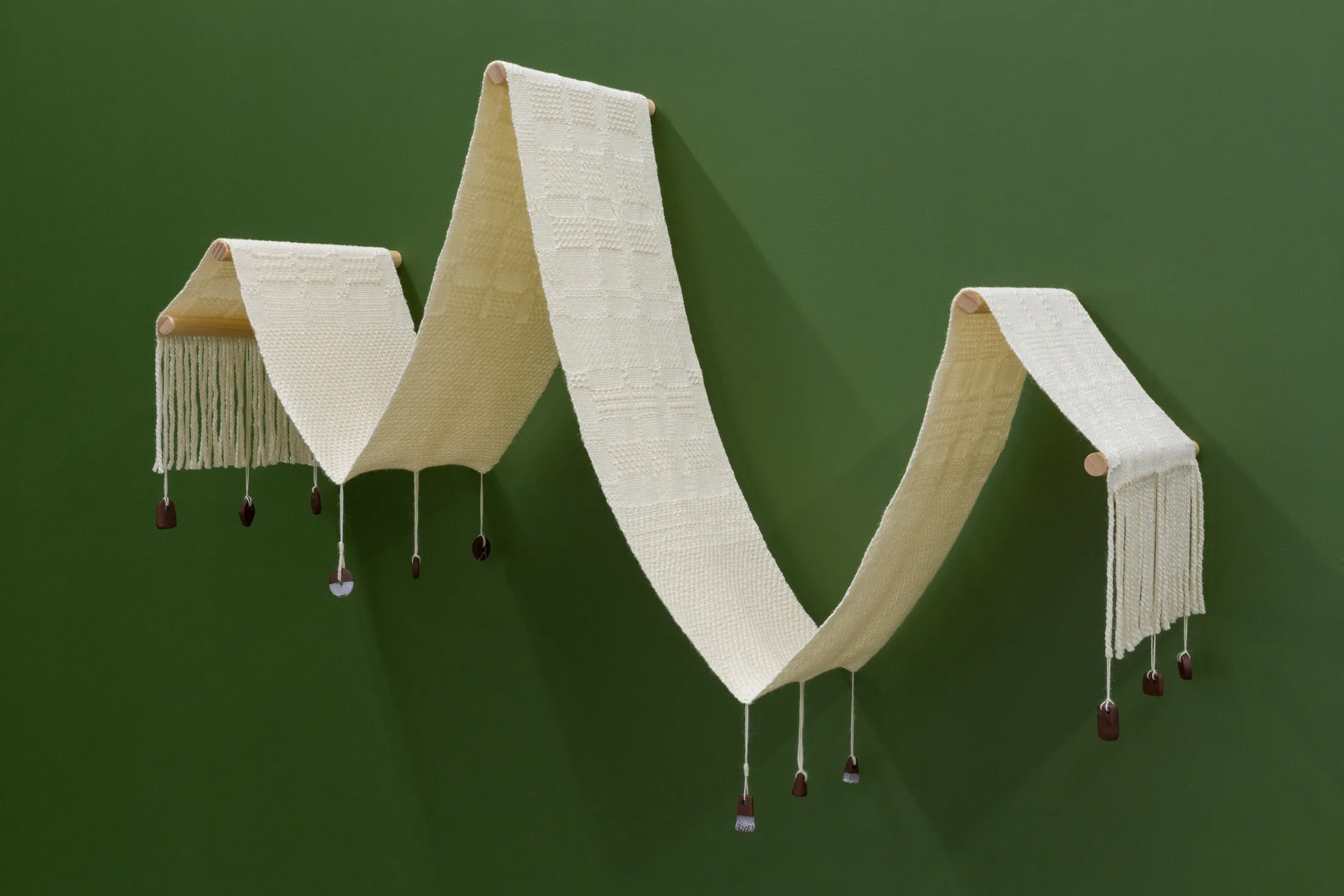
Gullies, 2024
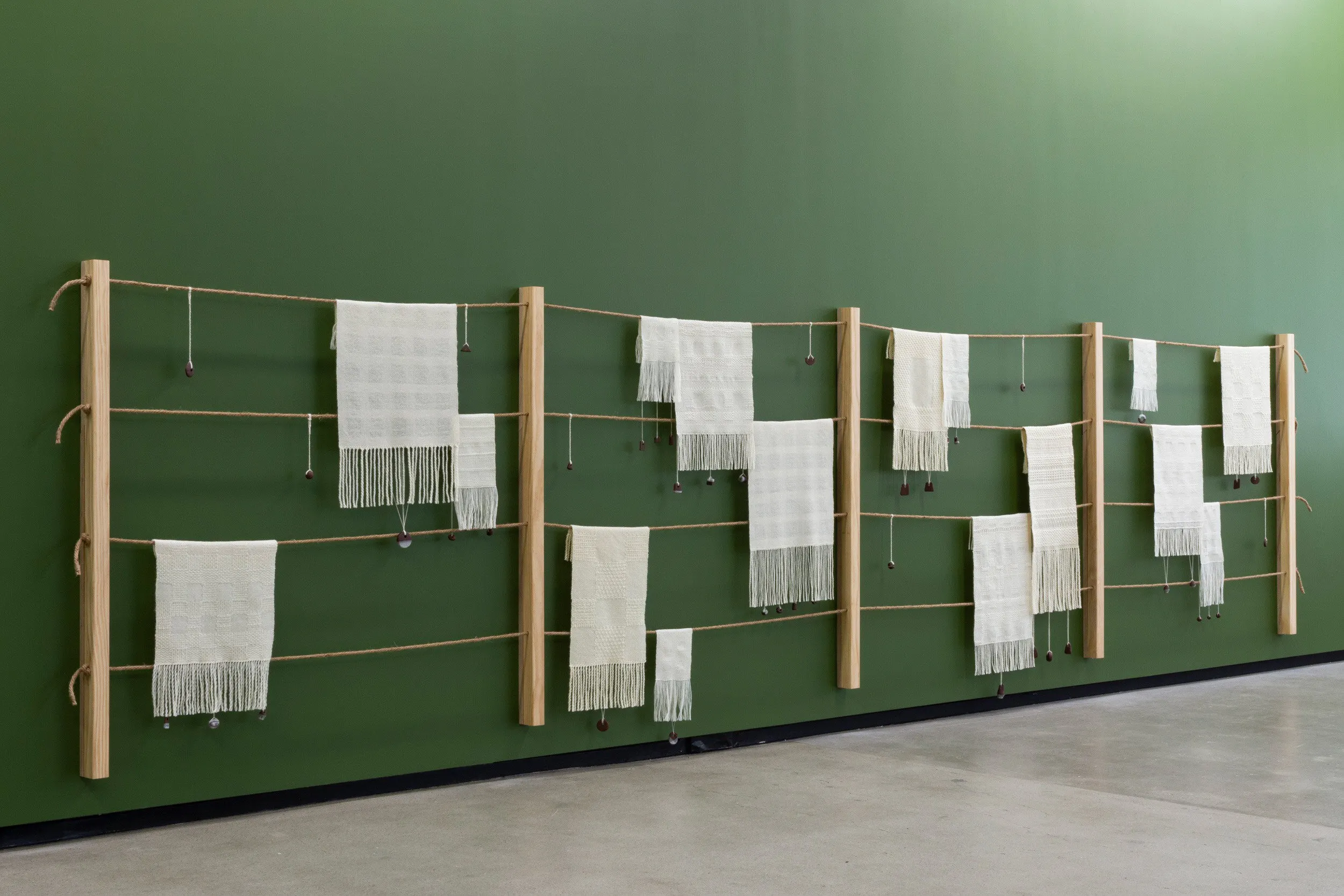
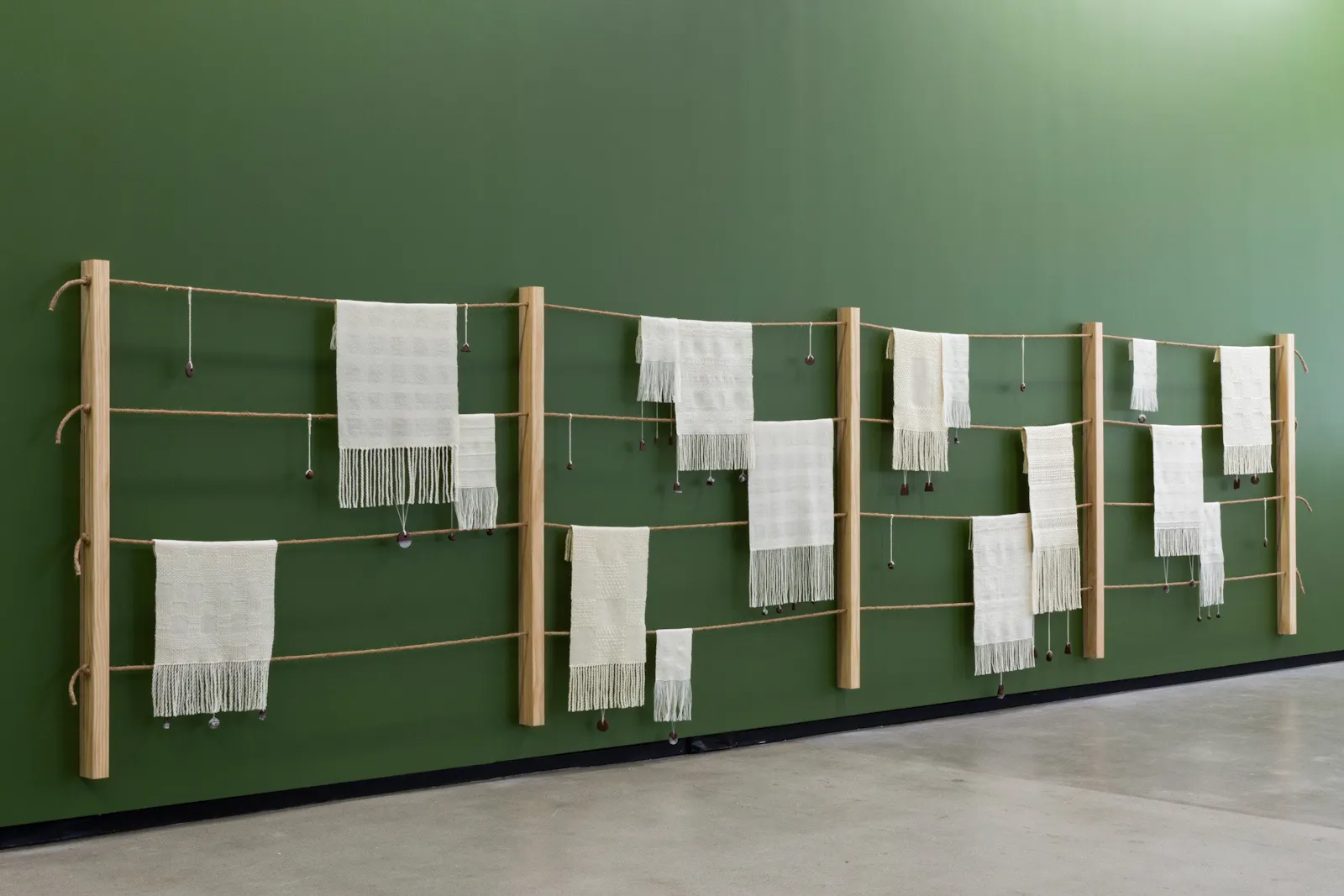
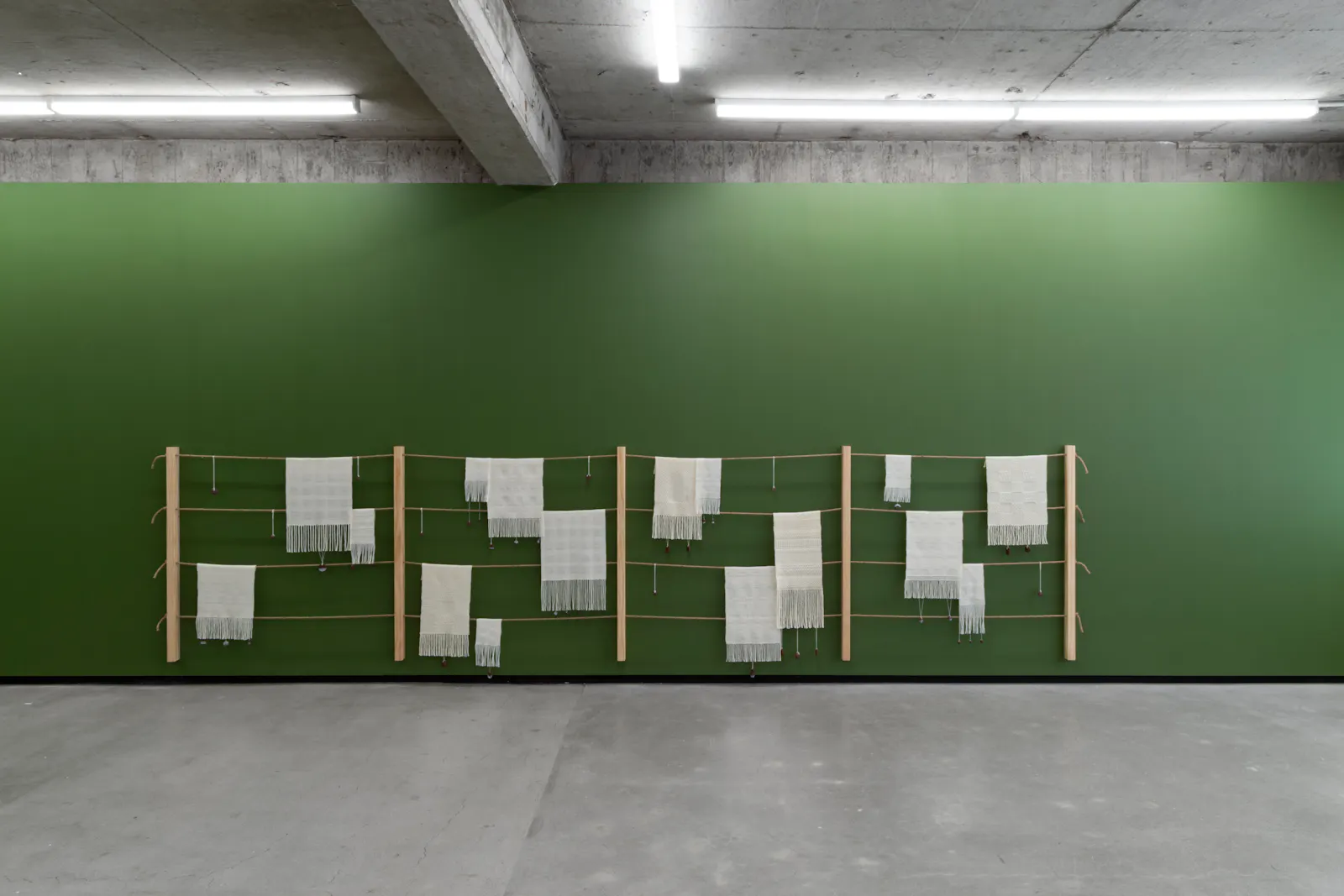
Fence, 2024
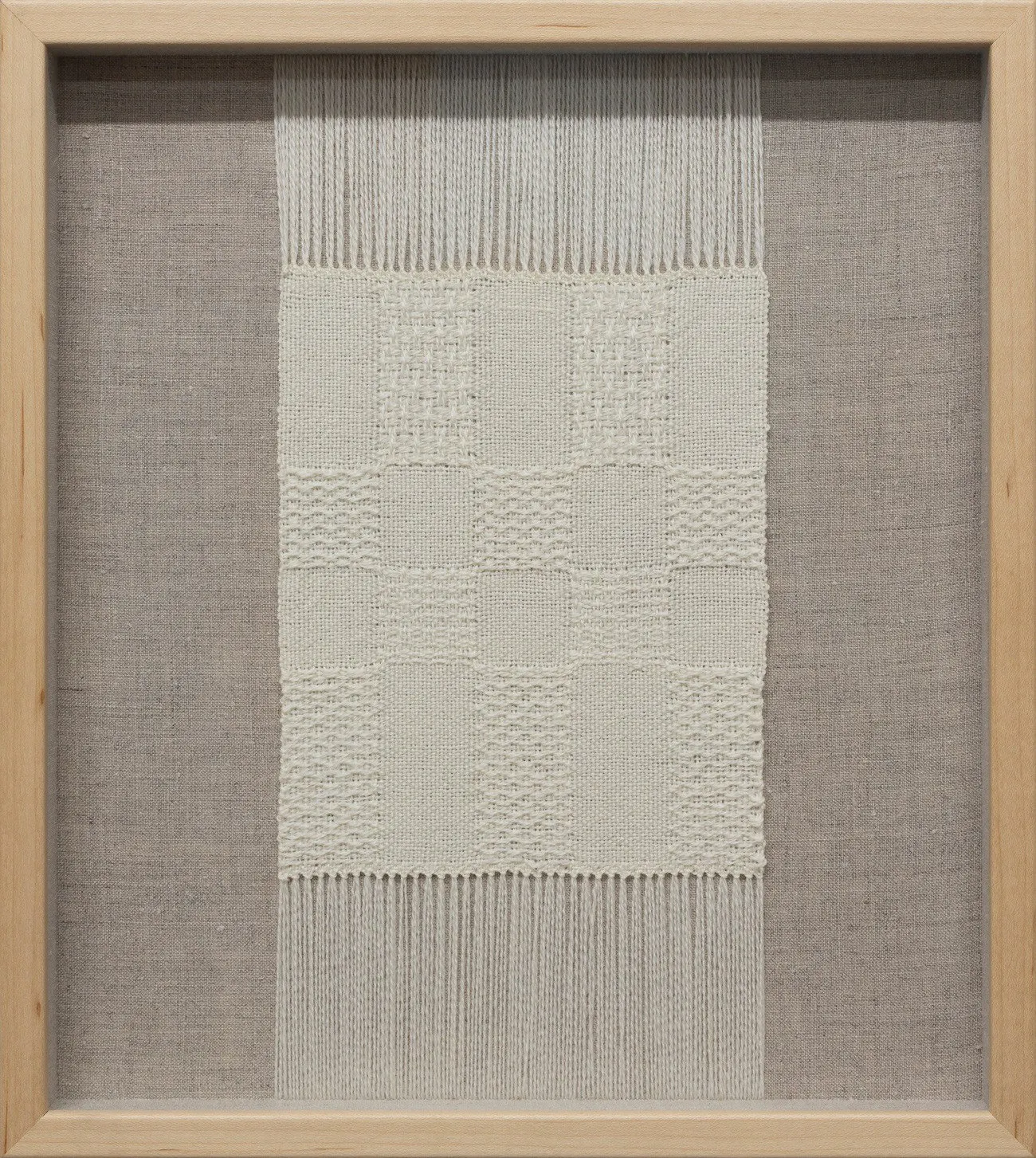
Woven sampler 2, 2024
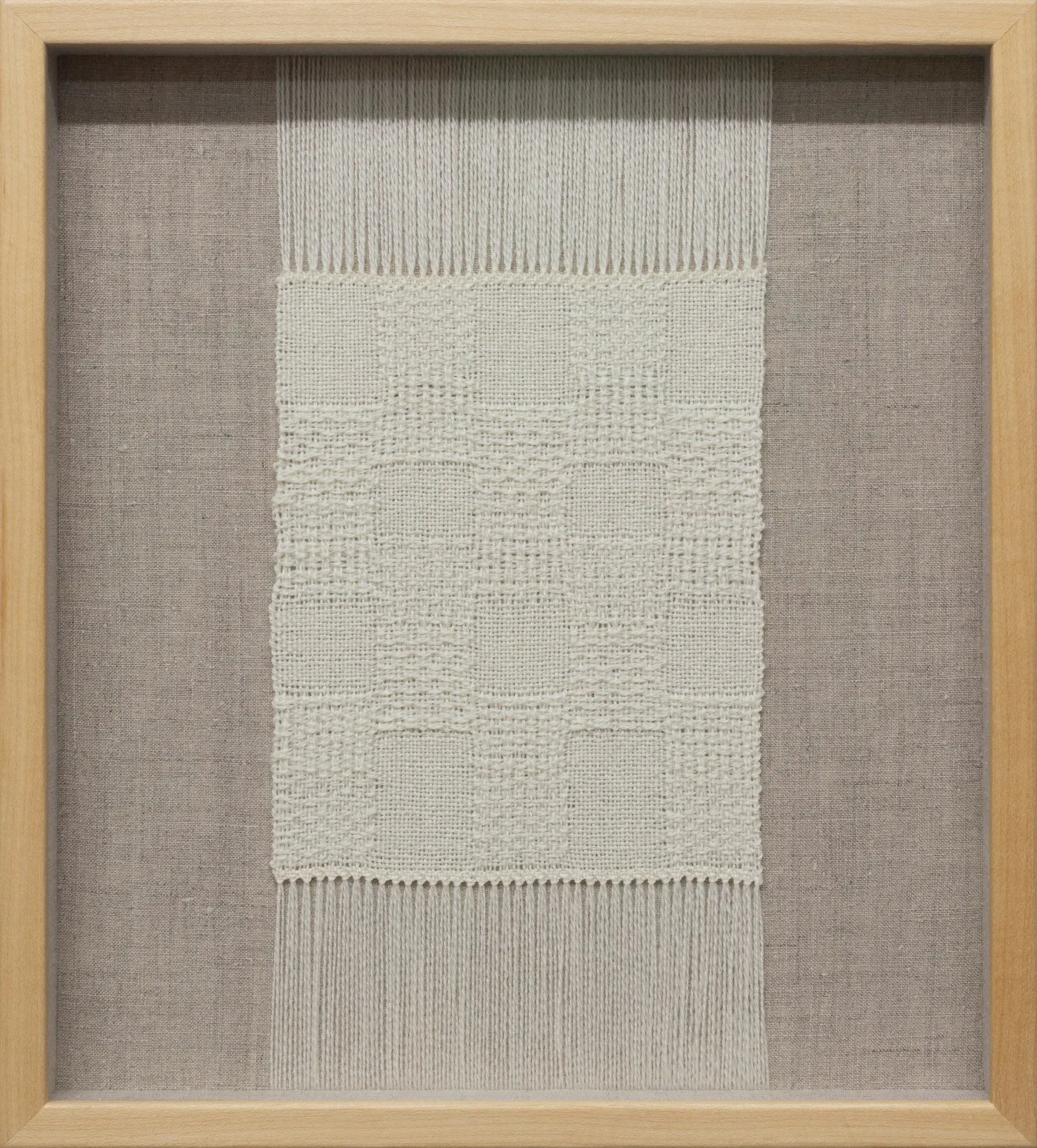
Woven sampler 4, 2024
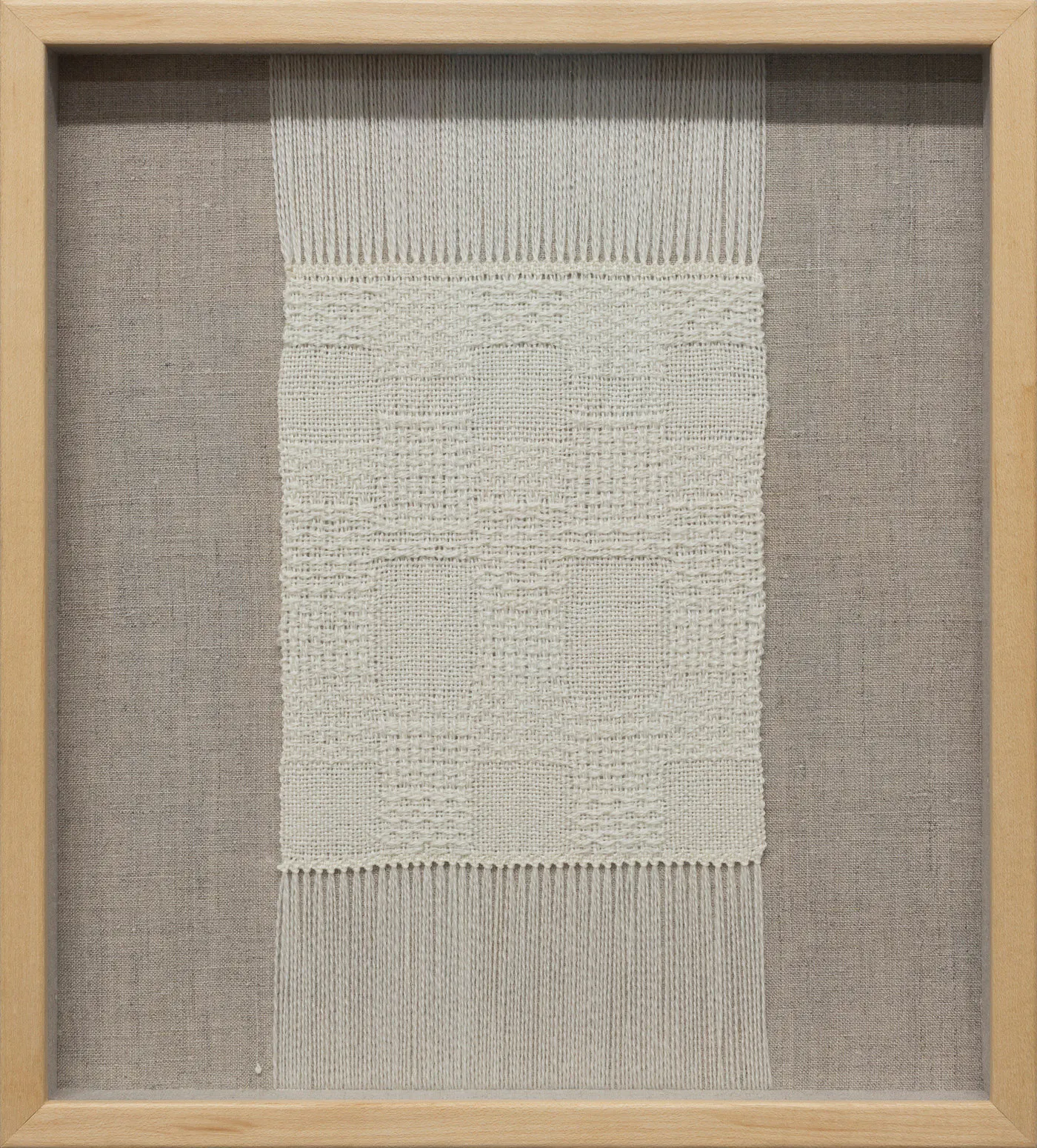
Woven sampler 6, 2024
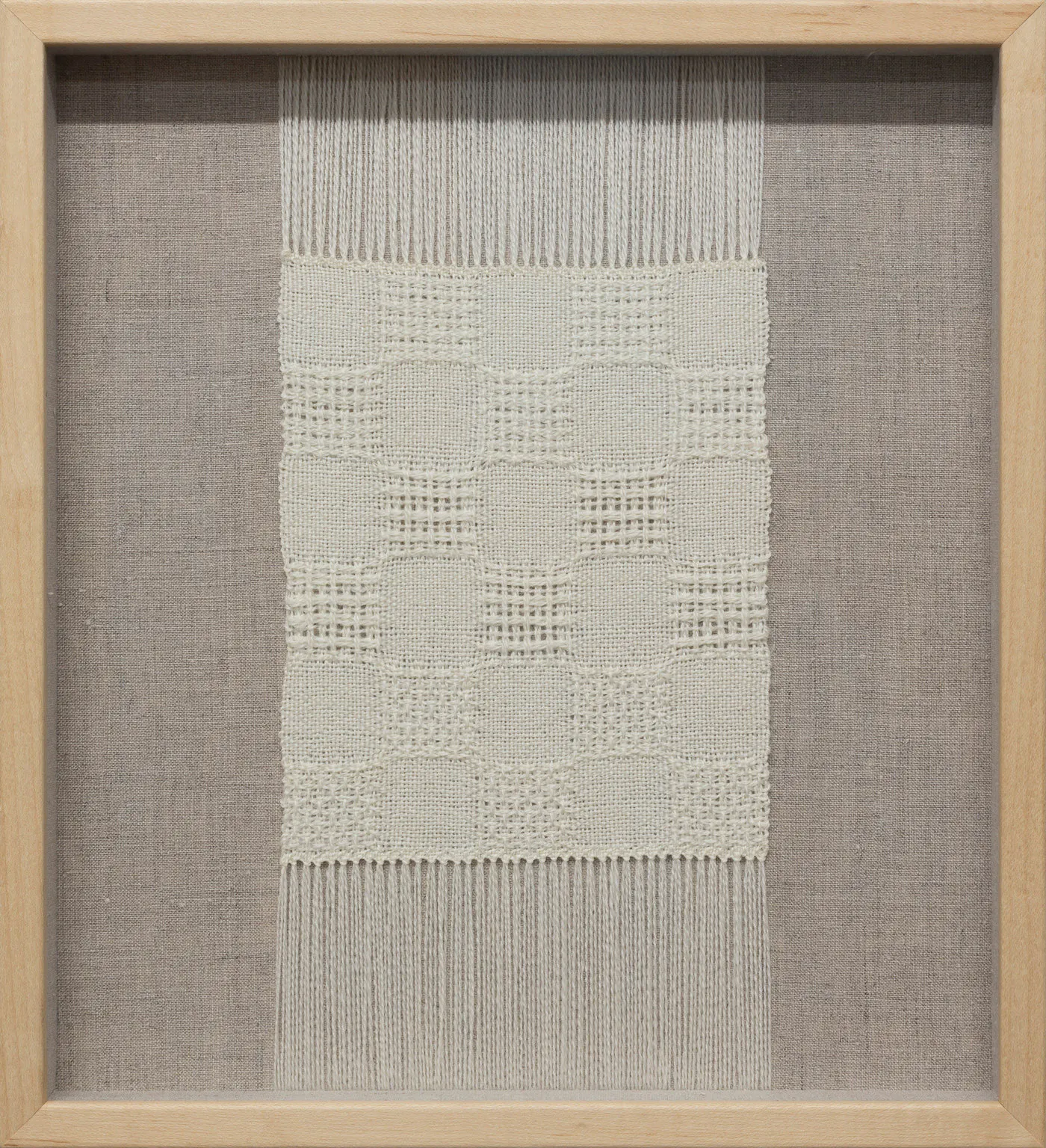
Woven sampler 8, 2024
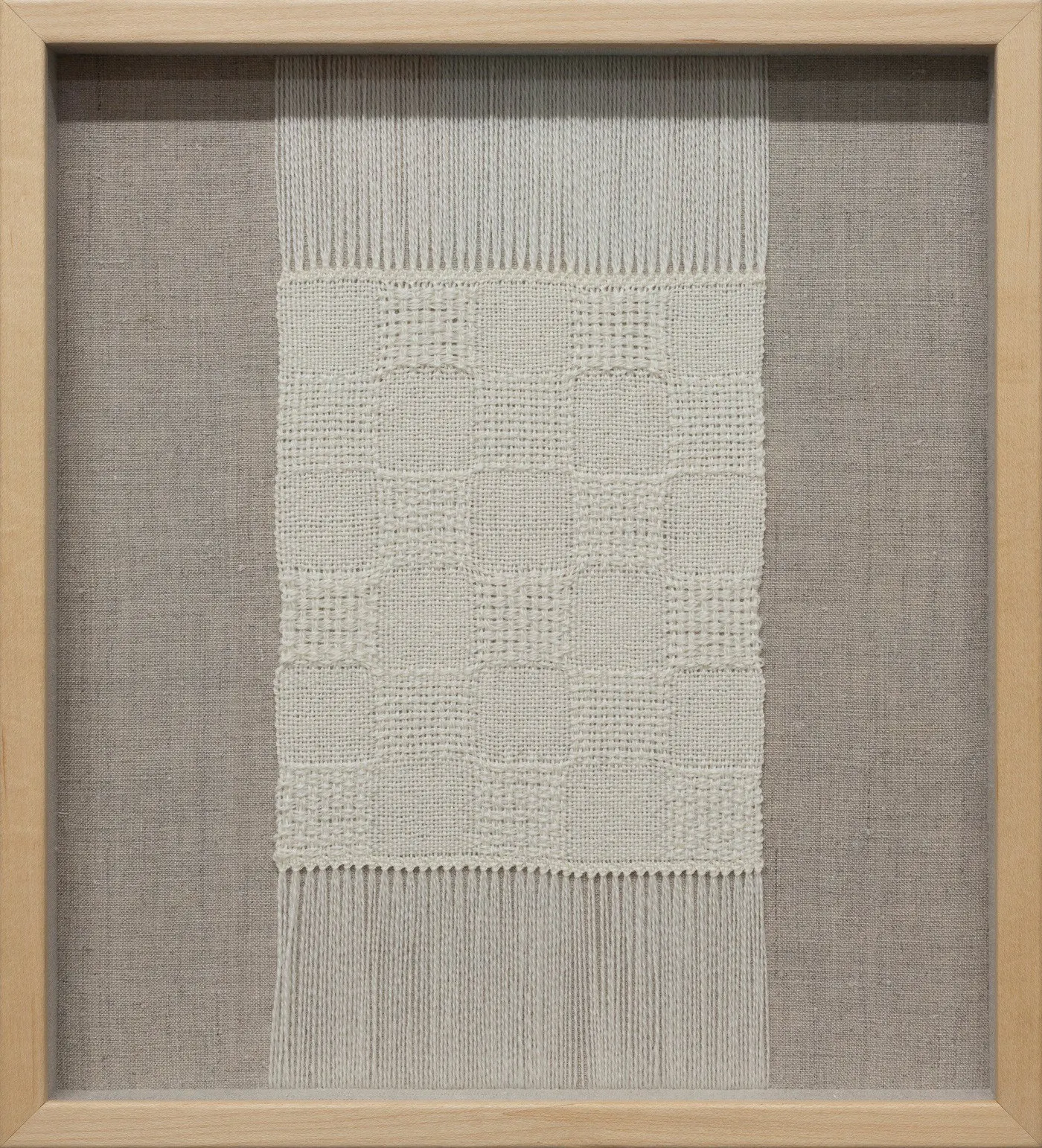
Woven sampler 10, 2024
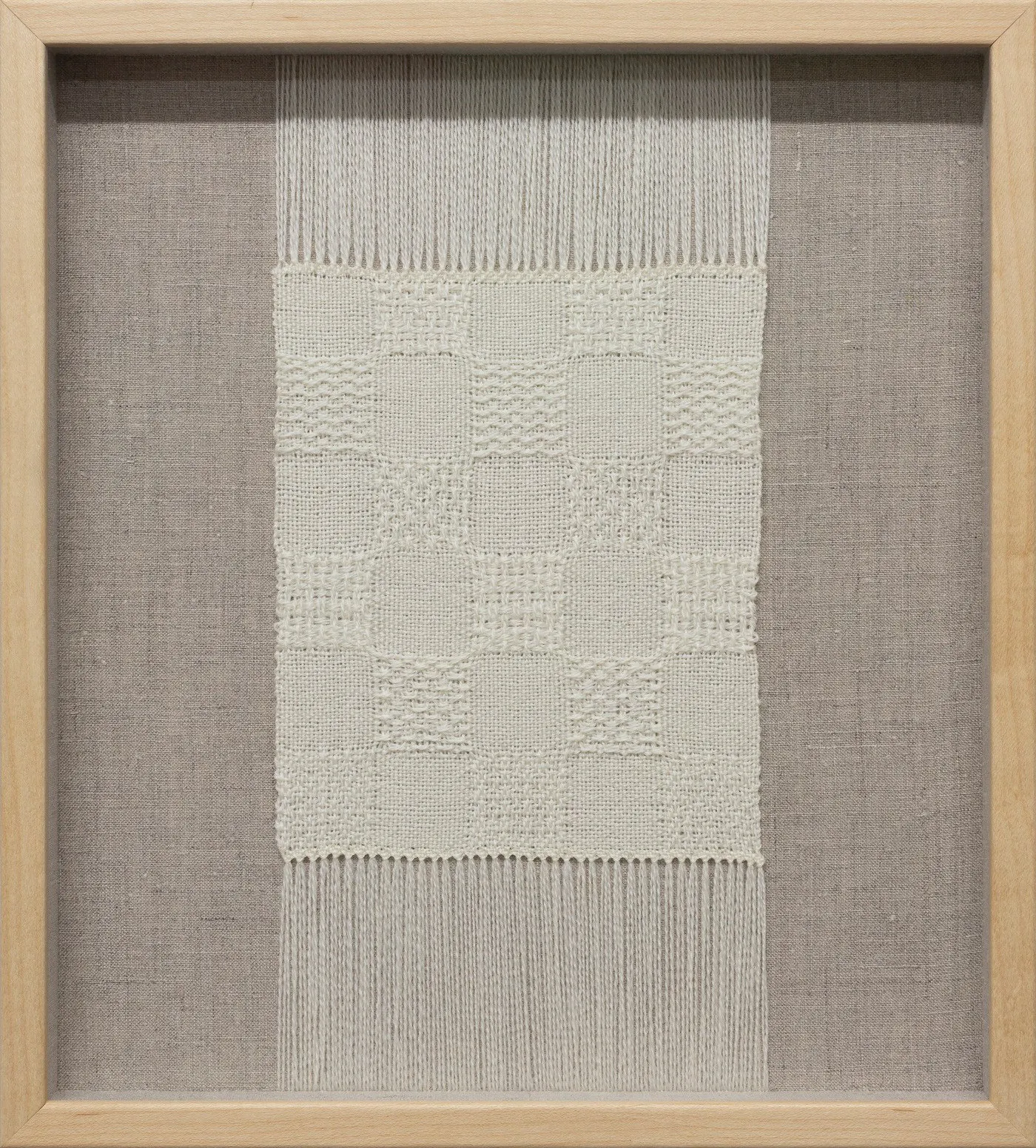
Woven sampler 12, 2024
How deep into the earth we sink is an exhibition developed from my time at The Gullies Art Residency on a sheep and beef farm in the Rangitīkei in winter 2023. The work explores land use in farming, using undyed Aotearoa grown wool hand-woven into grid structures emulating pasture as seen from above in rolling hills, and deep gullies of native bush. The woven works are weighted down with pottery weights made from papa clay — a soft, blue-grey mudstone or muddy sandstone common across Aotearoa.
The undyed ‘white’ wool references the colonial past of Aotearoa which is heavily tied to wool production, and also references the centuries long history humans have had with cultivating sheep in order to produce food and textiles. Textile production is inseparable from early human development, and wool was one of the earliest fibres used. The use of land as a source of production is also inextricably linked to textile making and use.
The exhibition has broad themes, but this project was also deeply personal. While on the residency I was able to walk the farm at The Gullies and spend time in the rural landscape in ways that haven’t been possible for me since I was a child – an activity I thoroughly enjoyed. Part of my exploration here has been to think about our personal associations with the whenua and how deeply we as humans are able to connect to it.
The work is woven on two looms, one 4-shaft table loom and one 8-shaft table loom. The yarn used is all grown in Aotearoa. The lace weight wool — used for the smallest works — was sourced from Anna Gratton near Feilding, who cultivates her own Corriedale blend sheep and spins and processes the wool on site. The heavier 4-ply and 8-ply weights were sourced from Ashfords in the South Island and is NZ grown wool which is spun and processed overseas. There is decreasing capacity for processing wool in this country and something I wanted to highlight with this work are the difficulties the NZ wool industry finds itself in, with most farmers currently paying more to have their sheep shorn than they earn when selling the wool.
I have used 13 weave patterns across the works which include plain weave, hopsack and various twills. The weave patterns are all traditional (rather than being invented by me) and have been sourced from various weaving books and www.handweaving.net.
The pottery weights were made by me at my father Bob McQuarrie’s pottery studio near Greymouth on the West Coast. The clay was sourced near Punakaiki. The white elements were applied using a porcelain slip.
The different weave textures might suggest differing uses of pasture, while the clay weights ground the lightweight weaving.
The wood used in the installation is pine, referencing the increasing use of farmland in Aotearoa for forestry which grows monoculture pinus radiata trees. Both the rope used in Fence and the fabric lining the frames is made from hemp, another natural fibre with a long history of use in textiles.
Caroline McQuarrie, February 2024