Caroline McQuarrie
The New Sun
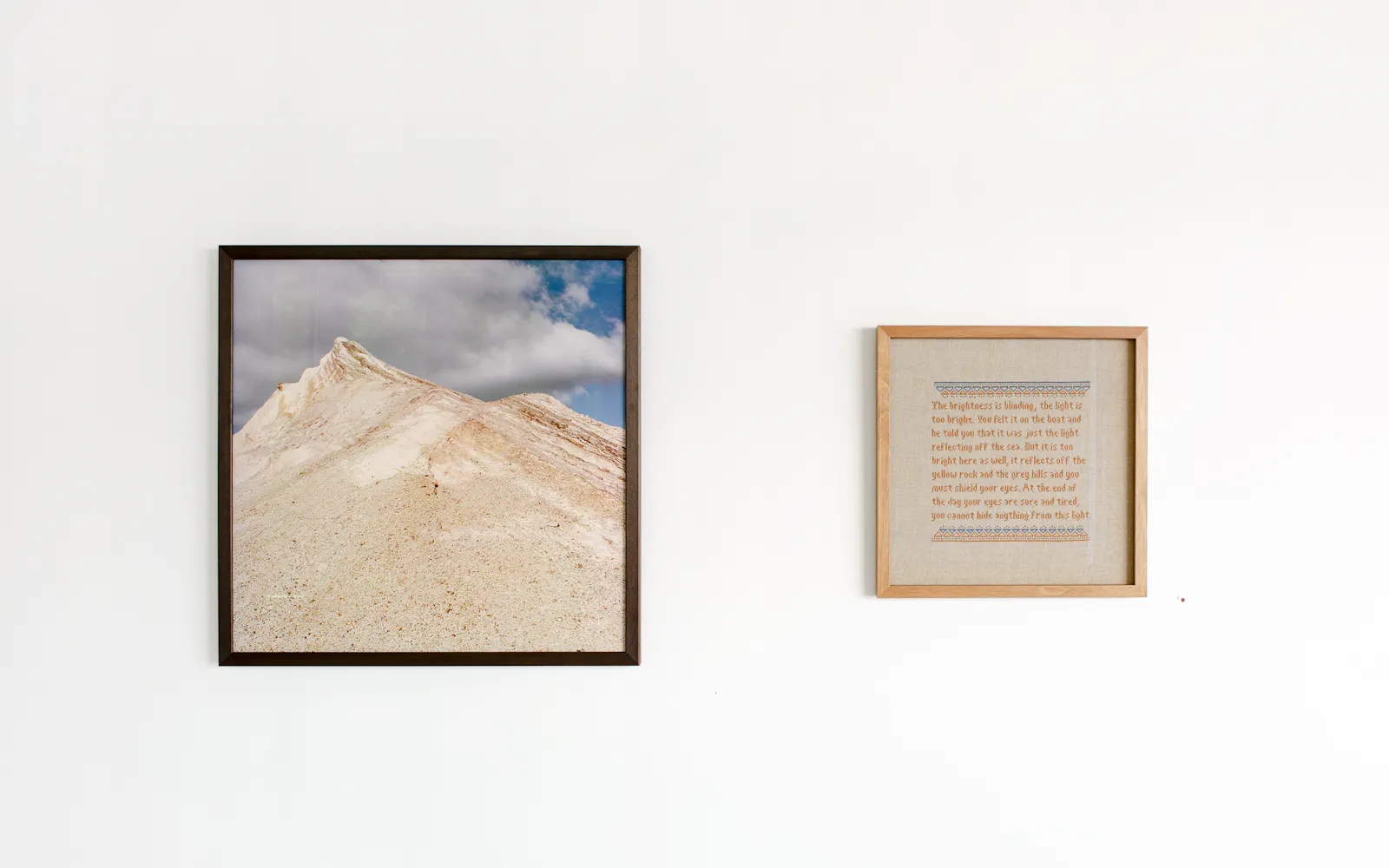
11 February — 13 March
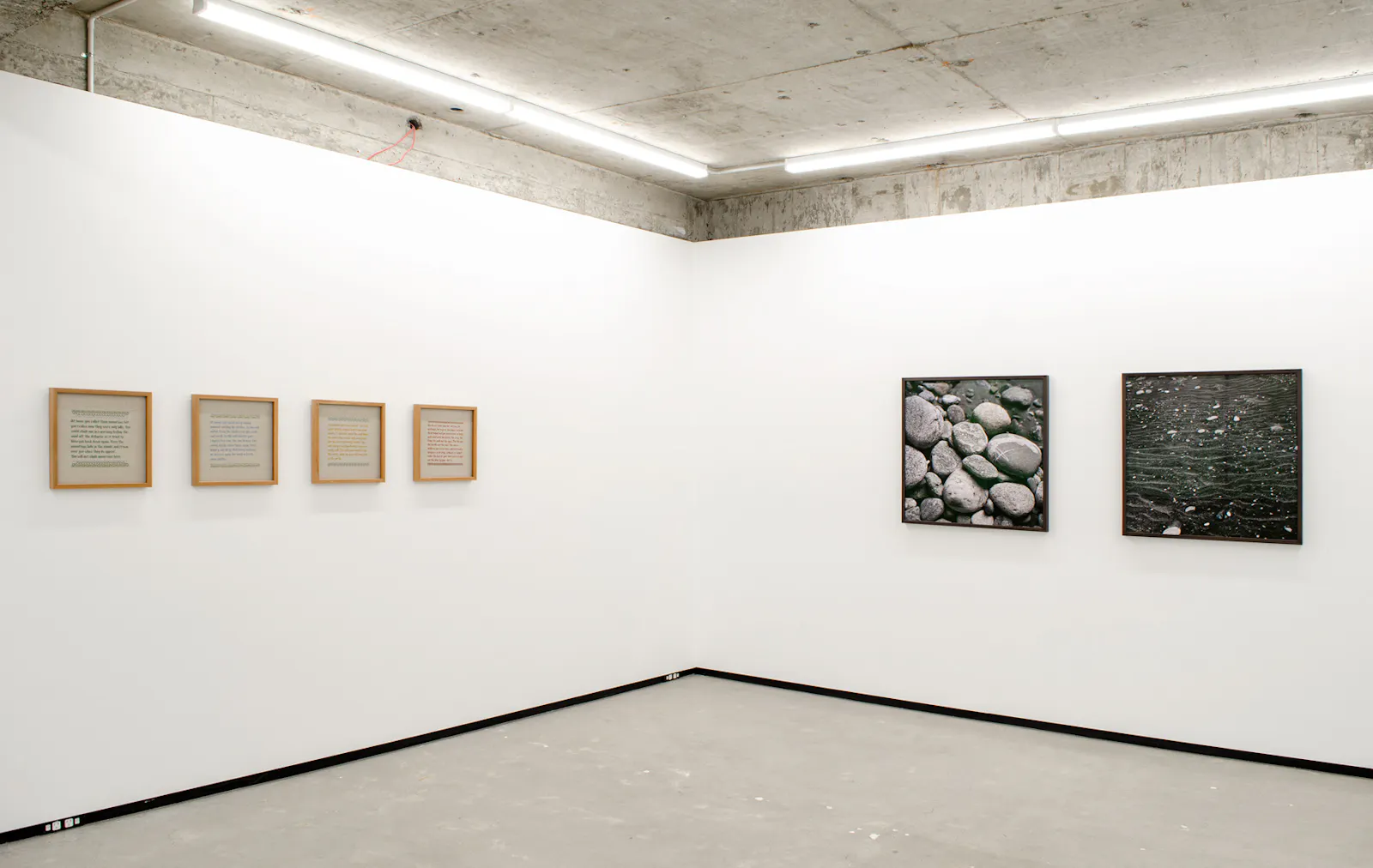
Through photographs and embroidered textile works The New Sun juxtaposes the empirical finds of land trace, with the more speculative imaginings of what life might have entailed for the women living with, or alongside, the male miners within early settler-colonial Aotearoa.
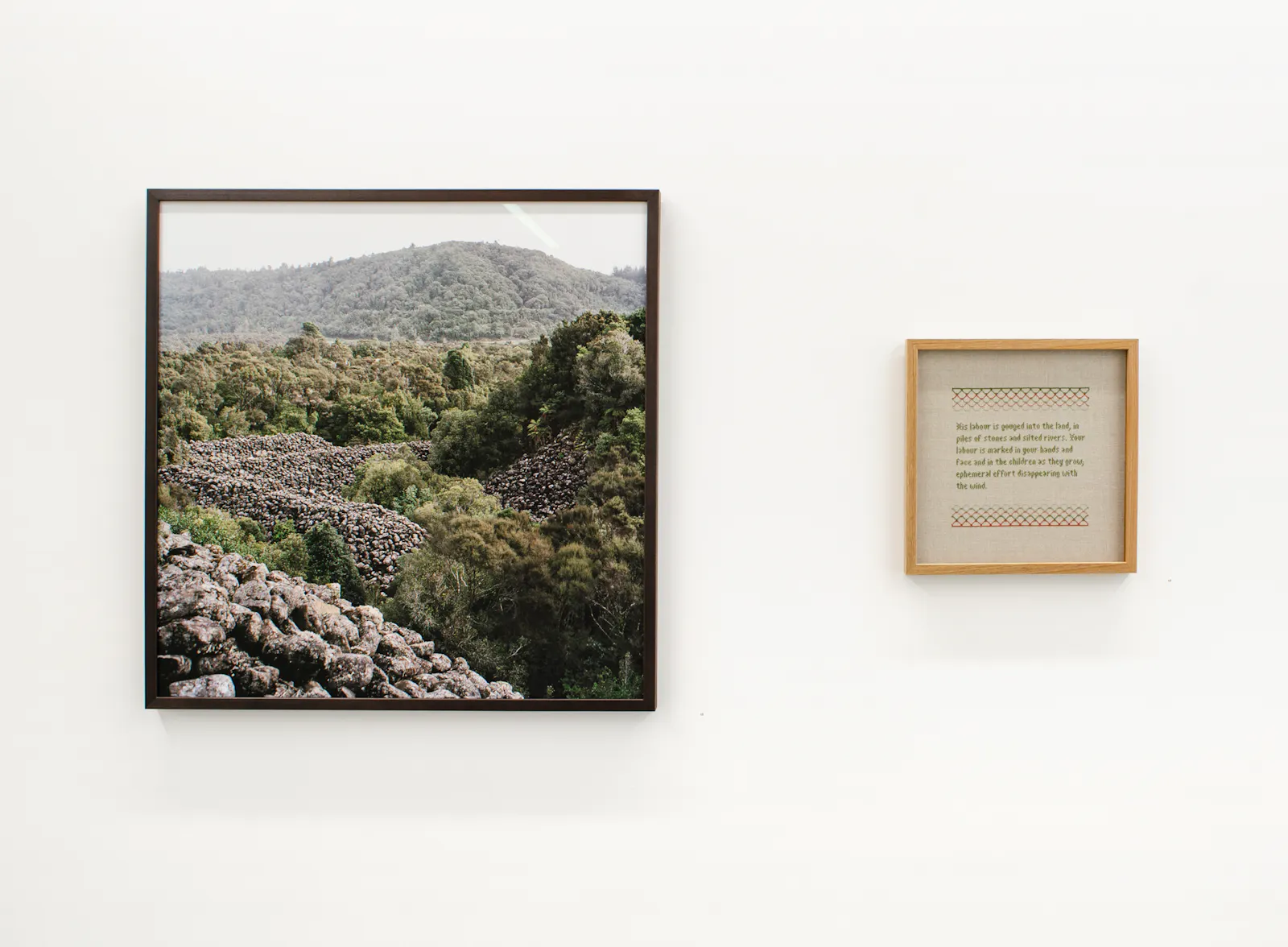
Taken between 2013 and 2016, a period when McQuarrie was travelling regularly around Aotearoa, the photographs depict sites of former mining activity. Many of these places are marked by signs or plaques, designating their place as ‘an historic site’, but predominantly they are hiding in plain sight. Landforms shaped by 19th century mining for gold and quartz. These undulations, channels and (now rarely) structures, are what tangibly remain from the brutal process of extraction of minerals from the land, that was fuelled by so many aspirations for prosperity. Brutal for the ecology of the land and brutal for the miners engaged in such perilous and back-breaking activity.
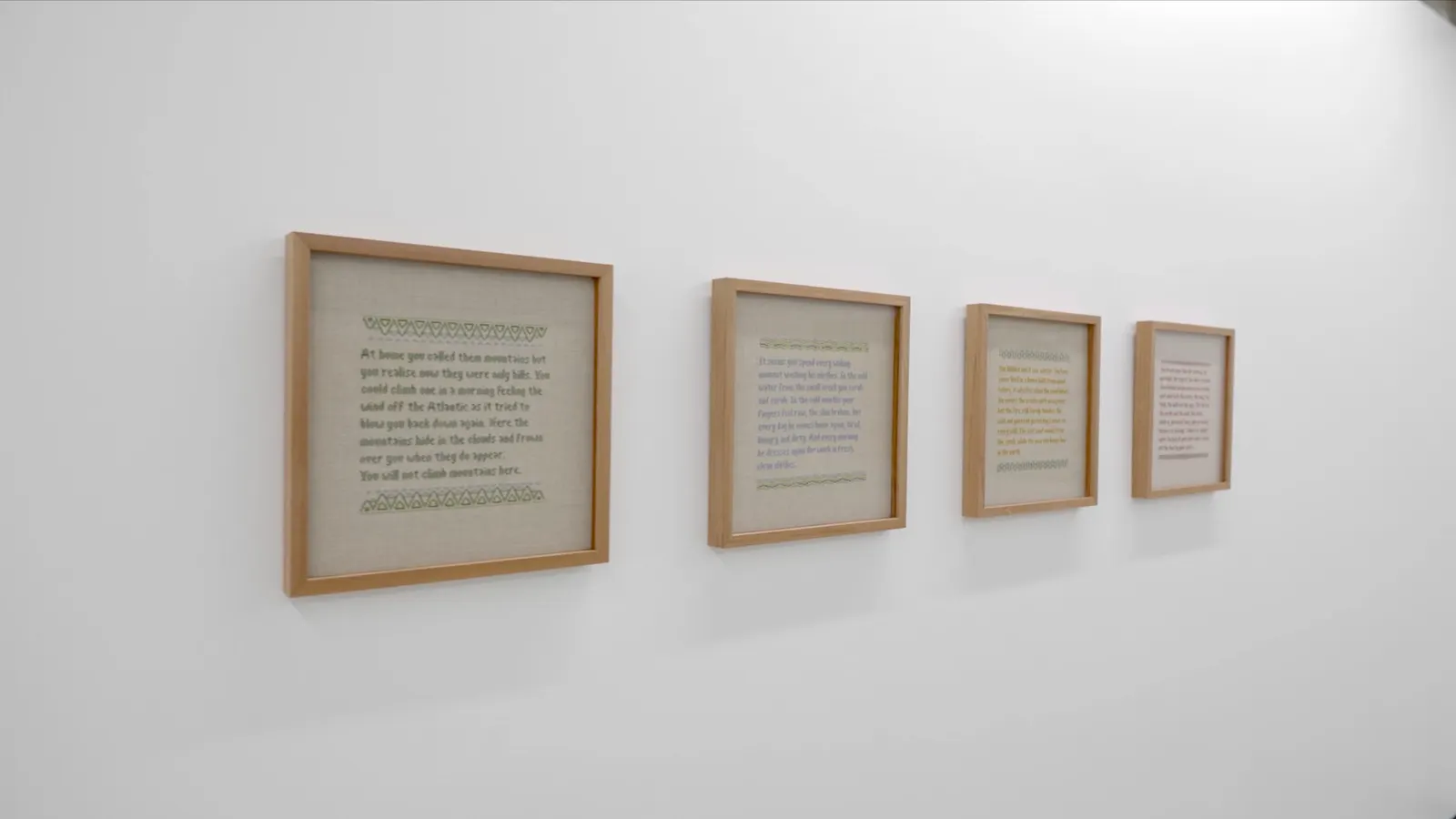
There is a very resonant counterpoint to the tone and material process of the accompanying hand-embroidered works on linen. The texts in these works, written by the artist, consider the female experience, ‘filling in’ for records that are very thin on the ground.
These works seek to offer a new way into thinking about this period of our history, to achieve a richer understanding of the legacies and traces threading between then and now, there and here.
Caroline McQuarrie is an artist whose primary interest is the concept of home, whether it is located in a domestic space, a community or the land we identify with. She works to explore meaning carried in photographic and craft based objects and domestic, suburban or community landscapes and sites. Caroline is a Senior Lecturer in Photography at Whiti o Rehua School of Art, College of Creative Arts, Massey University.
Extracts taken from the full Essay by Heather Galbraith: The New Sun: new photographic and textile work by Caroline McQuarrie.
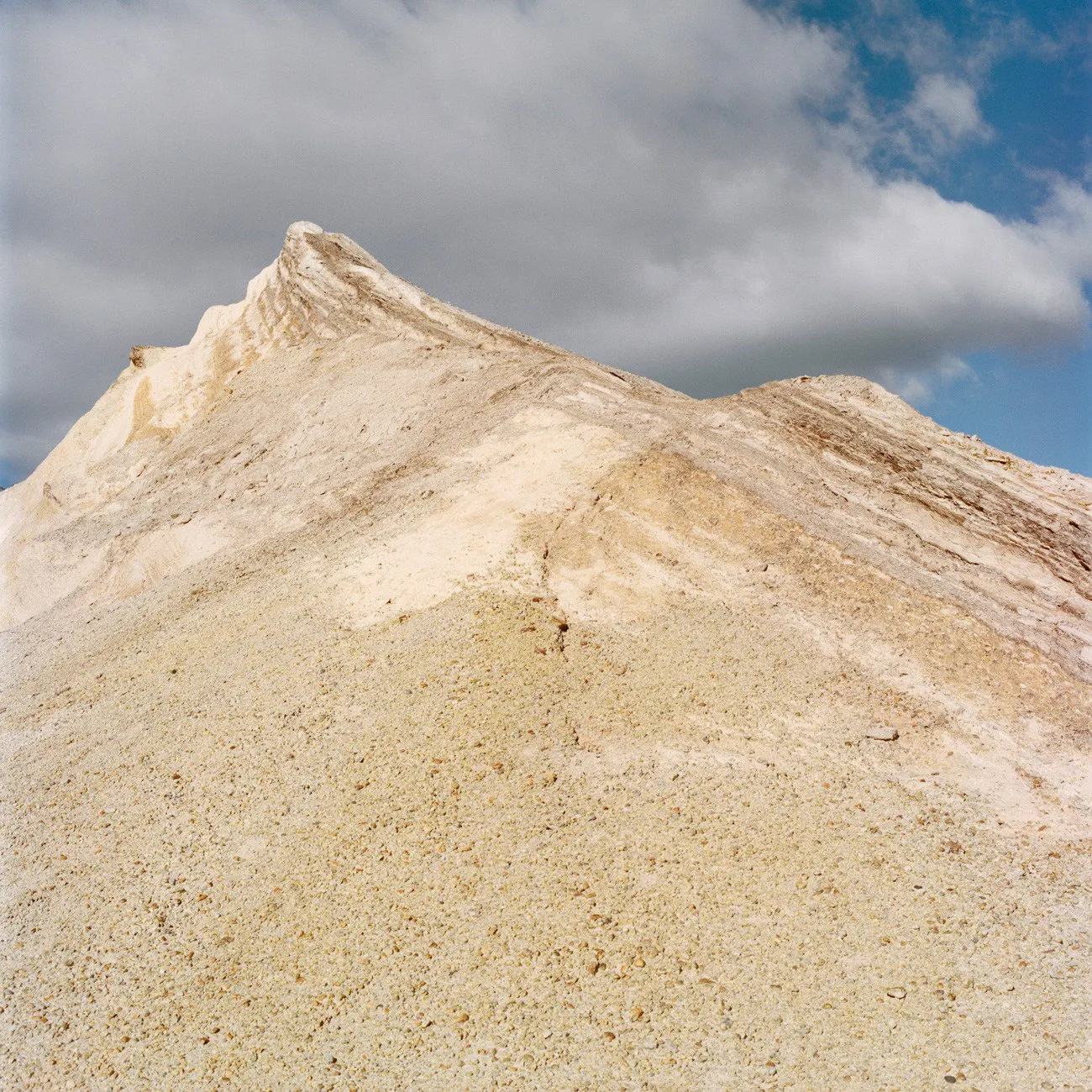
Sluiced hills, 2016
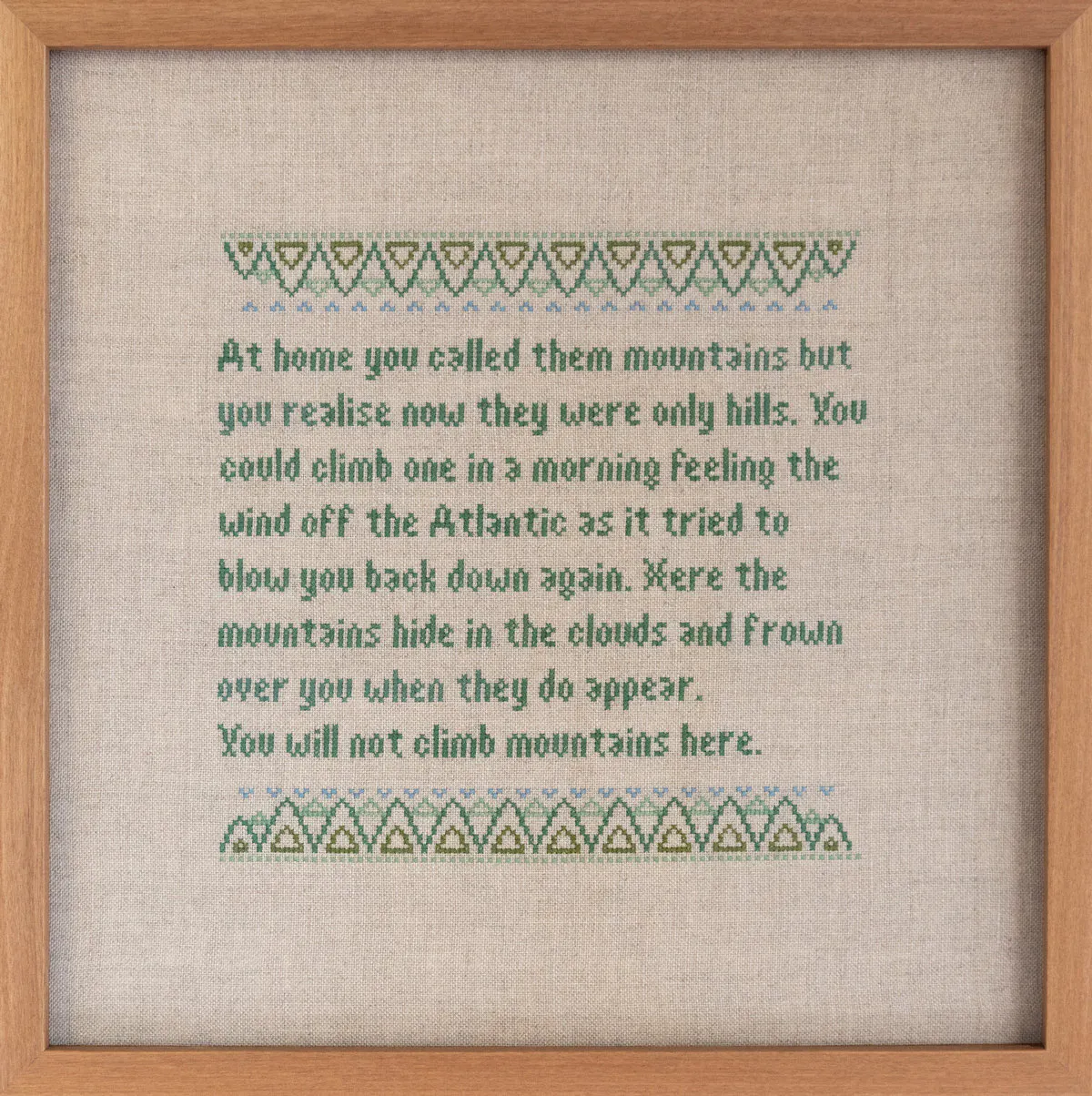
At home you called them mountains, 2021
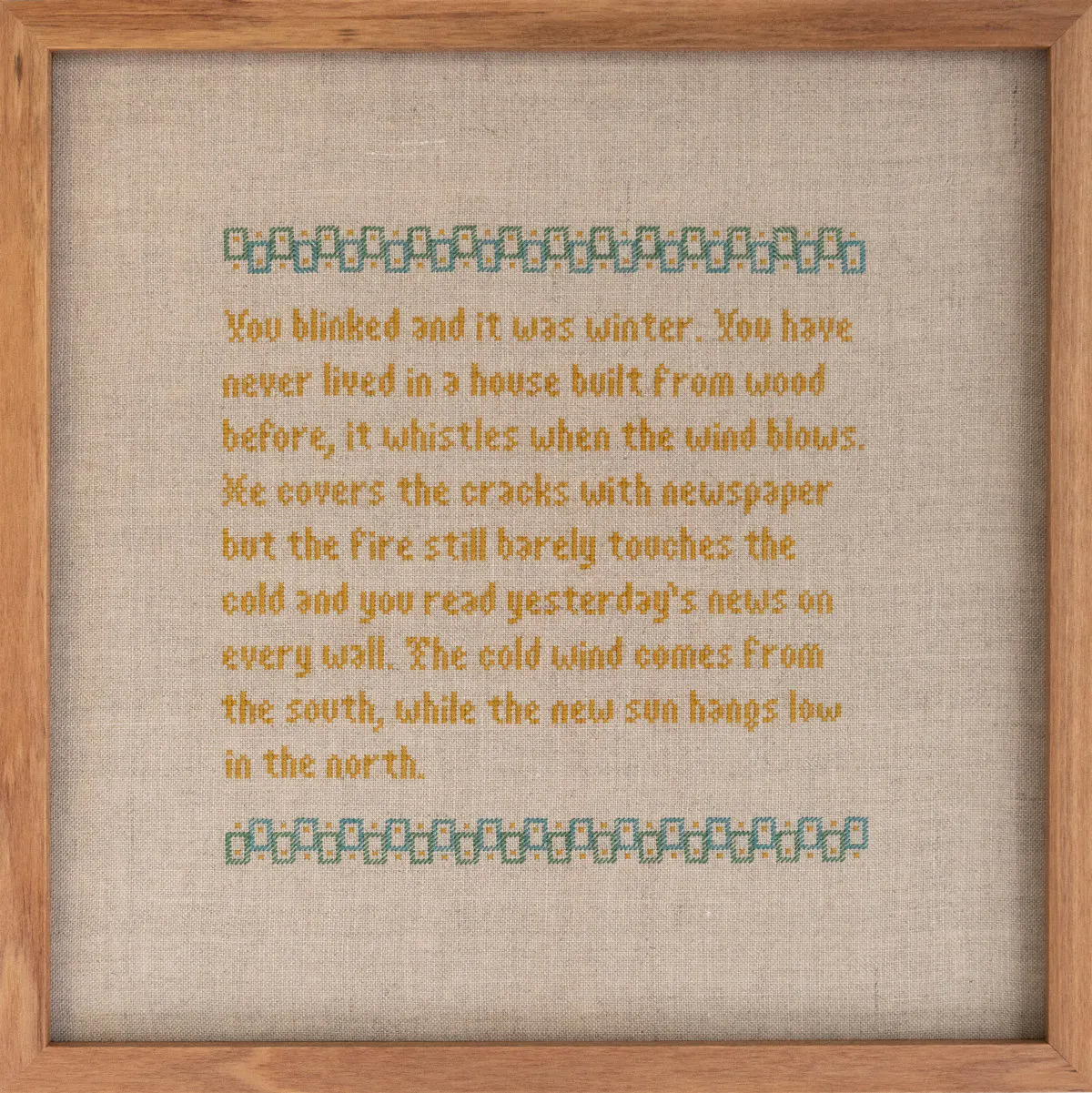
You blinked and it was winter, 2021
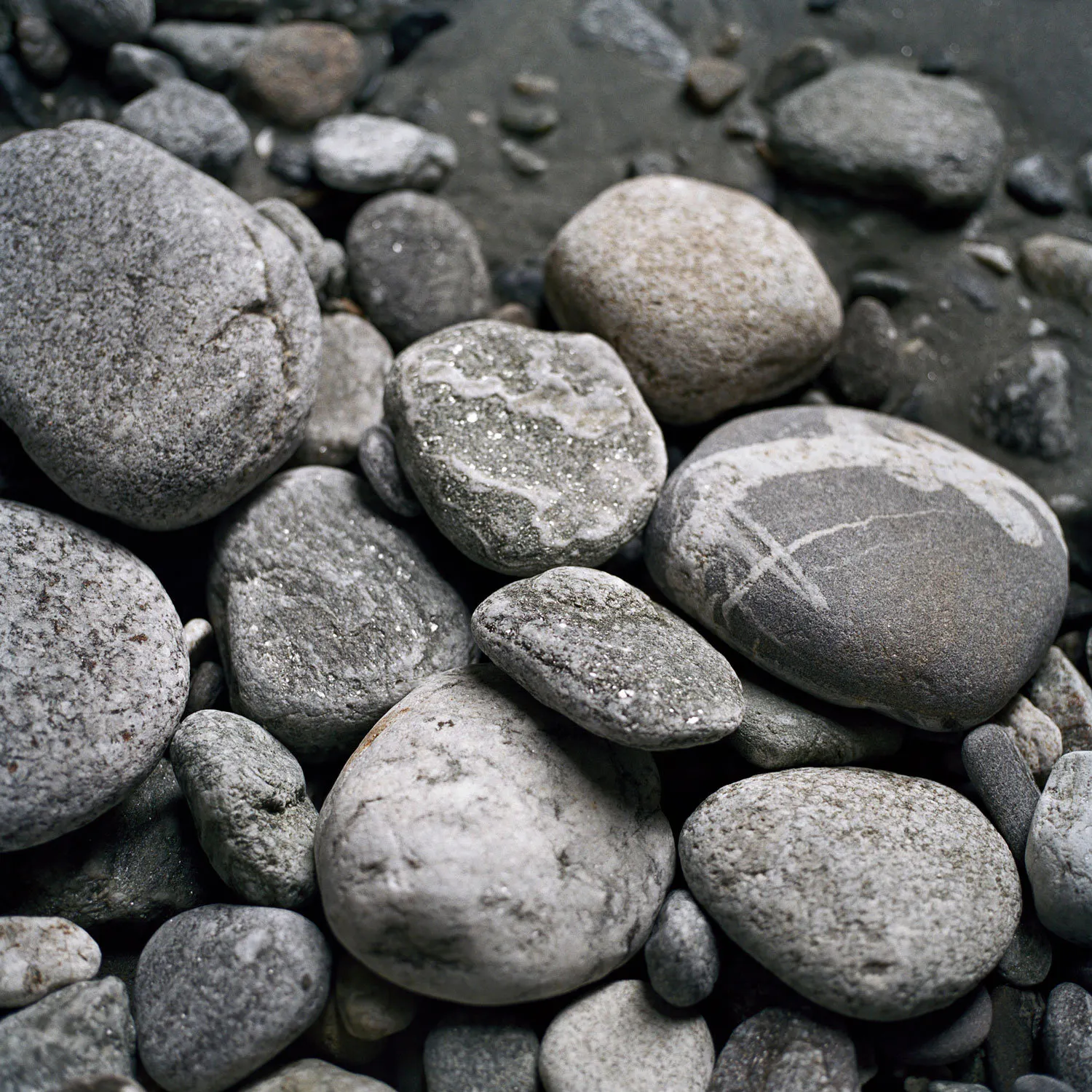
Fool’s gold, 2017
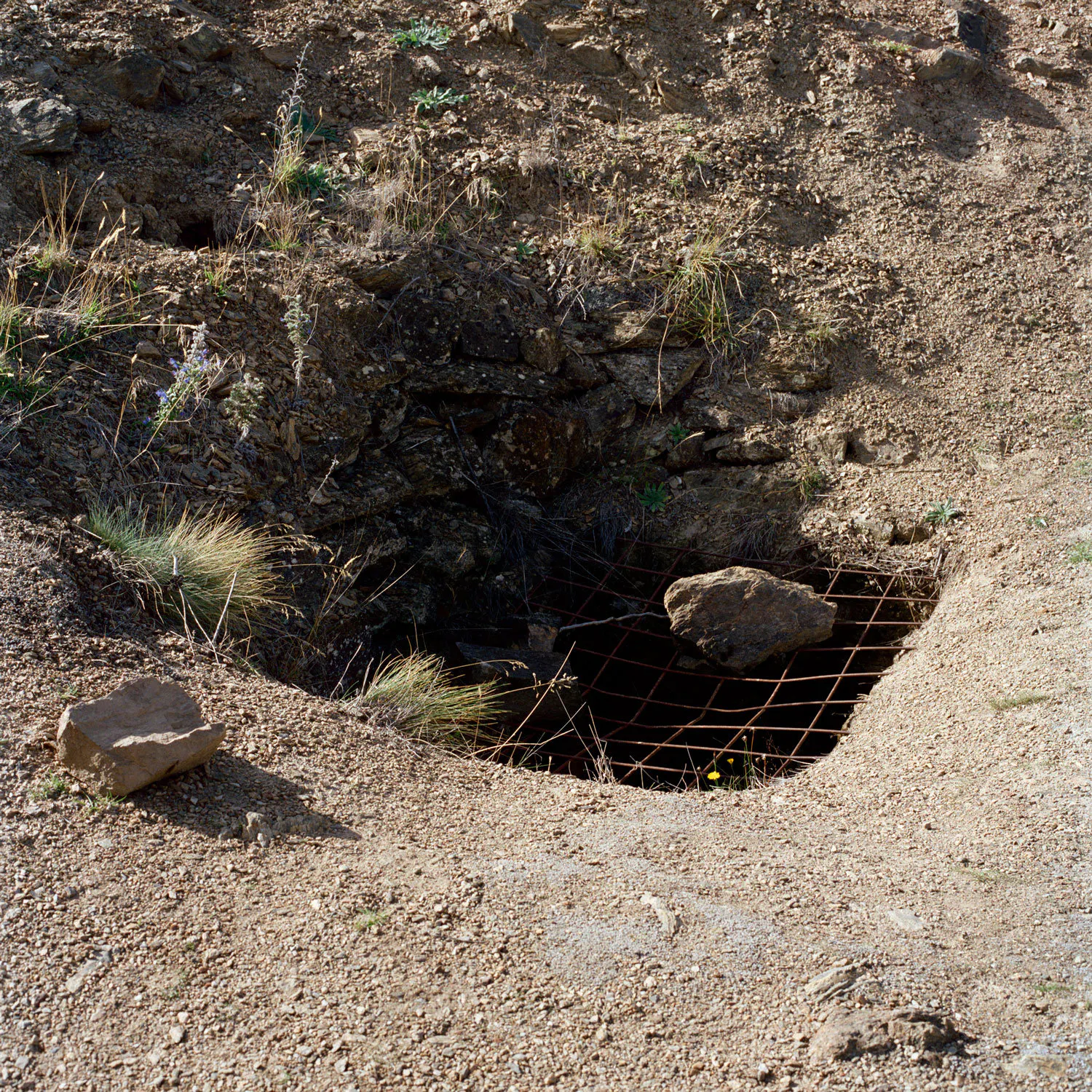
Mine Shaft, 2016
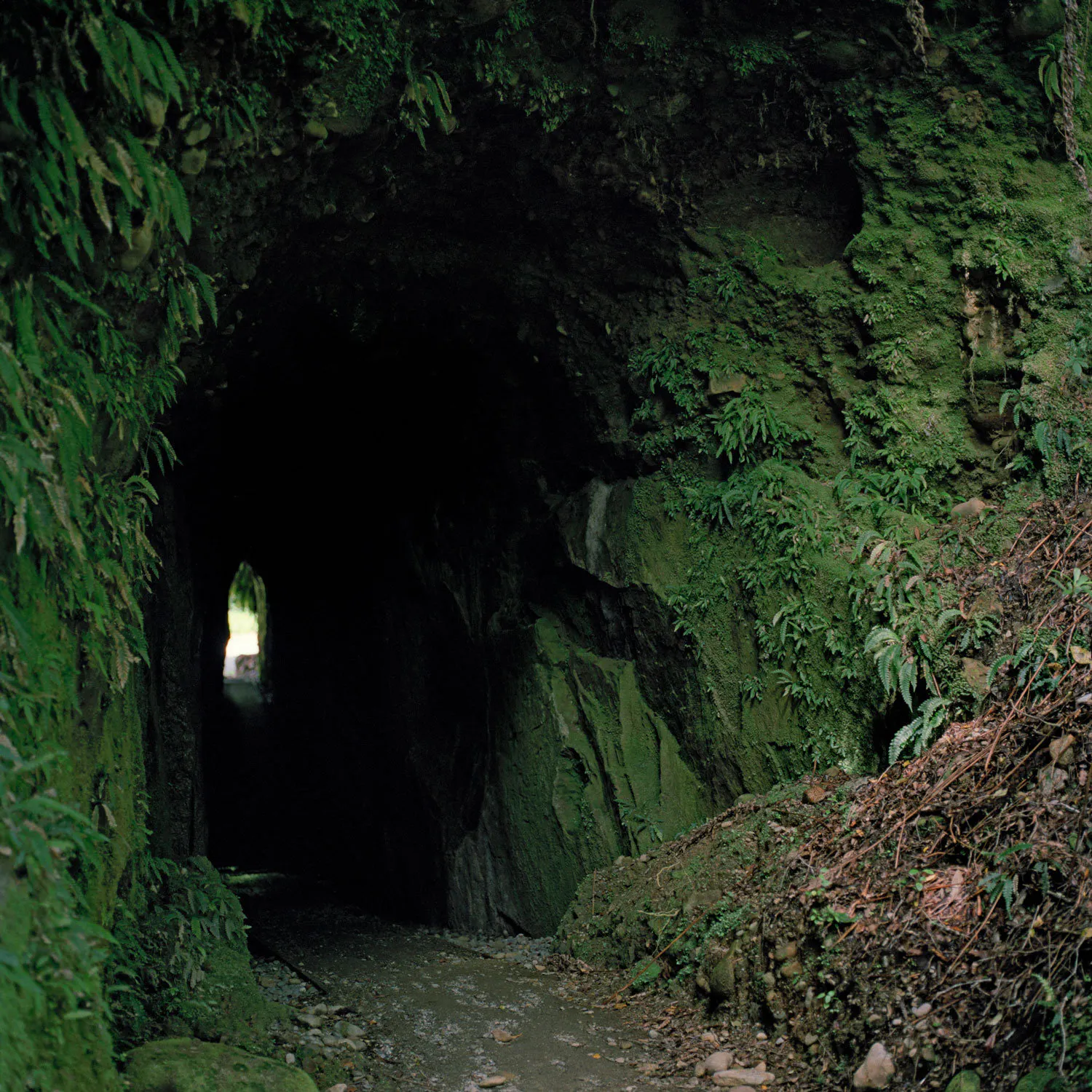
Tunnel, 2013
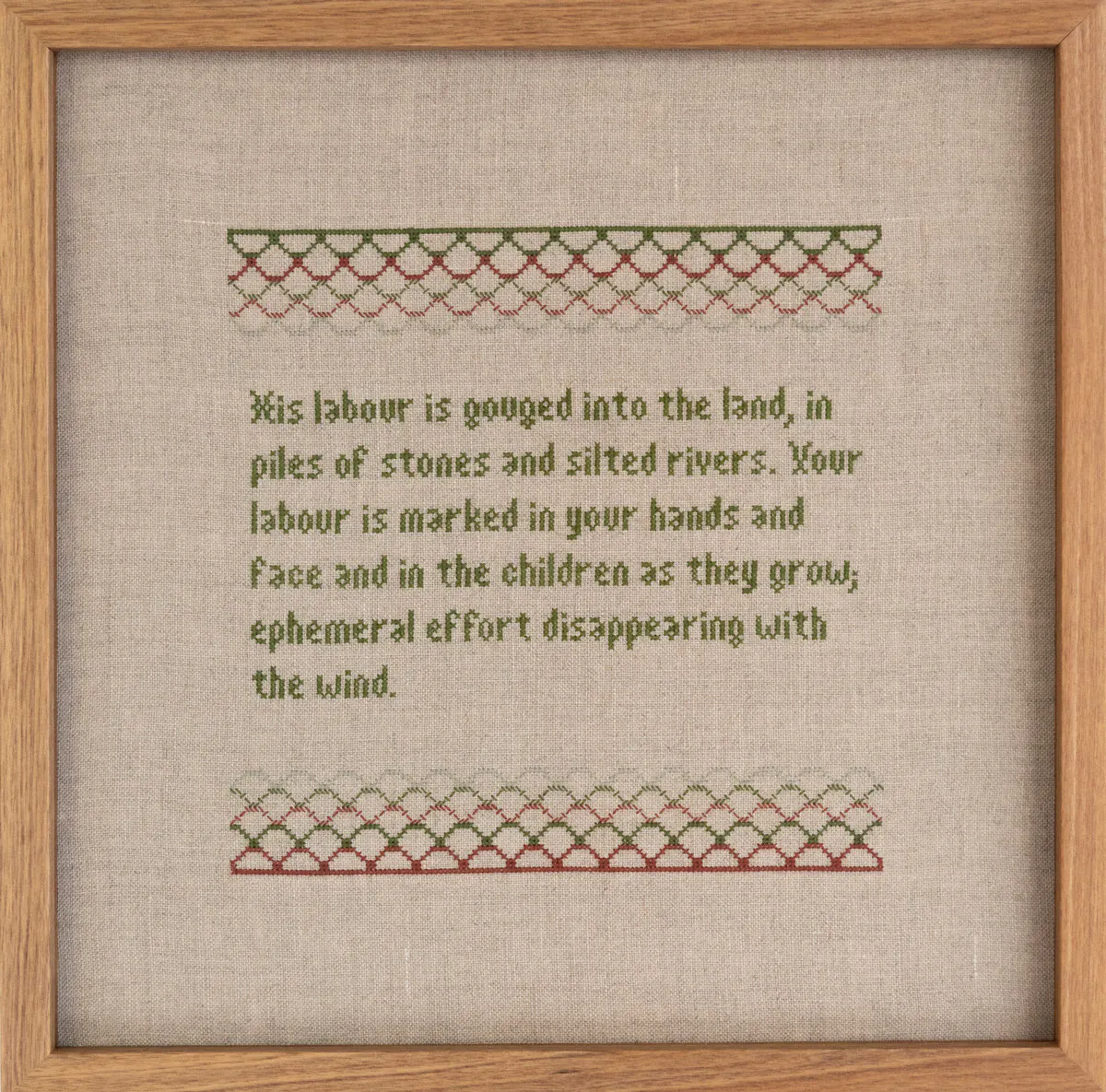
His labour is gouged into the land, 2021
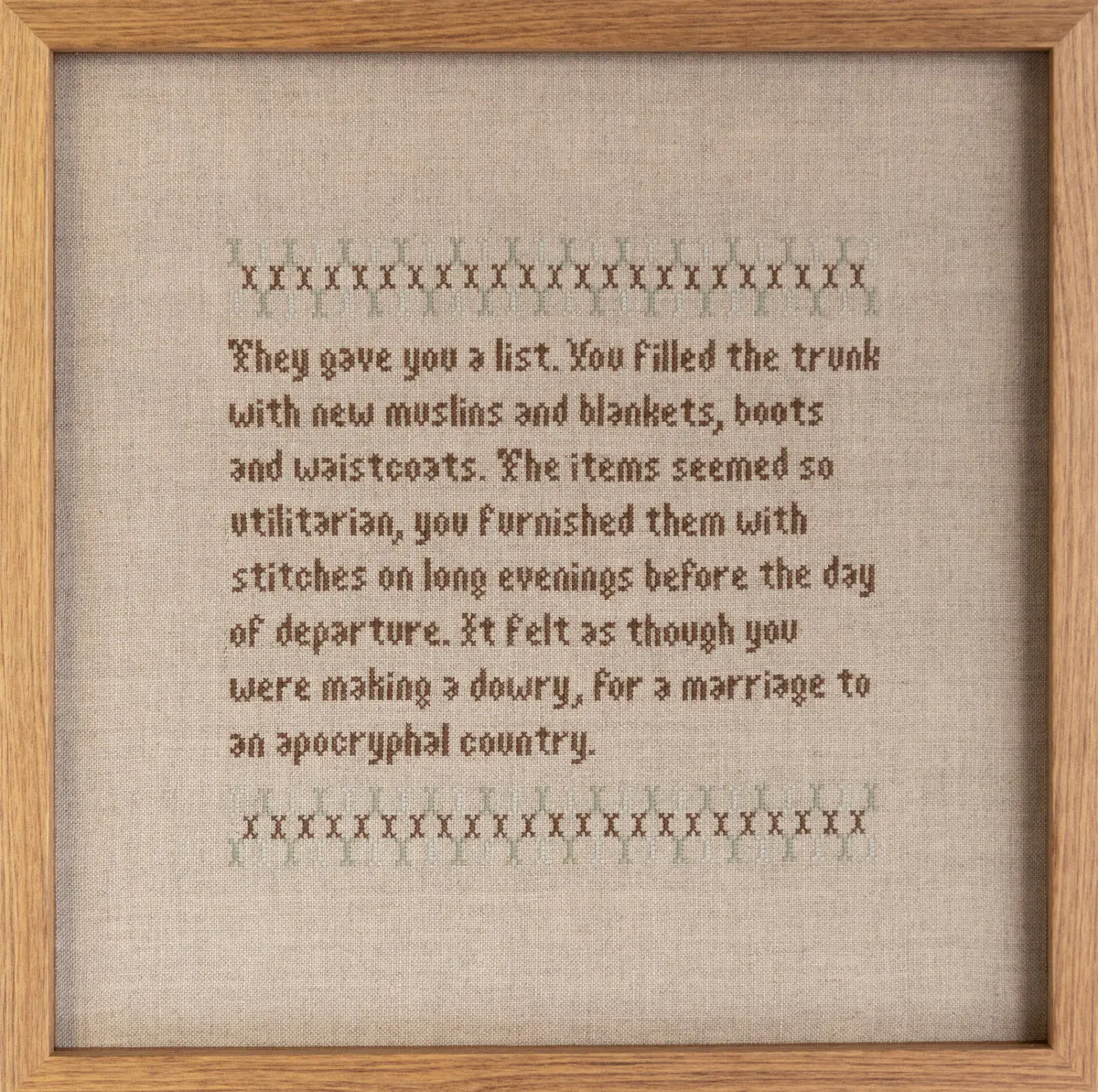
They gave you a list, 2020
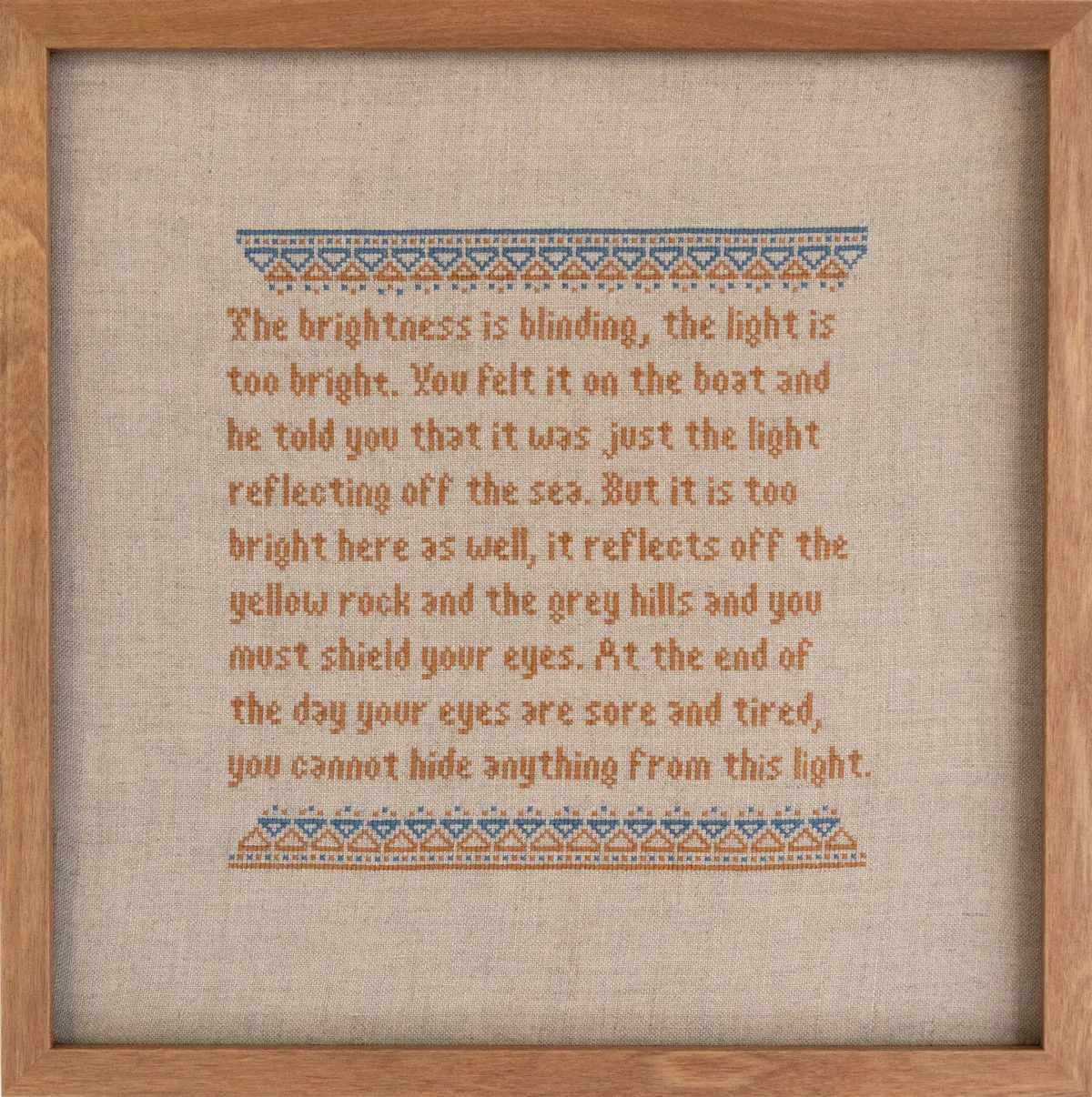
The brightness is blinding, 2021
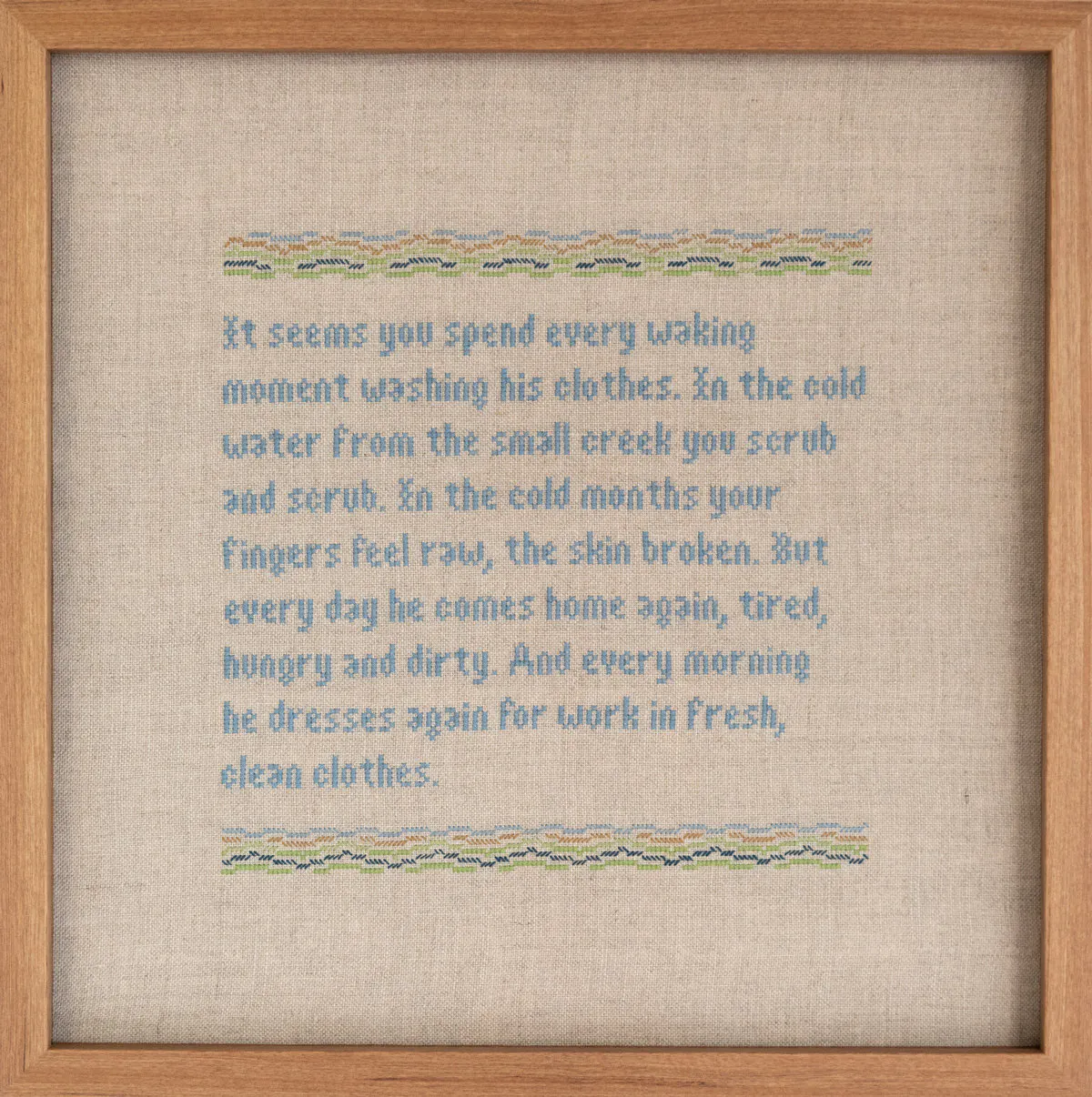
It seems you spend every waking moment, 2021
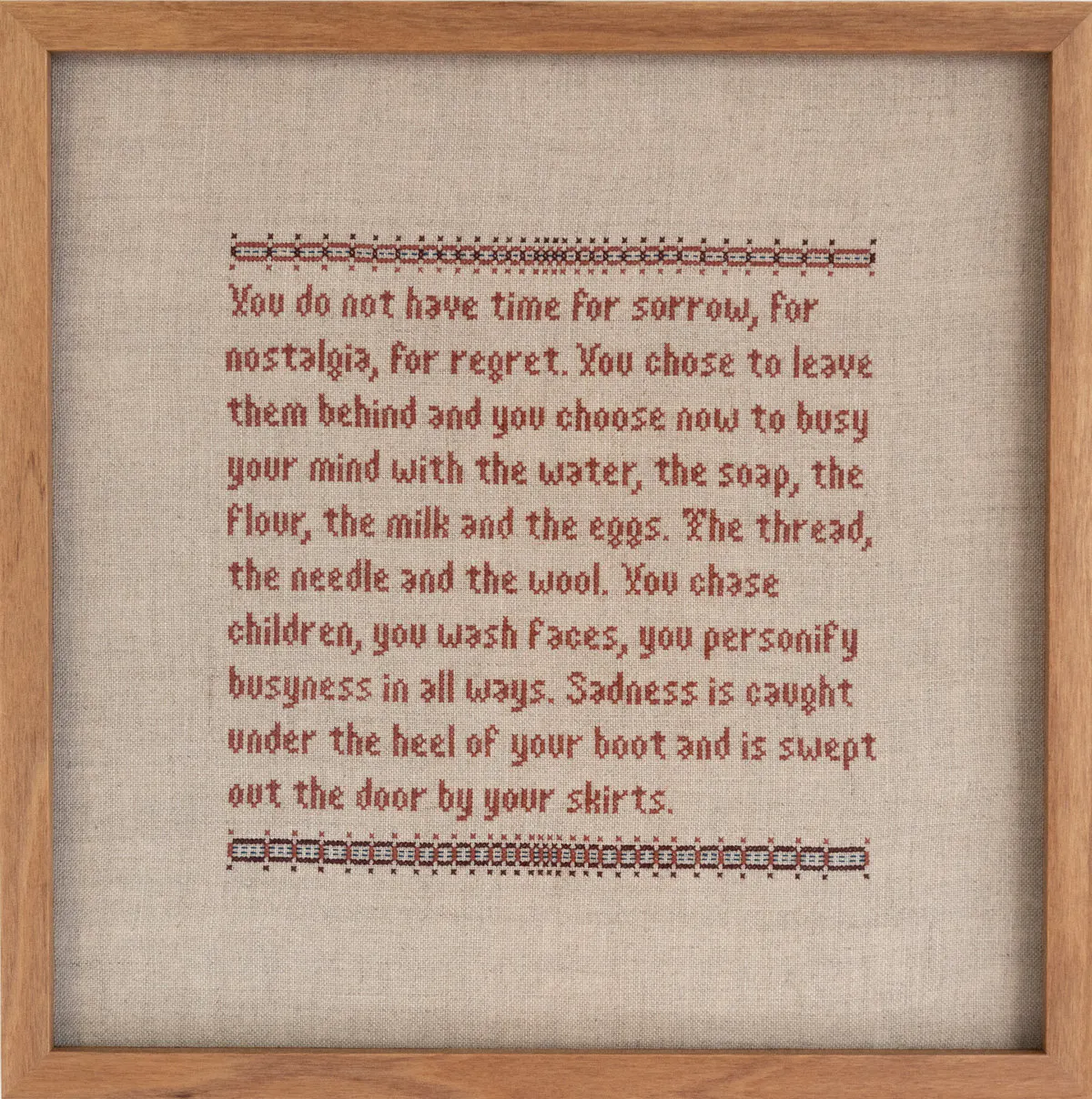
You do not have time for sorrow, 2021
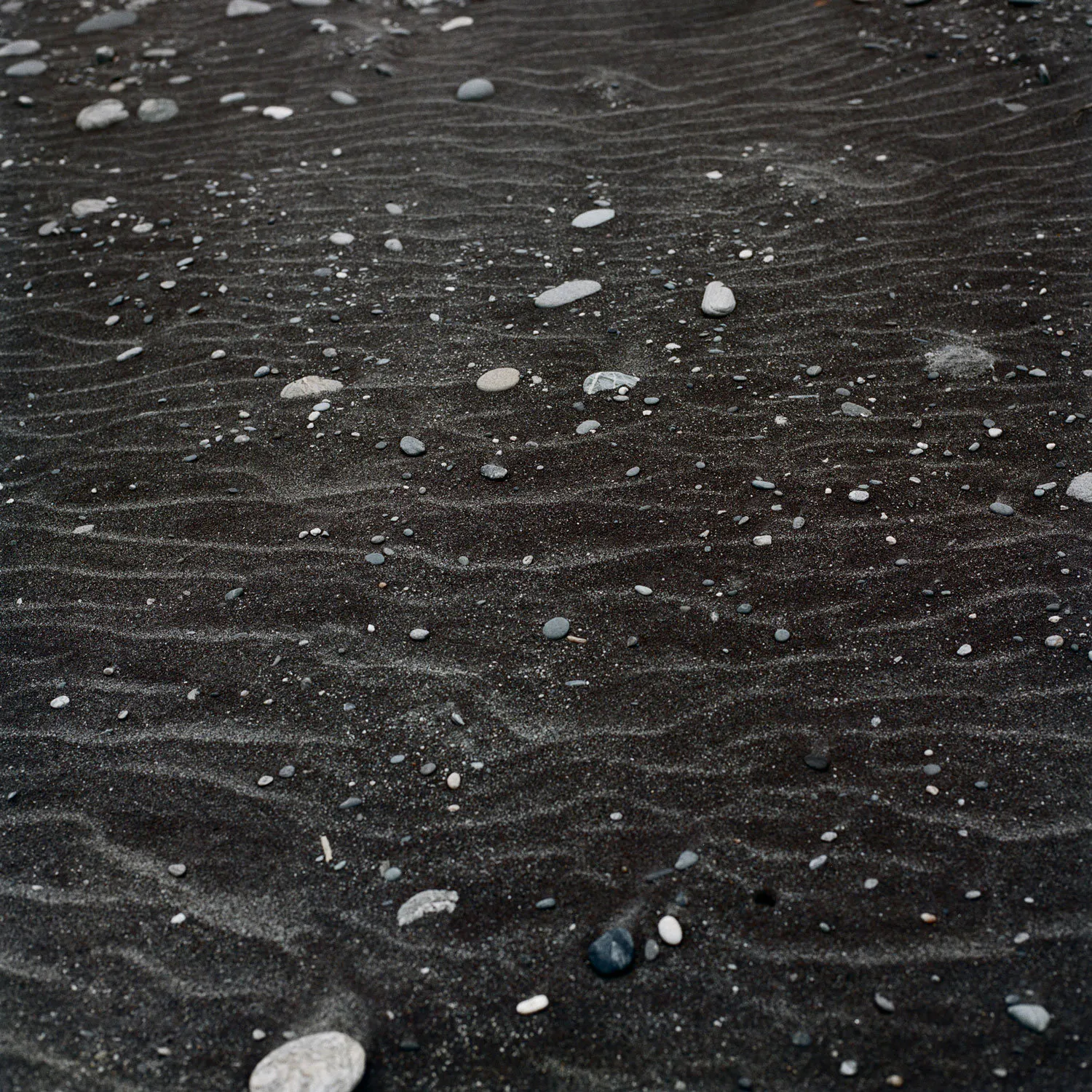
Black sand, 2017
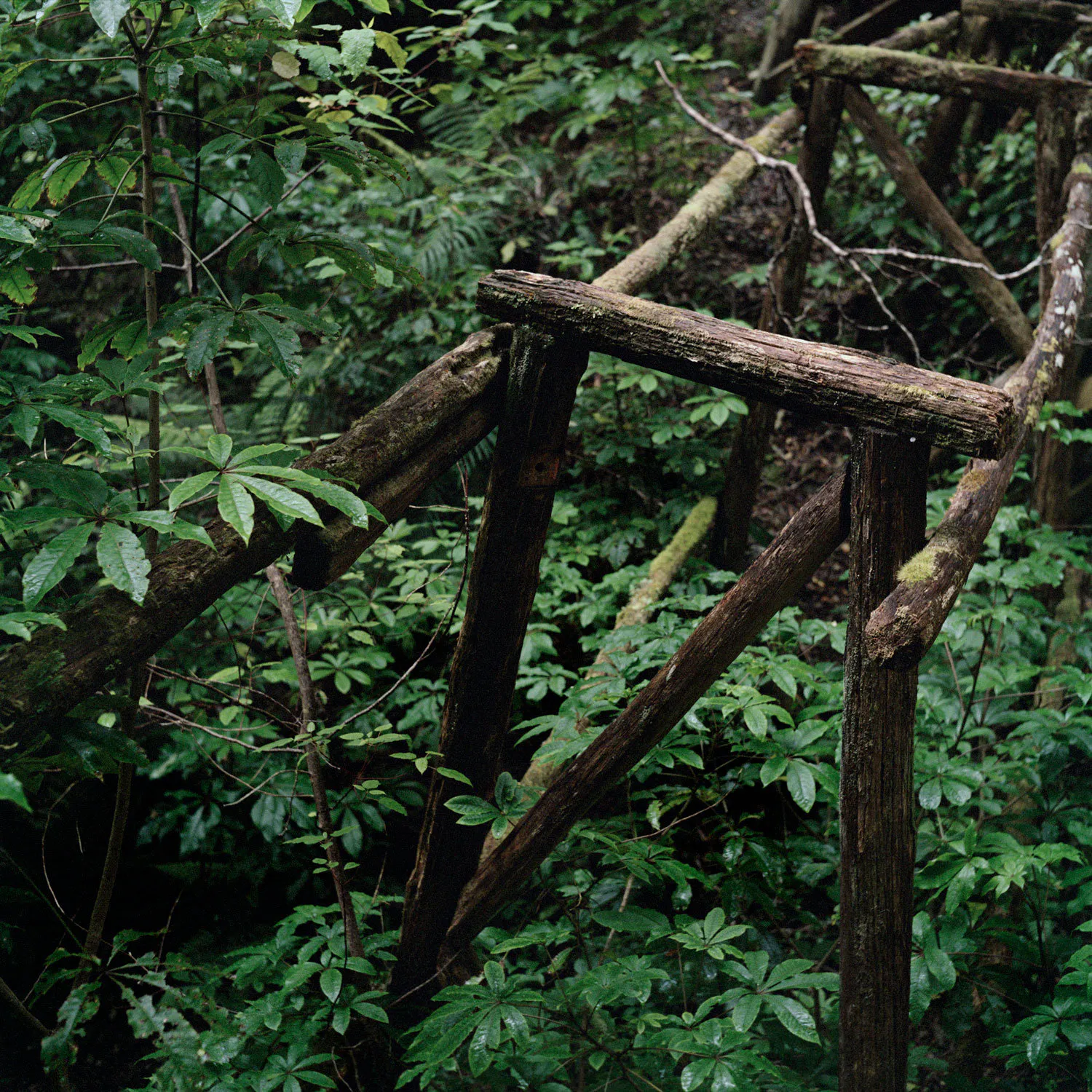
Flume Trestles, 2015
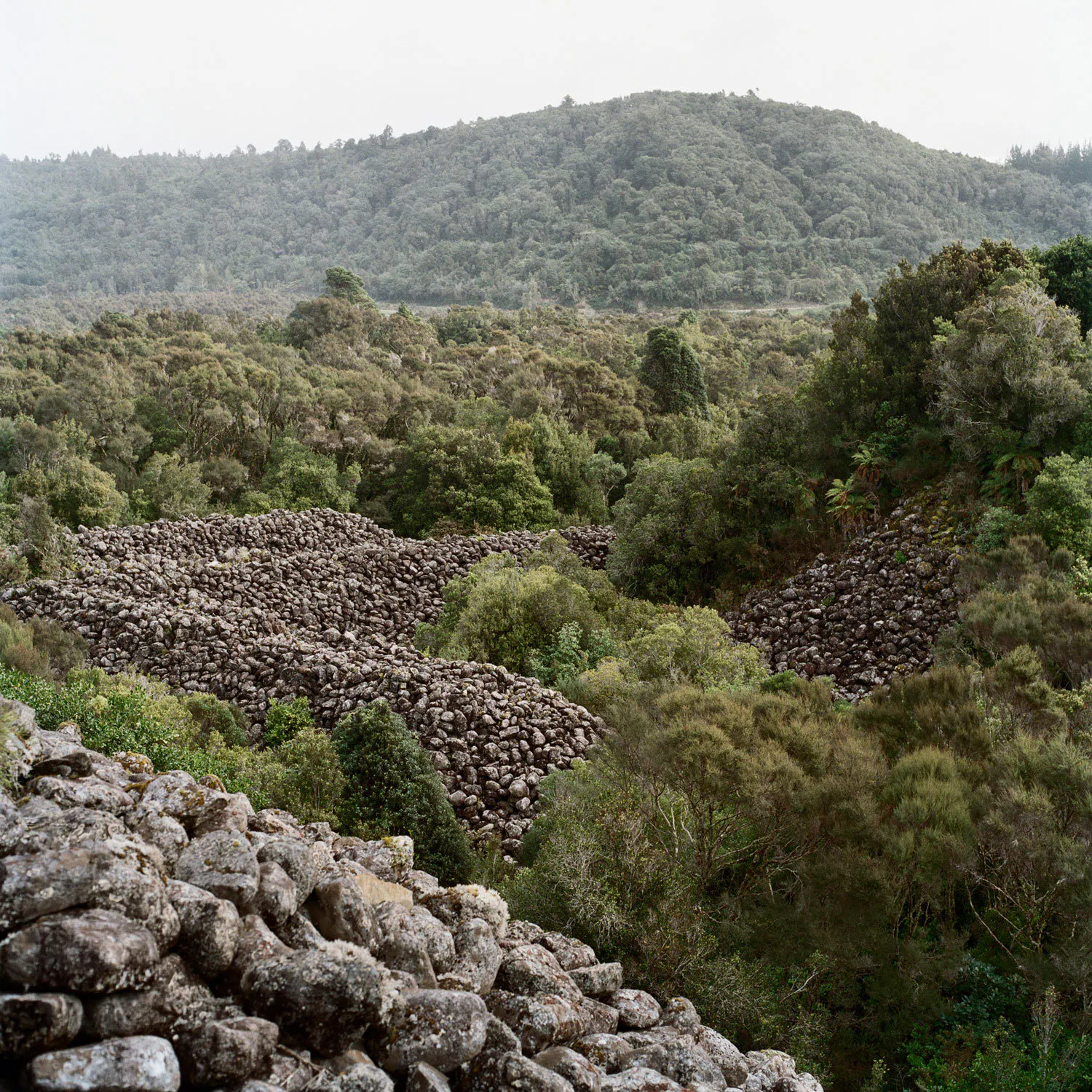
Tailings, 2016
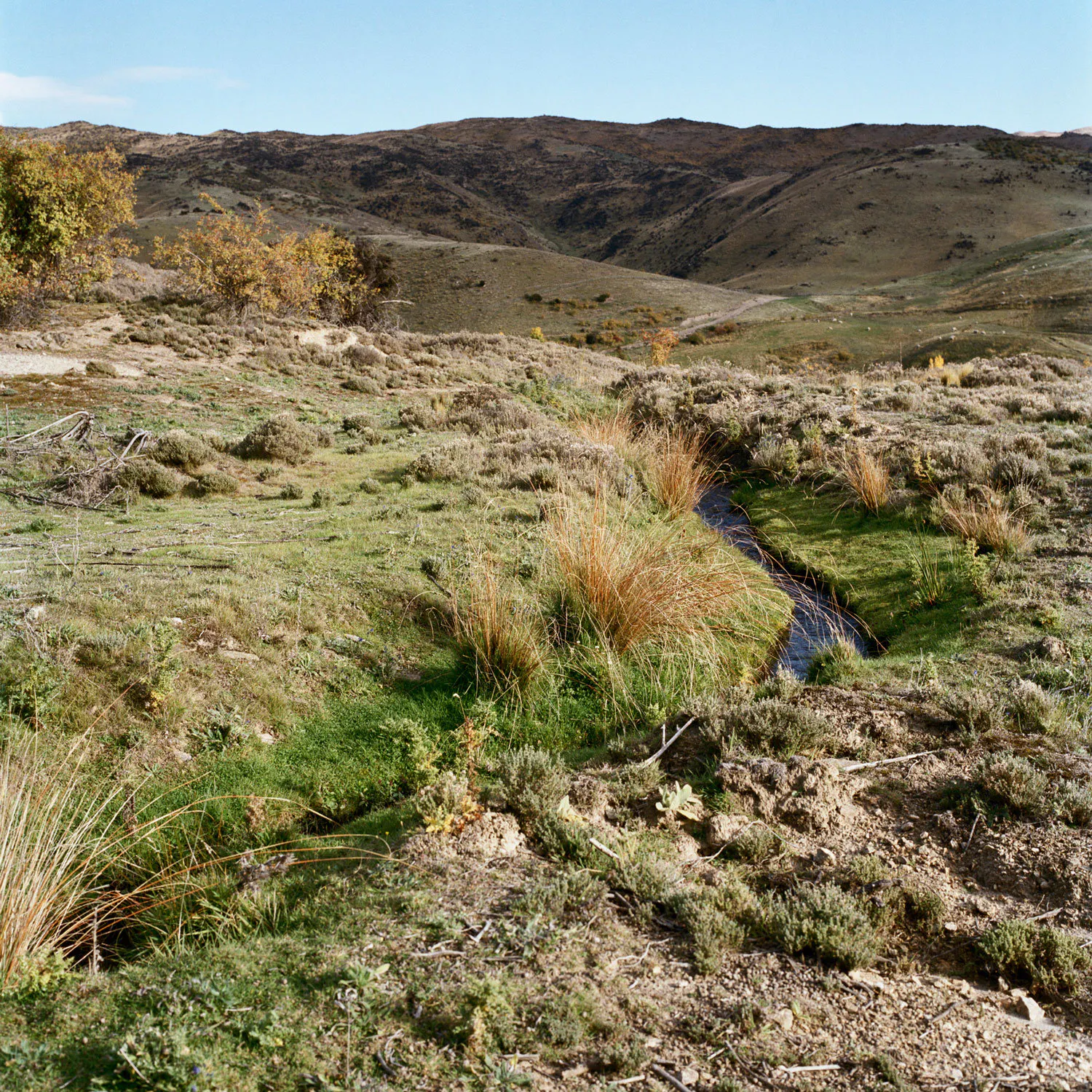
Water race, 2016
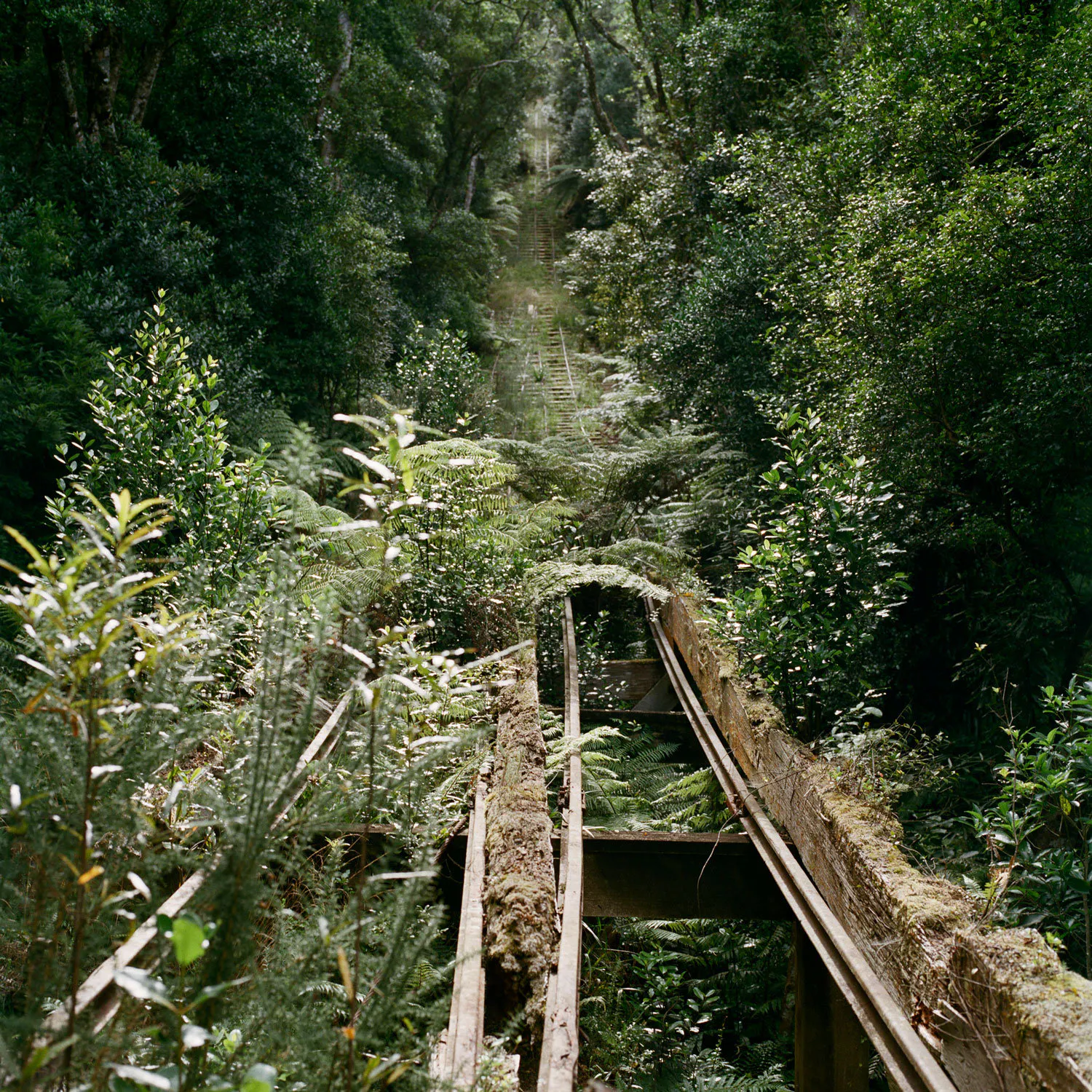
Incline, 2016
In places they are marked by signs or plaques, designating their place as ‘an historic site’, but predominantly they are hiding in plain sight. Landforms shaped by 19th century mining for gold and quartz. These undulations, channels and (now rarely) structures are what tangibly remain from the brutal process of extraction of minerals from the land, fuelled by so many aspirations for prosperity. Brutal for the ecology of the land, brutal for the iwi and hapu who were displaced from the land through confiscation or ‘purchase’, and brutal for the miners engaged in perilous and back-breaking activity.
Through photographs and embroidered textile works, The New Sun juxtaposes the ‘empirical’ finds of land trace (arguably the result of primarily male labour) with the more speculative imaginings of what life might have entailed for the women living with or alongside the male mining workforce within early settler-colonial Aotearoa.
The Gold Rush of 1850s – 1870s features large in colonial-settler narratives, particularly in Te Waipounamu – Otago, Southland, Nelson/Marlborough and the West Coast, but also in Te Ika-a-Māui – Coromandel, Bay of Plenty and Waikato. The early mining settlements were rudimentary, make-shift and seldom home to women. As larger settlements grew quickly in support of areas of mining promise, more infrastructure and services grew, and the option of starting, or bringing, a family to the region became more common. Mining populations were deeply itinerant and the histories of mining areas are littered with accounts of townships that emerged and disappeared with the fortunes of the yield.
The ecological and cultural impacts of mining are key components in McQuarrie’s work. In the 19th and early 20th century mining supported and fuelled broader settler-colonial aspirations. This trajectory, along with parallel extraction processes, propelled us into the Anthropocene, where so many legacies of land use and subjugation of ecosystems have resulted in a deeply worrying precarity for our survival.
In The New Sun, a cycle of photographs have an inherent taxonomy of structure or material. The works do not prioritise a singular site, but rather seek to offer a range of sites that help to make visible the processes involved in extraction, and the types of landforms and water courses that are left as remnants. The titling of the photographs highlights the purpose (or utility) of what we are looking at in terms of mining processes e.g. Flume trestles, Sluiced hills, Tailings, Water race, Tunnel etc. — all using terminology sourced from a historical account of Quartz-mining at Reefton, Waiuta and the Lyell1. The photographs were taken between 2013 and 2016, when McQuarrie was travelling regularly around Aotearoa photographing sites of former mining activity and diving deep into place-based histories.
Grappling with colonial histories of settlement, and interaction with land and Indigenous peoples, occupies many of the citizens of Aotearoa who have Pākehā ancestors. While genealogical tracking has gripped folk for centuries, our ability to research and trace relatives and their livelihoods, trials and tribulations is readily enhanced by accessible online data and research services. There is a palpable sense of reckoning, brought about through the confronting and uncomfortable process of unearthing the names and actions of one’s ancestors, their passages over ocean and land, their path within a process of colonisation, and the traces they have left behind. The process of figuring out who we are now is deeply reliant on how we got here and whose histories and legacies we carry with us, in order to provide a platform of knowledge from which we can situate our own place to stand. One that better factors in the ways in which Indigenous, settler-colonial and subsequent waves of migrants’ lives and narratives have interwoven and impacted one and other.
Darrell Latham, The Golden Reefs – An Account of the Great Days of Quartz Mining at Reefton, Waiuta and the Lyell, Nikau Press, January 1992 (2nd edition).
The challenge with pursuing traces is the highly partial mechanisms of recording official or informal connections and experiences. In mid-late 19th century Aotearoa the records that were instigated and deemed valuable, within the swiftly growing settler-colonial context, were largely transactional; records of birth, marriage, death, property ‘ownership’, legal proceedings and latterly within gazettes and newspapers – items of community interest, reportage and advertising. These favoured those for whom aspects of legal title were predominantly accorded — men.
There is a resonant counterpoint between the factual traces in official records and the tone and material processes evident in the embroideries in this exhibition. McQuarrie has written the texts as a means of trying to understand the female experience of immigrant women travelling to live in settlements that sprung up in relation to mining activity. The traces in written or oral accounts, and in statistical historical data, relating to female experiences of immigrant women aligned to this period, especially in relation to mining-affiliated communities, is thin on the ground.
McQuarrie has long been exploring personal and familial histories and what role the photograph and the hand-crafted textile plays in representing or questioning these narratives. Curiosity about what is tangible and what is intangible, what traces remain, and whose lived experiences are valued enough to be recorded, are strong drivers for the practice. Alongside historical research, she has been researching her family accounts and narratives. This has led to a process of searching and imagining the possible encounters, sensations and experiences of immigrant women who were involved with or adjacent to mining in Aotearoa during the 1860s – 1890s. The texts have been written in the second person addressing the female subjects directly, but not by name.
On reading the texts it feels particular scenarios, or actions or conditions of experience are being channelled by McQuarrie, but not anchored to specific biographical references. The women are not named, yet their toils and hardships are imagined and felt, as much as one can, through time and distance. It is not a romantic lens, but there is a wistfulness, perhaps edging towards admiration, for their resolve, their tenacity and their survival. I would argue that this sentiment is combined with a consciousness that these women were most-likely also part of, and complicit with, agendas of settler-colonial dominance over tangata whenua. In many cases the risks they took to traverse oceans to arrive and forge their new lives in Aotearoa took immense courage and would have meant leaving behind families and networks of connection. How we attend to these personal familial histories in understanding the roles our Pākehā forefathers and mothers played in a broader process of colonisation is pressing for many Pākehā/Tauiwi in Aotearoa today.
These works seek to offer a pertinent way into thinking about this period of our history, from a position where our feet are planted firmly in the present, to enable a richer understanding of the legacies and traces threading between then and now, there and here.
The photographs in this exhibition have been made on the rohe of Ngāti Waewae, Kati Mahaki ki Makaawhio and Kati Huirapa ki Puketeraki (Ngāi Tahu) and Ngāti Hauā (Waikato Tainui).